



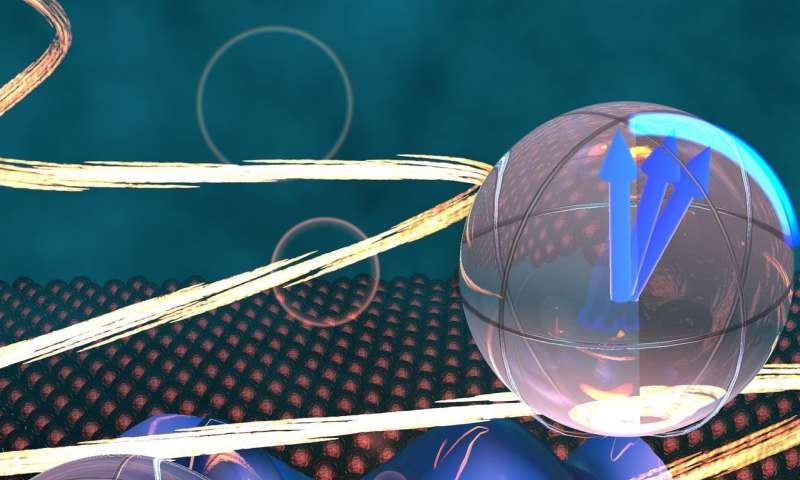
A technique to manipulate electrons with light could bring quantum computing up to room temperature.
A team of researchers in Germany and at the University of Michigan have demonstrated how infrared laser pulses can shift electrons between two different states,...

Great science stems from curiosity and hard work. In this case, it all began with a broken freezer.
Atsuko Kobayashi (MS '91) and Caltech professor Joseph Kirschvink (BS, MS '75)—a husband-and-wife team of researchers who divide their time between Japan...

Experiments with ultra-cold atoms at the TU Wien have shown surprising results: coupled atom clouds synchronize within milliseconds. This effect cannot be explained by standard theories.
When atoms are cooled down to almost zero temperature, their properties change completely. They...

A 2017 theory proposed by Rice University physicists to explain the contradictory behavior of an iron-based high-temperature superconductor is helping solve a puzzle in a different type of unconventional superconductor, the "heavy fermion" compound known as CeCu2Si2.
An international team...
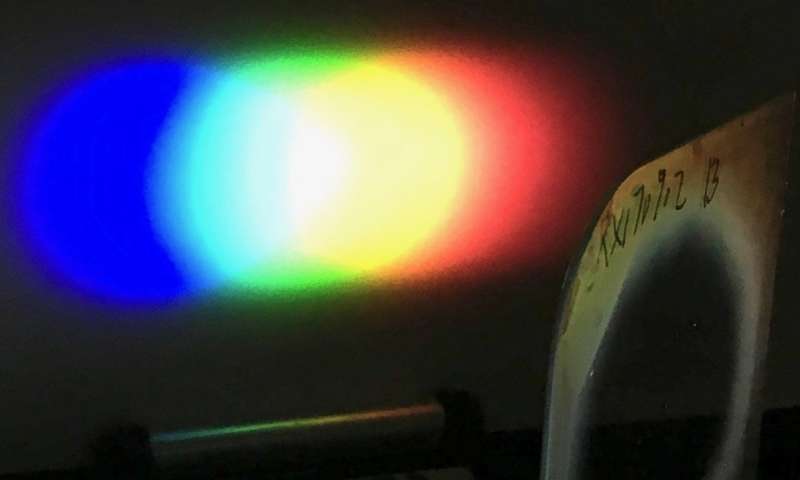
Engineering and physics researchers at North Carolina State University have developed a new technology for steering light that allows for more light input and greater efficiency – a development that holds promise for creating more immersive augmented-reality display systems.
At...
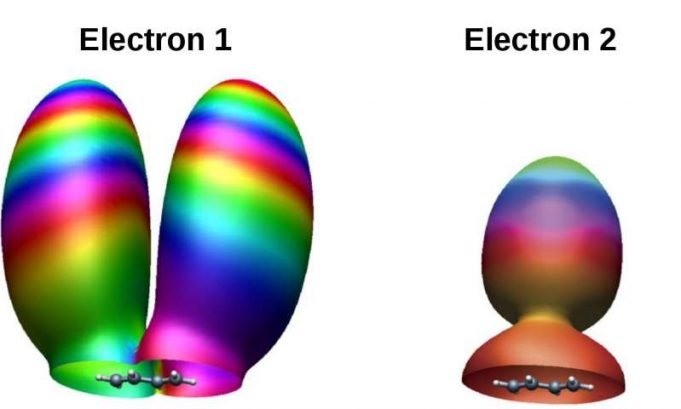
Scientists from the Max Born Institute for Nonlinear Optics and Short Pulse Spectroscopy (MBI) in Berlin combined state-of-the-art experiments and numerical simulations to test a fundamental assumption underlying strong-field physics. Their results refine our understanding of strong-field processes such...
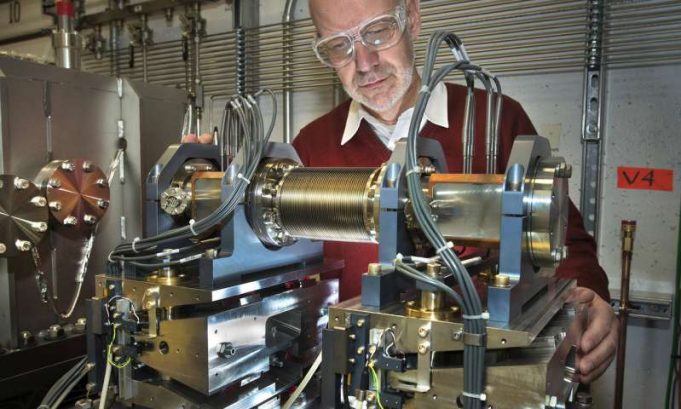
Lithium-sulfur (Li-S) batteries are a relatively new variety of battery being studied and developed by researchers around the world. Because they have very high theoretical energy densities – storing more than five times as much energy in a smaller...
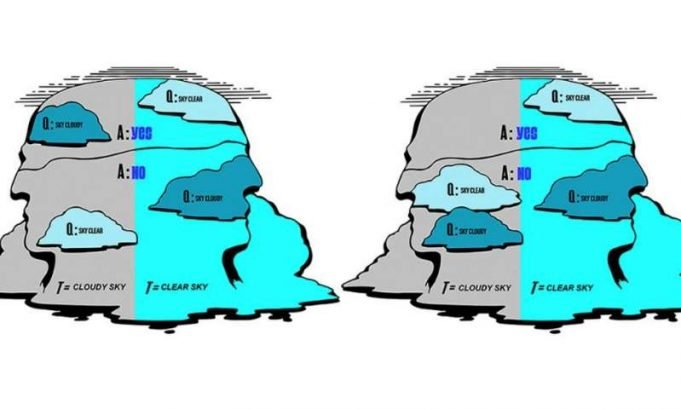
A new proof by SFI Professor David Wolpert sends a humbling message to would-be super intelligences: you can't know everything all the time.
The proof starts by mathematically formalizing the way an "inference device," say, a scientist armed with a...
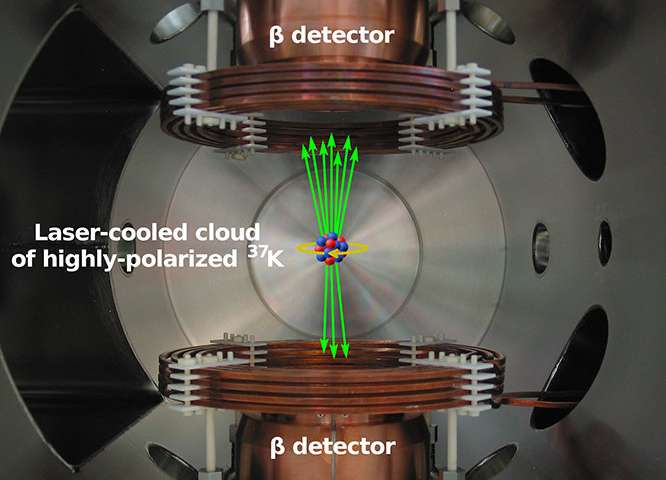
The study of how atoms radioactively decay has played a critical role in developing the standard model, our modern understanding of our universe's evolution since the Big Bang. Experiments investigating one form of decay, where a radioactive nucleus emits...
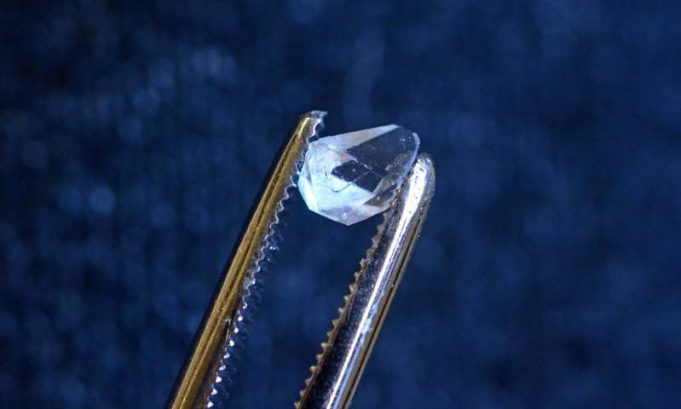
Yale physicists have uncovered hints of a time crystal—a form of matter that "ticks" when exposed to an electromagnetic pulse—in the last place they expected: a crystal you might find in a child's toy.
The discovery means there are now...

Superman's ability to shoot laser beams from his eyes has come a step closer to reality, with discoveries made by a research team at the University of St Andrews.
Lasers on the eye – ocular lasers – may now be...


