



A French nanorobotics team from the Femto-ST Institute in Besançon, France, assembled a new microrobotics system that pushes forward the frontiers of optical nanotechnologies. Combining several existing technologies, the μRobotex nanofactory builds microstructures in a large vacuum chamber and...

Researchers have studied how a 'drumstick' made of light could make a microscopic 'drum' vibrate and stand still at the same time.
A team of researchers from the UK and Australia have made a key step towards understanding the boundary...

Members of the Department of Theoretical Physics and History of Science of the UPV/EHU's Faculty of Science and Technology together with researchers from the University of Hannover have achieved quantum entanglement between two spatially separated Bose-Einstein condensates, ultra-cold atomic...
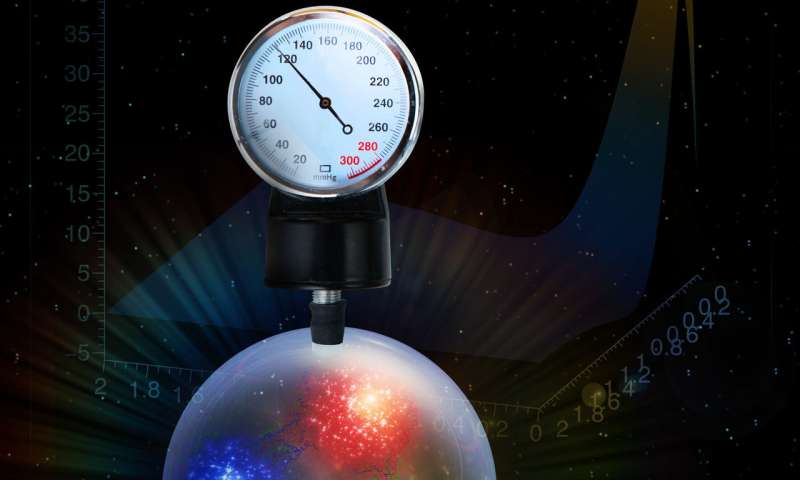
Inside every proton in every atom in the universe is a pressure cooker environment that surpasses the atom-crushing heart of a neutron star. That's according to the first measurement of a mechanical property of subatomic particles, the pressure distribution...
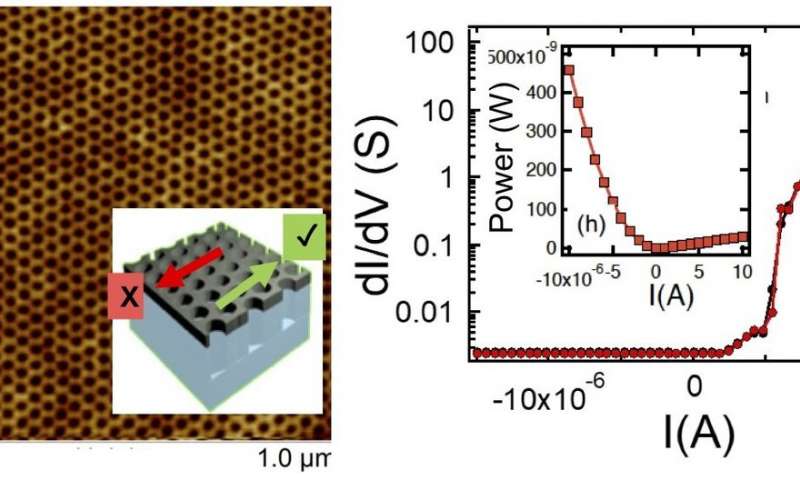
Among the chief complaints for smartphone, laptop and other battery-operated electronics users is that the battery life is too short and—in some cases—that the devices generate heat. Now, a group of physicists led by Deepak K. Singh, associate professor...

A team led by Austrian experimental physicist Rainer Blatt has succeeded in characterizing the quantum entanglement of two spatially separated atoms by observing their light emission. This fundamental demonstration could lead to the development of highly sensitive optical gradiometers...

Scientists have used a powerful X-ray laser to heat water from room temperature to 100,000 degrees Celsius in less than a 10th of a picosecond (millionth of a millionth of a second). The experimental setup, which can be seen...

New research gives insight into a recent experiment that was able to manipulate an unprecedented number of atoms through a quantum simulator. This new theory could provide another step on the path to creating the elusive quantum computers.
An international...

Studying the fleeting actions of electrons in organic materials will now be much easier, thanks to a new method for generating fast X-rays.
The technique means advanced measurements of fast reactions will now be possible in physics labs around the...

A solid can serve as a medium for heat and sound wave interactions just like a fluid does for thermoacoustic engines and refrigerators - resulting in leak-free machines that can stay operating longer.
Leaky systems have limited how engineers design...

Liquid crystals—much like the ones forming these words on computer monitors—could be tuned to fight bacteria or scuttle compromised electronics by reacting to subtle changes in their environment with tiny, measured doses of liquid or solids.
Researchers at the University...


