



In the popular movie franchise "Back to the Future", an eccentric scientist creates a time machine that runs on a flux capacitor.
Now a group of actual physicists from Australia and Switzerland have proposed a device which uses the quantum...

Based on complex simulations of quantum chromodynamics performed using the K computer, one of the most powerful computers in the world, the HAL QCD Collaboration, made up of scientists from the RIKEN Nishina Center for Accelerator-based Science and the...
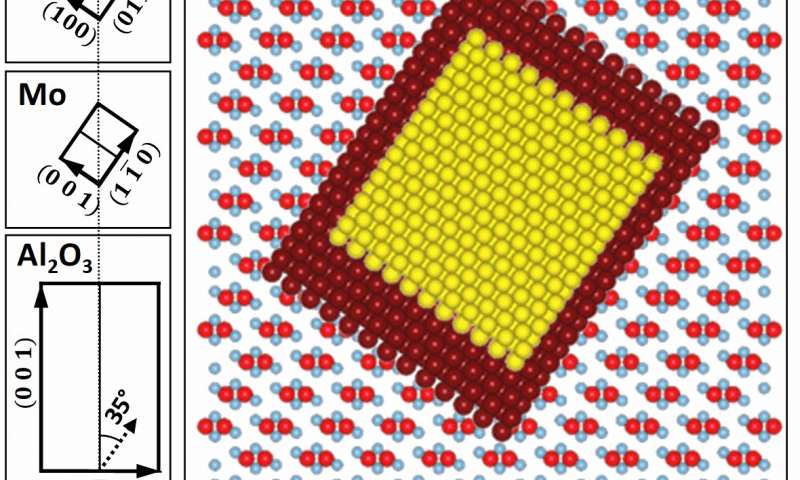
A new experimental discovery, led by researchers at the University of Minnesota, demonstrates that the chemical element ruthenium (Ru) is the fourth single element to have unique magnetic properties at room temperature. The discovery could be used to improve...

Imagine being able to power your car partly from the heat that its engine gives off. Or what if you could get a portion of your home's electricity from the heat that a power plant emits? Such energy-efficient scenarios...

Laser pulse compression technology invented in the late 1980s resulted in high-power, short-pulse laser techniques, enhancing laser intensity 10 million-fold in a quarter of a century.
Scientists at Osaka University discovered a novel particle acceleration mechanism they describe as a...
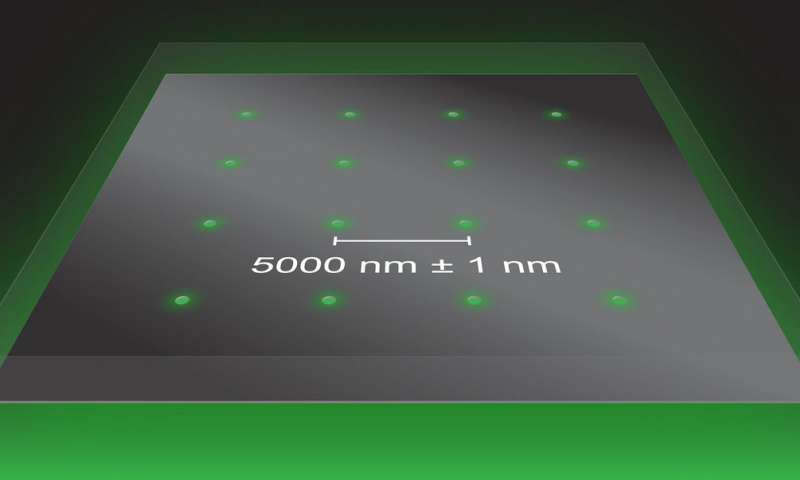
Over the last two decades, scientists have discovered that the optical microscope can be used to detect, track and image objects much smaller than their traditional limit—about half the wavelength of visible light, or a few hundred nanometers.
That pioneering...

A quantum internet promises completely secure communication. But using quantum bits or qubits to carry information requires a radically new piece of hardware—a quantum memory. This atomic-scale device needs to store quantum information and convert it into light to...

After years of research, scientists at the National Institute of Standards and Technology (NIST) have developed and demonstrated a way to count the absolute number of neutrons in a beam that is four times more accurate than their best...

A team of physicists from ICTP-Trieste and IQOQI-Innsbruck has come up with a surprisingly simple idea to investigate quantum entanglement of many particles. Instead of digging deep into the properties of quantum wave functions, which are notoriously hard to...

Molecules that are involved in photosynthesis exhibit the same quantum effects as non-living matter, concludes an international team of scientists including University of Groningen theoretical physicist Thomas la Cour Jansen. This is the first time that quantum mechanical behavior...

Nanostructures are the holy grail of new materials. The wonder material graphene, for example, is a single layer of carbon atoms arranged in a hexagonal pattern that, because of its conductivity, flexibility, transparency and strength, has the potential to...


