



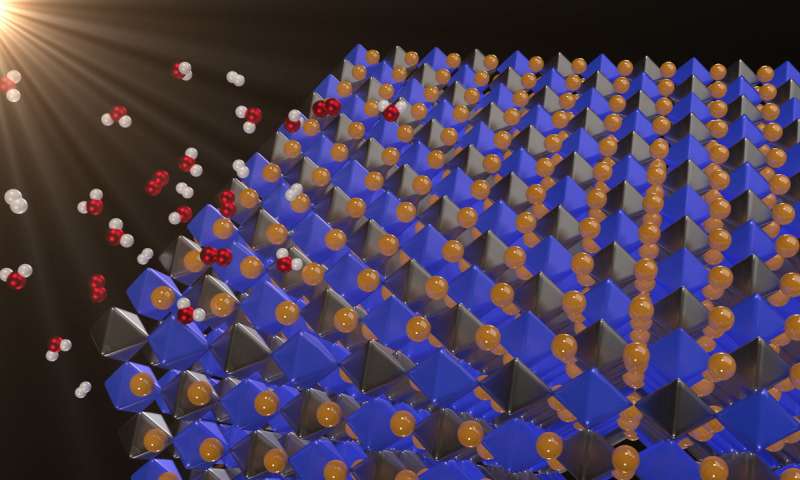
Solar energy is clean and abundant. But when the sun isn't shining, you must store the energy in batteries or through a process called photocatalysis—in which solar energy is used to make fuels. In photocatalytic water splitting, sunlight separates...

Scientists study tiny particles called neutrinos to learn about how our universe evolved. These particles, well-known for being tough to detect, could tell the story of how matter won out over antimatter a fraction of a second after the...

In new quantum information technologies, fragile quantum states have to be transferred between distant quantum bits. Researchers at ETH have now realized such a quantum transmission between two solid-state qubits at the push of a button.
Data transmission is the...
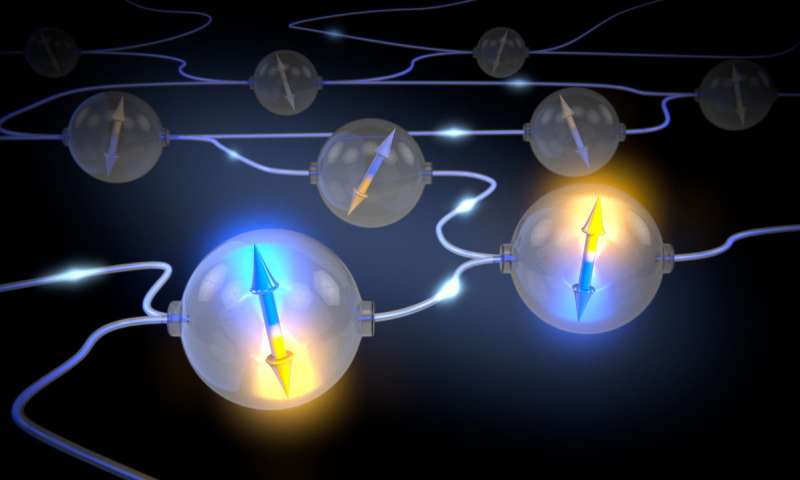
Researchers at QuTech in Delft have succeeded in generating quantum entanglement between two quantum chips faster than the entanglement is lost. Via a novel smart entanglement protocol and careful protection of the entanglement, the scientists led by Prof. Ronald...
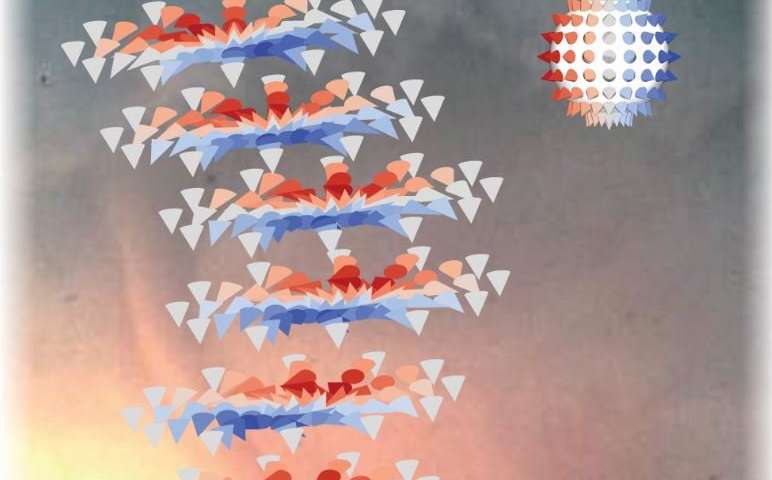
Vortex structures are common in nature, reaching from swirls in our morning coffee to spiral galaxies in the universe. Vortices are been best known from fluid dynamics. Take the example of a tornado. Air circulates around an axis, forming...
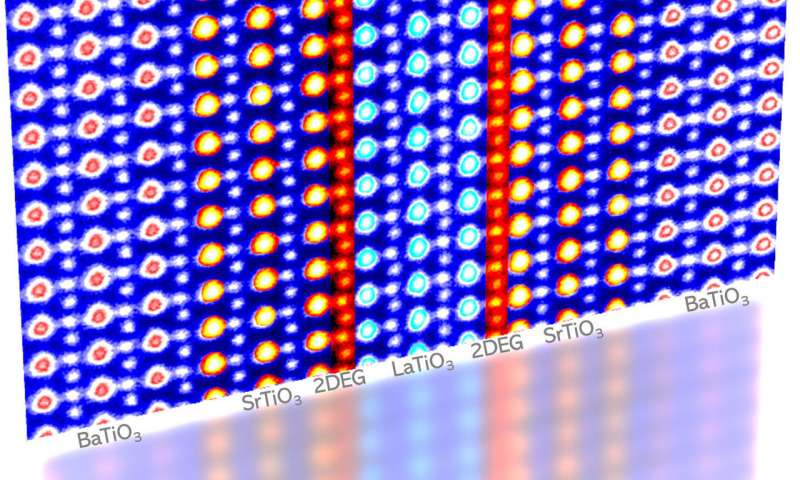
In 1965, a renowned Princeton University physicist theorized that ferroelectric metals could conduct electricity despite not existing in nature.
For decades, scientists thought it would be impossible to prove the theory by Philip W. Anderson, who shared the 1977 Nobel...

Quantum bits are now easier to manipulate for devices in quantum computing, thanks to enhanced spin-orbit interaction in silicon.
A silicon quantum computer chip has the potential to hold millions of quantum bits, or qubits, for much faster information processing...

A team of scientists working at the Department of Energy's Lawrence Berkeley National Laboratory (Berkeley Lab) has confirmed a special property known as "chirality—which potentially could be exploited to transmit and store data in a new way—in nanometers-thick samples...

As the 150th anniversary of the formulation of the Periodic Table of Chemical Elements looms, a Michigan State University professor probes the table's limits in a recent Nature Physics Perspective.
Next year will mark the 150th anniversary of the formulation...
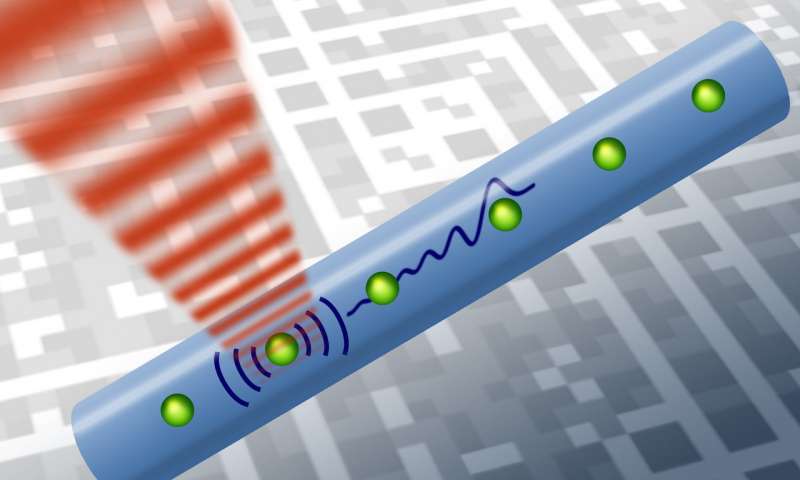
Quantum physics has led to new types of sensors, secure data transmission methods and researchers are working toward computers. However, the main obstacle is finding the right way to couple and precisely control a sufficient number of quantum systems...

Physicists developed a way to determine the electronic properties of thin gold films after they interact with light. Nature Communications published the new method, which adds to the understanding of the fundamental laws that govern the interaction of electrons...


