



Networks describe relations between objects. They show how objects relate to one another and which ones are mutually influential. In this context, how does space impact structure? Geoinformatics scientist Dr. Franz-Benjamin Mocnik was particularly interested in answering this question....
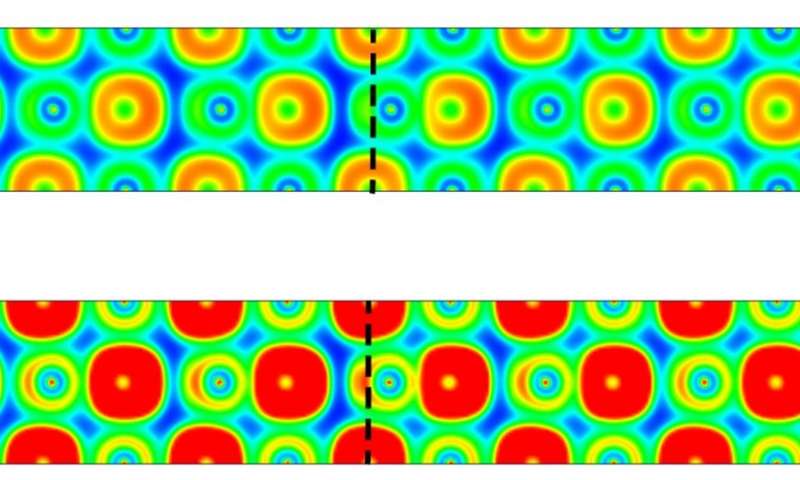
Scientists can spend a long time in heated debates over tiny details – for example, how and whether atoms in a crystal move when heated, thereby altering the symmetry. Using computer simulations for the mineral lead telluride on the...

In a marriage of quantum science and solid-state physics, researchers at the National Institute of Standards and Technology (NIST) have used magnetic fields to confine groups of electrons to a series of concentric rings within graphene, a single layer...

After their recent pioneering experiments to couple light and matter to an extreme degree, Rice University scientists decided to look for a similar effect in matter alone. They didn't expect to find it so soon.
Rice physicist Junichiro Kono, graduate...

Researchers have developed and demonstrated the first handheld ophthalmology instrument with resolution-boosting adaptive optics technology that can image individual photoreceptors in the eye. The new portable instrument will allow improved diagnosis of eye diseases and could enable early detection...

Swansea University scientists working at CERN have published a study detailing a breakthrough in antihydrogen research.
The scientists were working as part of the ALPHA collaboration which is made up of researchers and groups from over a dozen institutions from...
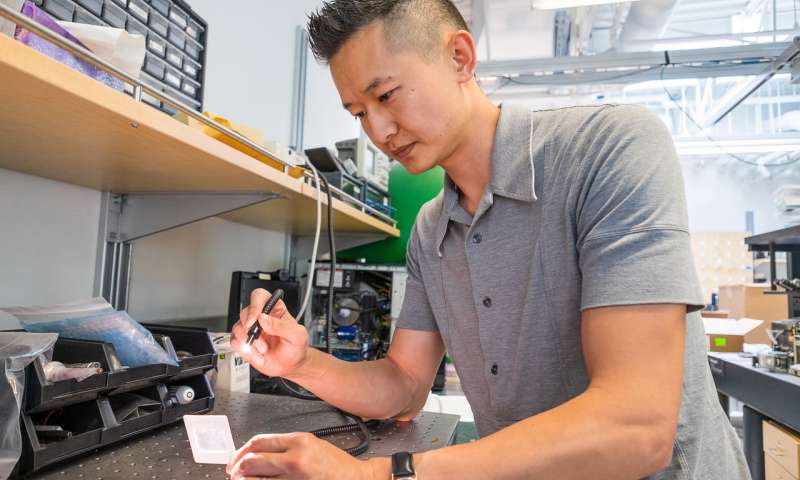
The idea that light has momentum is not new, but the exact nature of how light interacts with matter has remained a mystery for close to 150 years. New research from UBC's Okanagan campus, recently published in Nature Communications,...

Researchers recently discovered that the strength of the magnetic field required to elicit a particular quantum mechanical process, such as photoluminescence and the ability to control spin states with electromagnetic (EM) fields, corresponds to the temperature of the material....

An international team of researchers led by the University of Bristol have demonstrated that light can be used to implement a multi-functional quantum processor.
This small device can be used as a scientific tool to perform a wide array of...
New quantum theory research, led by academics at the University of St Andrews' School of Physics, could transform the way scientists predict how quantum particles behave.
Quantum theory is a cornerstone of modern physics, explaining the behaviour of isolated particles,...
Researchers at the Tokyo Institute of Technology report on an enzyme belonging to the glycerol-3-phosphate acyltransferase (GPAT) family as a promising target for increasing biofuel production from the red alga Cyanidioschyzon merolae.
Algae are known to store up large amounts...


