




Researchers at the University of Zurich have developed a type of nanoparticle by adding zinc sulfide to the surface of indium-based quantum dots. These quantum dots produce clean hydrogen fuel from water and sunlight—a sustainable source of energy. They...
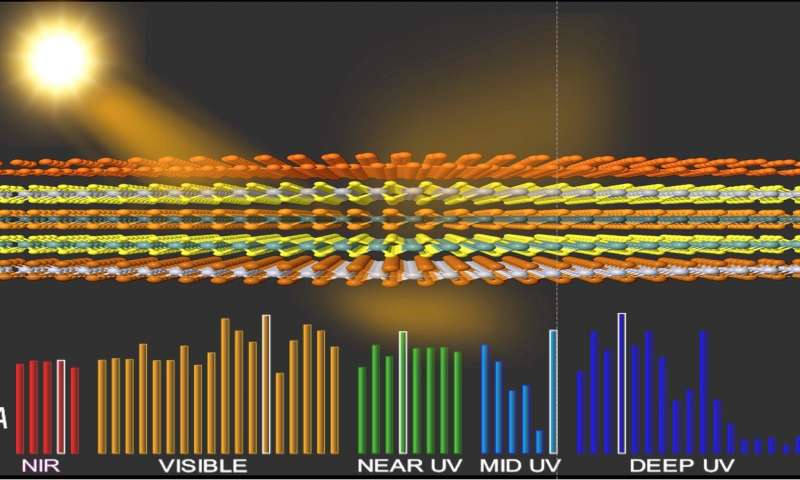
The ability of metallic or semiconducting materials to absorb, reflect and act upon light is of primary importance to scientists developing optoelectronics—electronic devices that interact with light to perform tasks. Rice University scientists have now produced a method to...

A research team led by Arun Iyer, Ph.D., assistant professor of pharmaceutical sciences in the Eugene Applebaum College of Pharmacy and Health Sciences at Wayne State University, has developed a nanoplatform technology that works in combination with existing chemotherapeutic...

Molecular electronics is a burgeoning field of research that aims to integrate single molecules as active elements in electronic devices. Obtaining a complete picture of the charge transport properties in molecular junctions is the first step toward realizing functionality...

A team of researchers has developed a device that uses the material graphene to detect mid-infrared light and efficiently convert it to electrical signal at room temperature. It's a breakthrough that could lead to better communications systems, thermal imagers...

Engineers at the University of British Columbia have developed a new ultrasound transducer, or probe, that could dramatically lower the cost of ultrasound scanners to as little as $100. Their patent-pending innovation—no bigger than a Band-Aid—is portable, wearable and...
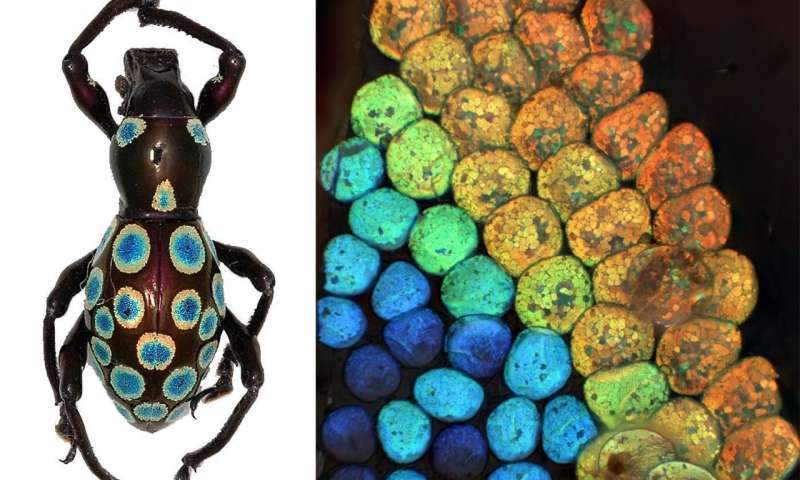
Researchers from Yale-NUS College and the University of Fribourg in Switzerland have discovered a novel colour-generation mechanism in nature, which if harnessed, has the potential to create cosmetics and paints with purer and more vivid hues, screen displays that...

Schottky diodes are composed of a metal in contact with a semiconductor. Despite their simple construction, Schottky diodes are tremendously useful components in modern electronics. Schottky diodes fabricated using two-dimensional (2-D) materials have attracted major research attention in recent...

Graphene—an ultrathin material consisting of a single layer of interlinked carbon atoms—is considered a promising candidate for the nanoelectronics of the future. In theory, it should allow clock rates up to a thousand times faster than today's silicon-based electronics....
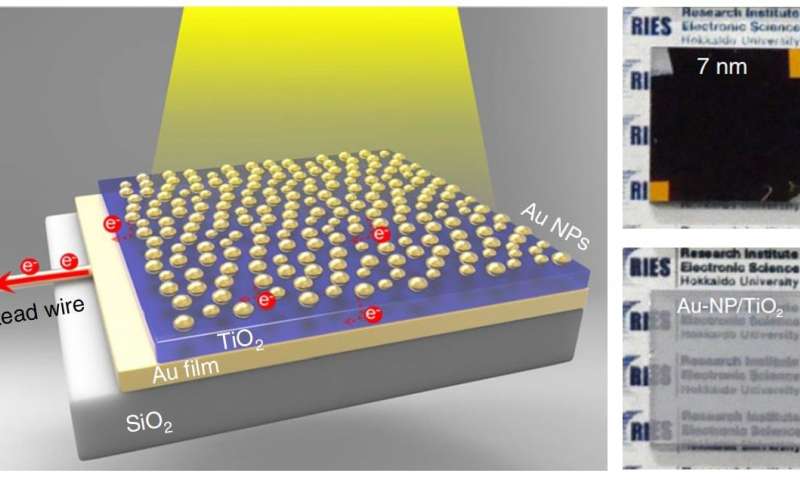
Scientists have developed a photoelectrode that can harvest 85 percent of visible light in a 30 nanometers-thin semiconductor layer between gold layers, converting light energy 11 times more efficiently than previous methods.
In the pursuit of realizing a sustainable society,...

University of Wisconsin-Madison materials engineers have made a surprising discovery that could dramatically improve the lifetime of solar energy harvesting devices.
The findings allowed them to achieve the longest-ever lifetime for a key component of some types of photovoltaic cells...


