




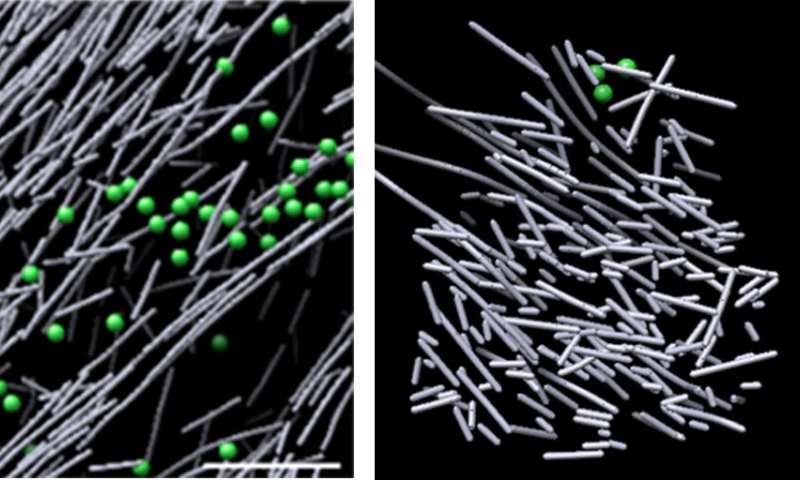
There are many times when our cells need to move. Mobile cells guide our body's formation (embryonic development). Immune cells roam to capture unwanted intruders. And healing cells (fibroblasts) migrate to mend wounds. But not all movement is desirable:...
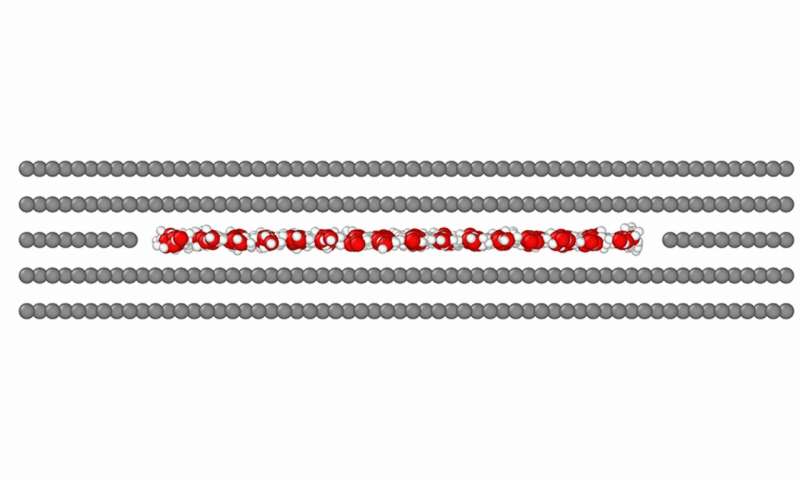
Researchers at The University of Manchester's National Graphene Institute in the UK have succeeded in making artificial channels just one atom in size for the first time. The new capillaries, which are very much like natural protein channels such...

Imagine if you could look at a small amount of an unidentified chemical element – less than 100 atoms in size – and know what type of material the element would become in large quantities before you actually saw...

The transition from electronic integrated circuits to faster, more energy-efficient and interference-free optical circuits is one of the most important goals in the development of photon technologies. Photonic integrated circuits (PICs) are already used today for transmitting and processing...
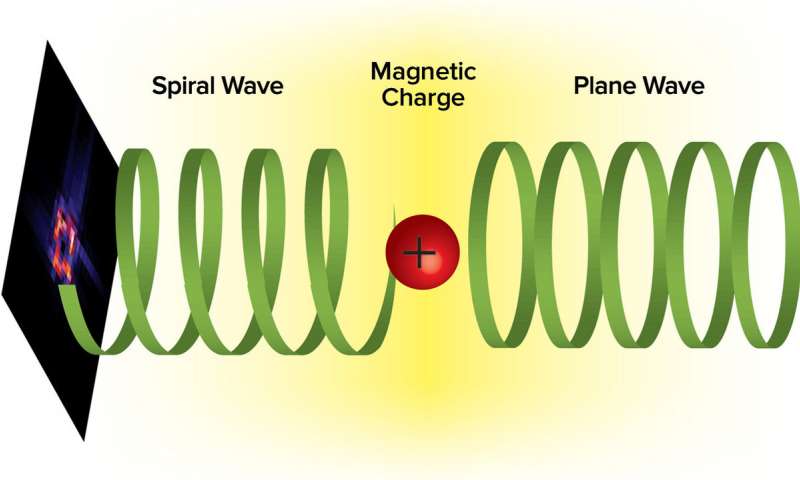
Surfers spend much of their time watching long waves come onto the shoreline as they attempt to catch one right as it begins to curve and break.
In a similar vein, scientists are working to create twisting helical electromagnetic waves...
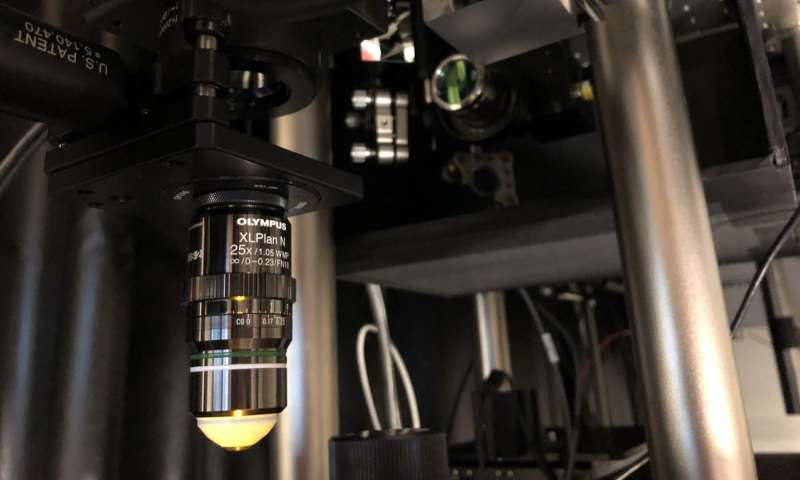
MIT researchers have invented a way to fabricate nanoscale 3-D objects of nearly any shape. They can also pattern the objects with a variety of useful materials, including metals, quantum dots, and DNA.
"It's a way of putting nearly any...

Nano-sized particles already make bicycles and tennis rackets lighter and stronger, protect eyeglasses from scratches, and help direct chemotherapy drugs to cancer cells. But their usefulness depends on being able to precisely sculpt them into the right configurations—no easy...

In a groundbreaking study, researchers have successfully developed a method that could lead to unprecedented advances in computer speed and efficiency.
Through this study, researchers Desmond Loke, Griffin Clausen, Jacqueline Ohmura, Tow-Chong Chong, and Angela Belcher have successfully developed a...

In a groundbreaking study, researchers have successfully developed a method that could lead to unprecedented advances in computer speed and efficiency.
Through this study, researchers Desmond Loke, Griffin Clausen, Jacqueline Ohmura, Tow-Chong Chong, and Angela Belcher have successfully developed a...

Researchers from the University of Queensland's Australian Institute for Bioengineering and Nanotechnology (AIBN) have discovered a unique nano-scaled DNA signature that appears to be common to all cancers.
Based on this discovery, the team has developed a novel technology that...

Using electrical impulses, the 'tweezers' can extract single DNA, proteins and organelles from living cells without destroying them.
We are continuously expanding our knowledge on how cells function, but many unanswered questions remain. This is especially true for individual cells...


