




A team of researchers led by the Department of Energy's Lawrence Berkeley National Laboratory (Berkeley Lab) has developed a simple method that could turn ordinary semiconducting materials into quantum machines—superthin devices marked by extraordinary electronic behavior. Such an advancement...
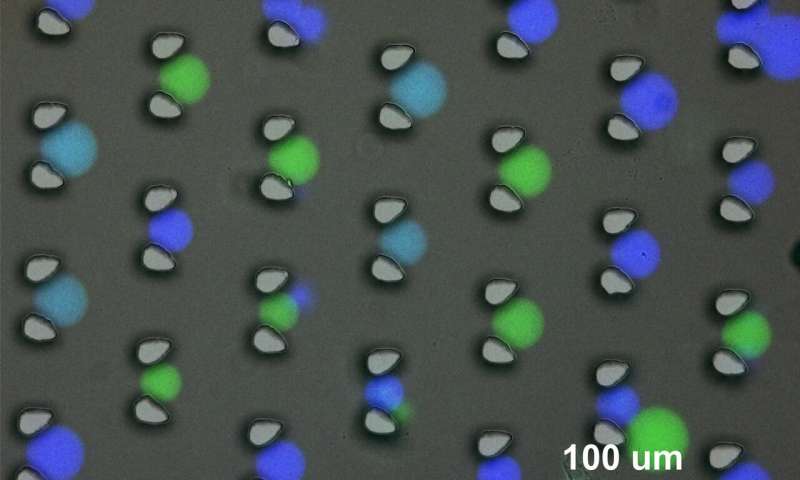
The work provides a step towards chemical cognition in synthetic protocells and could be useful in biosensing and therapeutics.
Molecular computers made from DNA use programmable interactions between DNA strands to transform DNA inputs into coded outputs. However, DNA computers...

Researchers at The University of Manchester in the UK have discovered that the Hall effect—a phenomenon well known for more than a century—is no longer as universal as it was thought to be.
In the research paper published in Science...

Mice with vision enhanced by nanotechnology were able to see infrared light as well as visible light, reports a study published February 28 in the journal Cell. A single injection of nanoparticles in the mice's eyes bestowed infrared vision...

Researchers at The University of Manchester in the UK, led by Dr. Artem Mishchenko, Prof Volodya Fal'ko and Prof Andre Geim, have discovered the quantum Hall effect in bulk graphite—a layered crystal consisting of stacked graphene layers. This is...
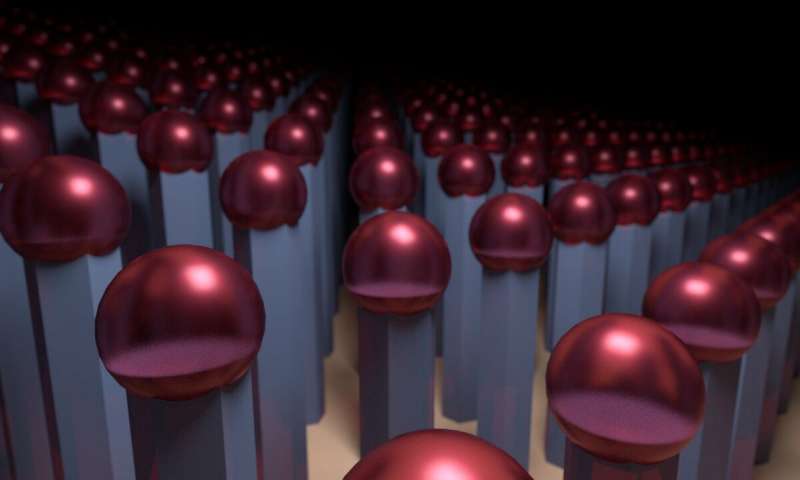
Nanowires have the potential to revolutionize the technology around us. Measuring just 5-100 nanometers in diameter (a nanometer is a millionth of a millimeter), these tiny, needle-shaped crystalline structures can alter how electricity or light passes through them.
They can...
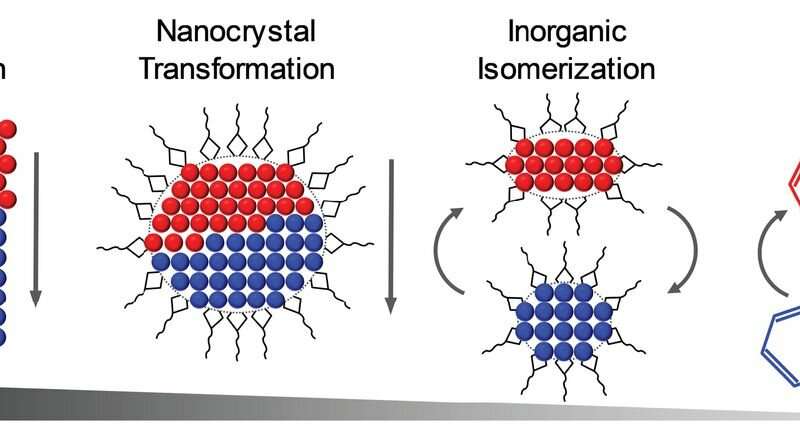
Three years ago, when Richard Robinson, associate professor of materials science and engineering, was on sabbatical at Hebrew University in Israel, he asked a graduate student to send him some nanoparticles of a specific size.
"When they got to me,...

Scientists at the U.S. Naval Research Laboratory (NRL) and the Air Force Research Laboratory (AFRL) have developed a way to directly write quantum light sources, which emit a single photon of light at a time, into monolayer semiconductors such...
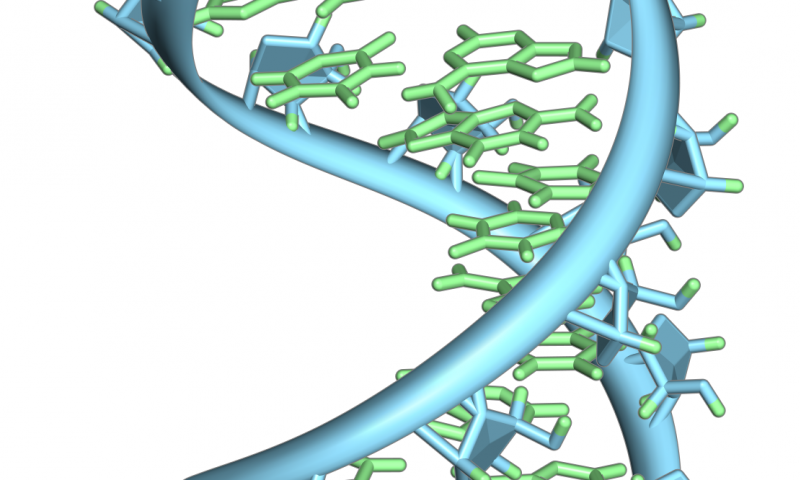
Scientists from ITMO in collaboration with international colleagues have proposed new DNA-based nanomachines that can be used for gene therapy for cancer. This new invention can greatly contribute to more effective and selective treatment of oncological diseases. The results...

Despite decades of innovation in fabrics with high-tech thermal properties that keep marathon runners cool or alpine hikers warm, there has never been a material that changes its insulating properties in response to the environment. Until now.
University of Maryland...

Materials scientists study and understand the physics of interacting atoms in solids to find ways to improve materials we use in every aspect of daily life. The frontier of this research lies not in trial and error, though; to...


