




Colonies of social insects are capable of self-organizing and accomplishing complex tasks through individual interactions. For example, to march across large gaps, ants grip the bodies of each other, forming a living bridge that allows the colonies to reach...

The smallest pixels yet created—a million times smaller than those in smartphones, made by trapping particles of light under tiny rocks of gold—could be used for new types of large-scale flexible displays, big enough to cover entire buildings.
The colour...

Nanozymes—catalytic nanomaterials with enzyme-like characteristics—offer the advantage of low cost, high stability, tunable catalytic activity and ease of mass production. For these reasons, they have been widely applied in biosensing, therapeutics and environmental protection.
However, the low density of active...
Researchers have developed a revolutionary method to intricately grow and protect some of the world's most exciting nanomaterials—graphene and carbon nanotubes (CNT).
When curved and rolled into cylinders, thin graphene layers form CNT structures. These rolled sheets of carbon can...

To kill bacteria in the blood, our immune system relies on nanomachines that can open deadly holes in their targets. UCL scientists have now filmed these nanomachines in action, discovering a key bottleneck in the process which helps to...

Scientists are excited about diamonds—not the types that adorn jewelry, but the microscopic variety that are less than the width of a human hair. These so-called "nanodiamonds" are made up almost entirely of carbon. But by introducing other elements...

MIT engineers have designed tiny robots that can help drug-delivery nanoparticles push their way out of the bloodstream and into a tumor or another disease site. Like crafts in "Fantastic Voyage"—a 1960s science fiction film in which a submarine...

Researchers from Carnegie Mellon University's Department of Chemistry have found a way to control the lifetime of the quantum states of gold nanoclusters by three orders of magnitude, which could lead to improvements in solar cell and photocatalysis technologies....

By studying how electrons in two-dimensional graphene can literally act like a liquid, researchers have paved the way for further research into a material that has the potential to enable future electronic computing devices that outpace silicon transistors.
Research into...
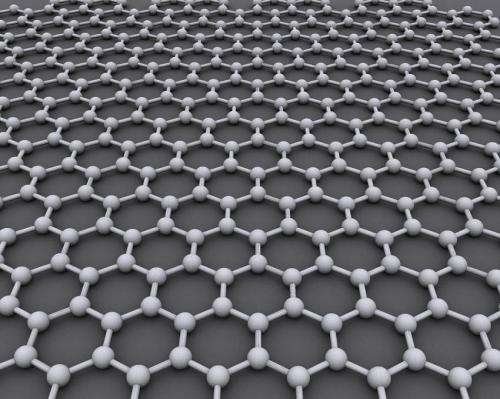
The nano research team led by professors Helge Weman and Bjørn-Ove Fimland at the Norwegian University of Science and Technology's (NTNU) Department of Electronic Systems has succeeded in creating light-emitting diodes, or LEDs, from a nanomaterial that emits ultraviolet...

The human body is held together by an intricate cable system of tendons and muscles, engineered by nature to be tough and highly stretchable. An injury to any of these tissues, particularly in a major joint like the shoulder...


