




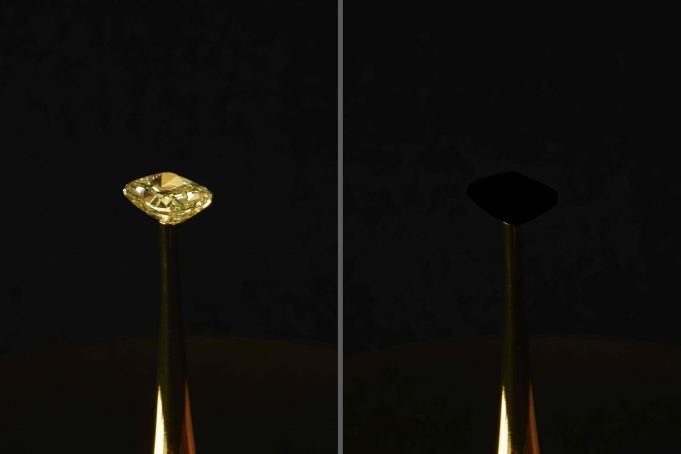
With apologies to "Spinal Tap," it appears that black can, indeed, get more black.
MIT engineers report today that they have cooked up a material that is 10 times blacker than anything that has previously been reported. The material is...

Scientists have designed an ultra-miniaturised device that could directly image single cells without the need for a microscope or make chemical fingerprint analysis possible from a smartphone.
The device, made from a single nanowire 1000 times thinner than a human...

Researchers at the Nanoscience Center and Faculty of Information Technology in the University of Jyväskylä, Finland, have achieved a significant step forward in predicting atomic structures of hybrid nanoparticles. A research article published in Nature Communications on 3 September 2019, demonstrates...
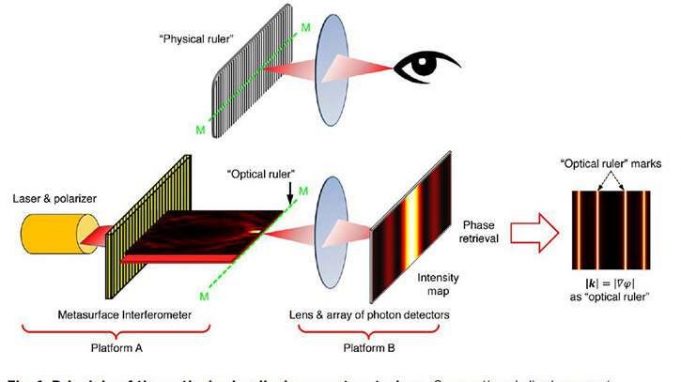
Scientists at Nanyang Technological University, Singapore (NTU Singapore) have developed a new way to measure distances at the nanoscale—one nanometer being one billionth of a meter—using light.
Devices that use light to see objects, such as microscopes, have a fundamental limitation based...
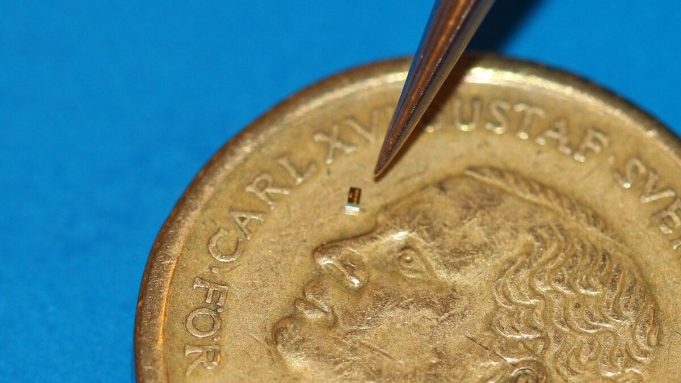
In what could be a breakthrough for body sensor and navigation technologies, researchers at KTH have developed the smallest accelerometer yet reported, using the highly conductive nanomaterial, graphene.
Each passing day, nanotechnology and the potential for graphene material make new progress. The...

Researchers at The University of Manchester discovered that atomically- thin micas—the name given to a type of common mineral found in soil—are excellent proton conductors. This surprising result is important for the use of 2-D materials in applications such...

After years of tackling numerous design and manufacturing challenges, MIT researchers have built a modern microprocessor from carbon nanotube transistors, which are widely seen as a faster, greener alternative to their traditional silicon counterparts.
The microprocessor, described today in the...

Chemists funded by the SNSF have created a new compound for flexible drug delivery that specifically targets prostate cancer cells. Incorporating four different molecules, the compound prevents tumor cells from multiplying, can be detected by medical imaging and has...
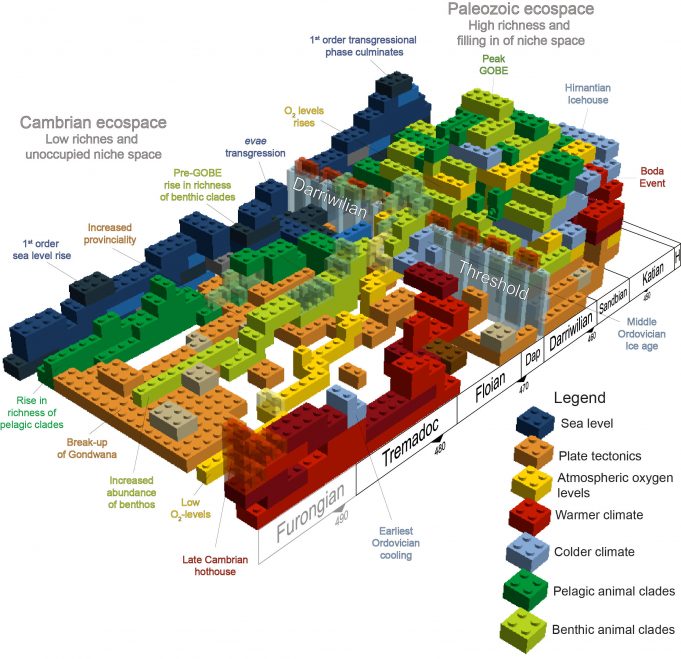
When Earth's species were rapidly diversifying nearly 500 million years ago, that evolution was driven by complex factors including global cooling, more oxygen in the atmosphere, and more nutrients in the oceans. But it took a combination of many...

A new chip-based platform developed by researchers at UC Santa Cruz integrates nanopores and optofluidic technology with a feedback-control circuit to enable an unprecedented level of control over individual molecules and particles on a chip for high-throughput analysis.
In a...

Nanotechnology developed at Rutgers University-New Brunswick could boost research on stem cell transplantation, which may help people with Alzheimer's disease, Parkinson's disease, other neurodegenerative diseases and central nervous system injuries.
The nanotechnology platform, which uses special tiny rods for sensing,...


