




Our lives are governed by submicroscopic processes in the nanocosmos. Indeed many natural phenomena begin with a minuscule shift in the states of atoms or molecules, triggered by radiation. One such process has now been elucidated by a team...
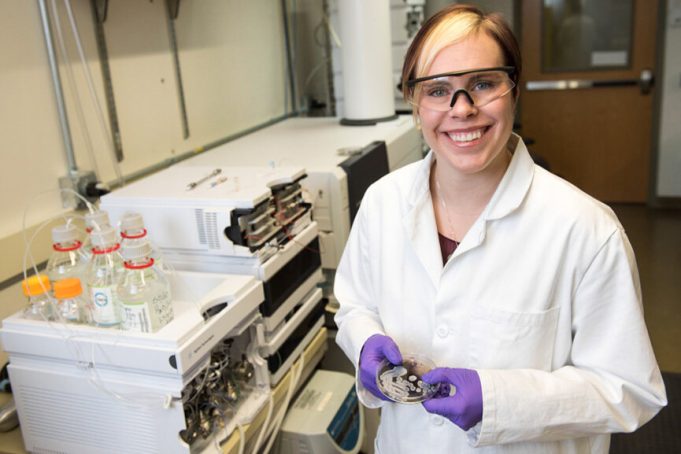
Over the last two decades, nanotechnology has improved many of the products we use every day from microelectronics to sunscreens. Nanoparticles (particles that are just a few hundred atoms in size) are ending up in the environment by the...
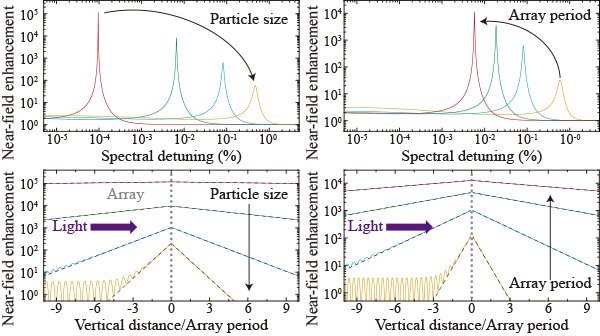
Controlling the interactions between light and matter has been a long-standing ambition for scientists seeking to develop and advance numerous technologies that are fundamental to society. With the boom of nanotechnology in recent years, the nanoscale manipulation of light...
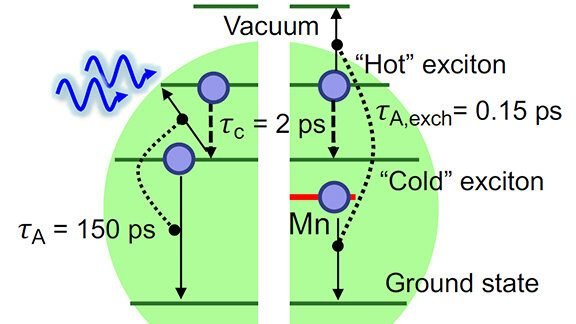
Los Alamos National Laboratory scientists have synthesized magnetically-doped quantum dots that capture the kinetic energy of electrons created by ultraviolet light before it's wasted as heat.
"This discovery can potentially enable novel, highly-efficient solar cells, light detectors, photocathodes and light-driven...

Airborne bacteria may see what looks like a comfy shag carpet on which to settle. But it's a trap.
Rice University scientists have transformed their laser-induced graphene (LIG) into self-sterilizing filters that grab pathogens out of the air and kill...
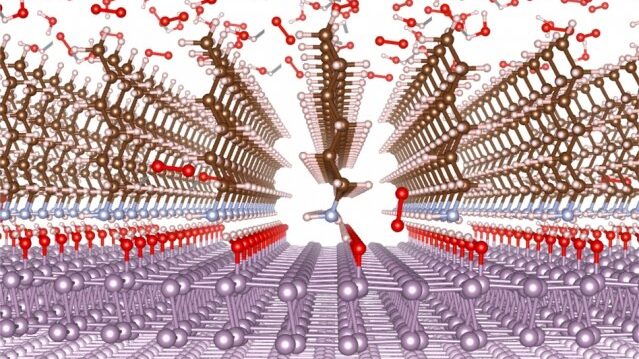
A variety of two-dimensional materials that have promising properties for optical, electronic, or optoelectronic applications have been held back by the fact that they quickly degrade when exposed to oxygen and water vapor. The protective coatings developed thus far...
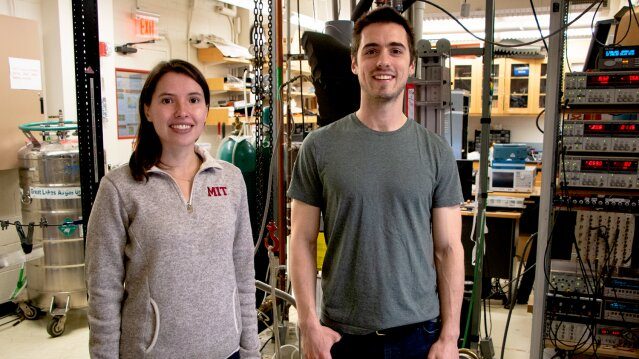
Researchers led by MIT Department of Physics Professor Pablo Jarillo-Herrero last year showed that rotating layers of hexagonally structured graphene at a particular "magic angle" could change the material's electronic properties from an insulating state to a superconducting state....
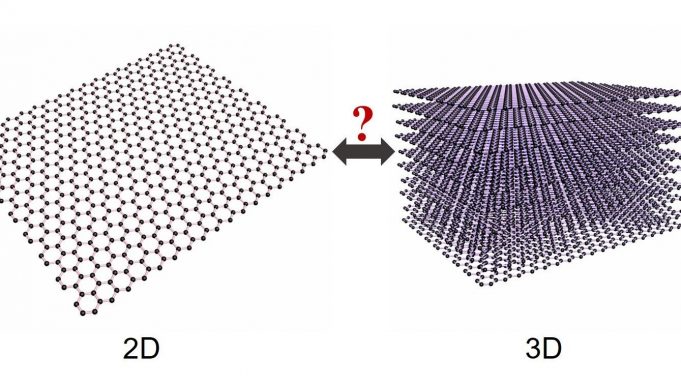
Graphene is actually a 3-D material as well as a 2-D material, according to a new study from Queen Mary University of London.
Realising that it is a 3-D material is important for understanding its mechanical properties and for developing...

What may be viewed as the world's smallest incandescent lightbulb is shining in a Rice University engineering laboratory with the promise of advances in sensing, photonics and perhaps computing platforms beyond the limitations of silicon.
Gururaj Naik of Rice's Brown...
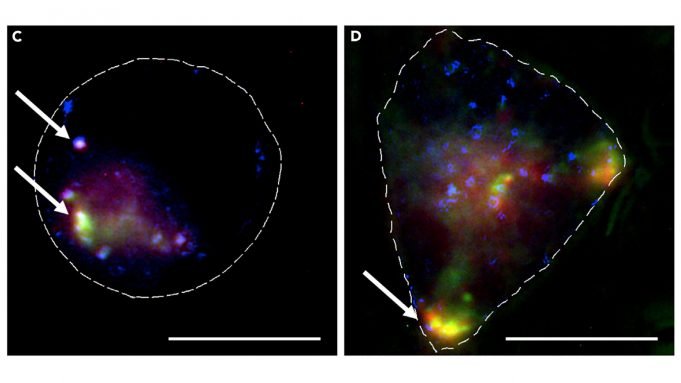
Scientists from the University of Cambridge have developed a platform that uses nanoparticles known as metal-organic frameworks to deliver a promising anti-cancer agent to cells.
Research led by Dr. David Fairen-Jimenez, from the Cambridge Department of Chemical Engineering and Biotechnology,...
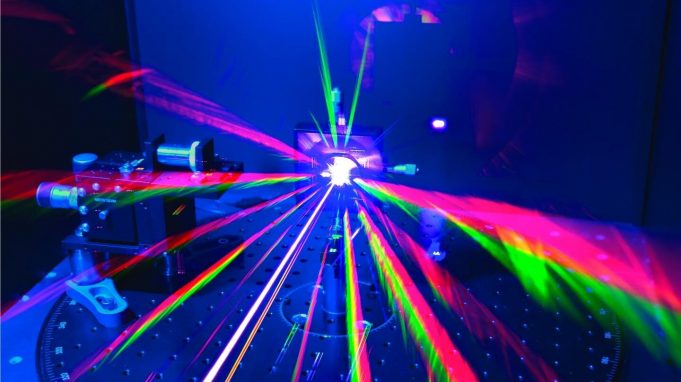
A new nanomaterial developed by scientists at the University of Bath could solve a conundrum faced by scientists probing some of the most promising types of future pharmaceuticals.
Scientists who study the nanoscale—with molecules and materials 10,000 smaller than a...


