





An international team of researchers has used nanoparticles to deliver a drug—one that previously failed in clinical trials for pain—into specific compartments of nerve cells, dramatically increasing its ability to treat pain in mice and rats. The findings are...
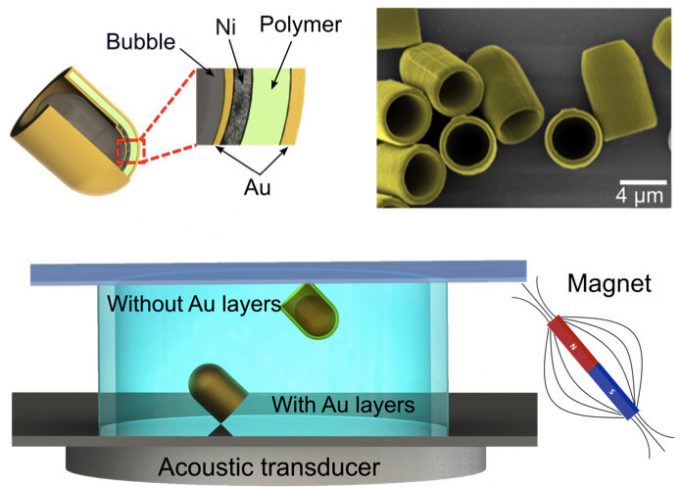
A new study from the lab of Thomas Mallouk shows how microscale "rockets," powered by acoustic waves and an onboard bubble motor, can be driven through 3-D landscapes of cells and particles using magnets. The research was a collaboration...

Theoretically, our immune system could detect and kill cancer cells. Unfortunately, tumors are well armed to fight these attacks. Despite modern cancer treatments, metastases and relapses remain a major problem. Increasing anti-tumor immunity might now be made possible, thanks...
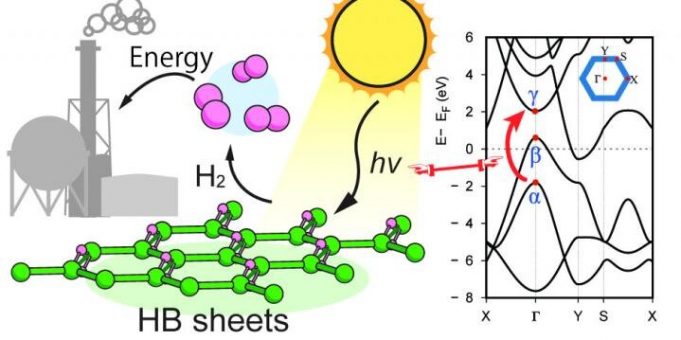
Researchers at Tokyo Institute of Technology, University of Tsukuba, and colleagues in Japan have reported a promising hydrogen carrier in the form of hydrogen boride nanosheets. This two-dimensional material, which is not yet well studied, could eventually be used...
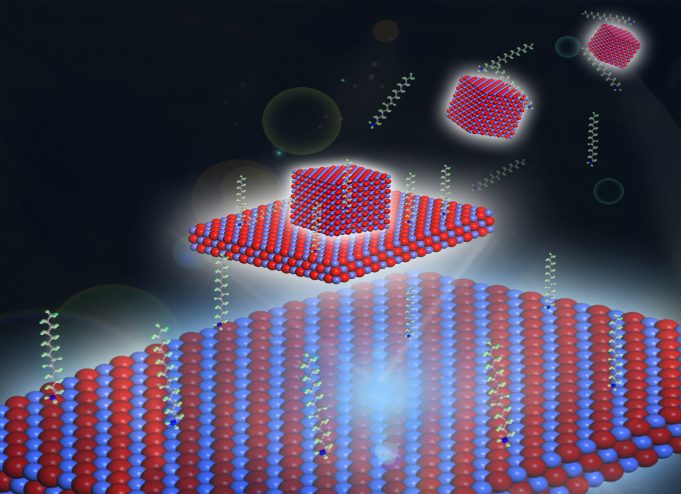
Ever since its discovery in 2004, graphene—an atomically thin material with amazing strength and electrical properties—has inspired scientists around the world to design new 2-D materials to serve a broad range of applications, from renewable energy and catalysts to...
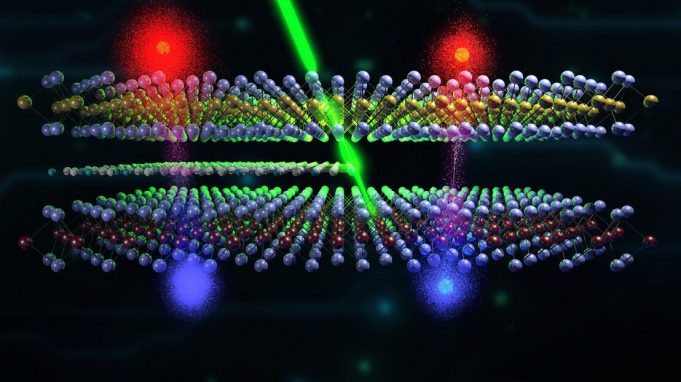
Excitons are quasiparticles made from the excited state of electrons and—according to research being carried out EPFL—have the potential to boost the energy efficiency of our everyday devices.
It's a whole new way of thinking about electronics. Excitons—or quasiparticles formed...
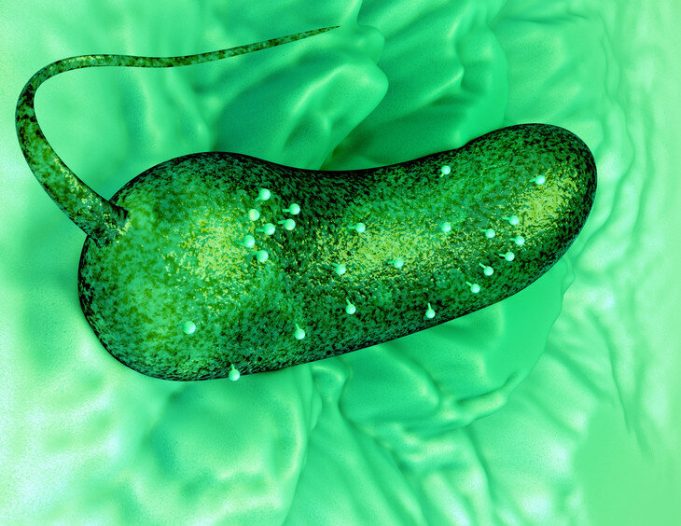
A new liquid-cell technology allows scientists to see living biological materials and systems in three dimensions under an electron microscope, according to researchers at Penn State, Virginia Tech and Protochips Inc.
"With this technology that we developed in collaboration with...
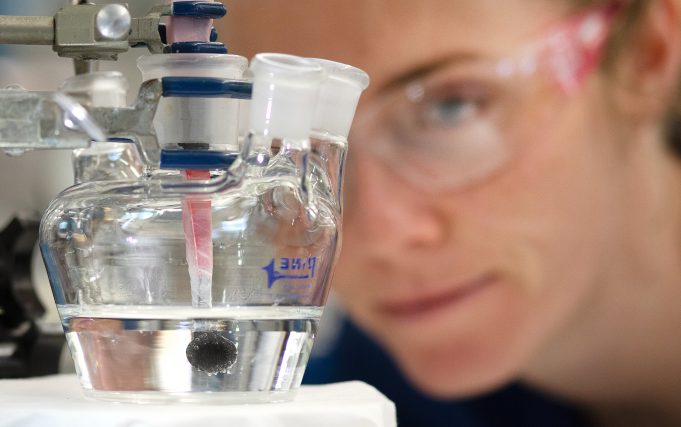
Researchers at the Department of Energy's SLAC National Accelerator Laboratory and Stanford University have shown for the first time that a cheap catalyst can split water and generate hydrogen gas for hours on end in the harsh environment of...
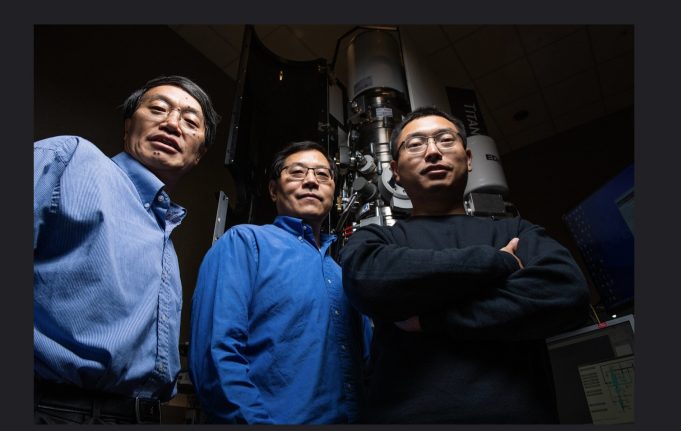
Scientists have uncovered a root cause of the growth of needle-like structures—known as dendrites and whiskers—that plague lithium batteries, sometimes causing a short circuit, failure, or even a fire.
The team, led by Chongmin Wang at the Department of Energy's...

Scientists at Lancaster University and the University of Oxford have created a nano-electronic circuit which vibrates without any external force.
Using a tiny suspended wire, resembling a vibrating guitar string, their experiment shows how a simple nano-device can generate motion directly from...

Nanomaterials could provide the basis of many emerging technologies, including extremely tiny, flexible, and transparent electronics.
While many nanomaterials exhibit promising electronic properties, scientists and engineers are still working to best integrate these materials together to eventually create semiconductors and circuits...


