




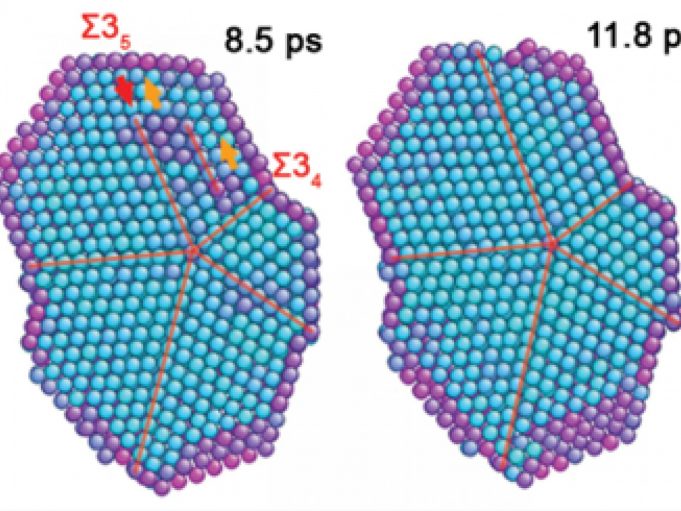
Materials formed on vanishingly small scales are being used in medicine, electronics, manufacturing and a host of other applications. But scientists have only scratched the surface of understanding how to control building blocks on the nanoscale, where simple machines...
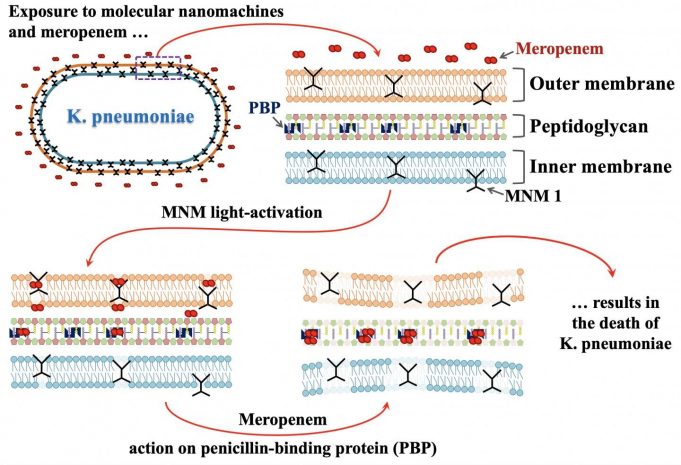
Molecular drills have gained the ability to target and destroy deadly bacteria that have evolved resistance to nearly all antibiotics. In some cases, the drills make the antibiotics effective once again.
Researchers at Rice University, Texas A&M University, Biola University...

Heart disease and stroke are the world's two most deadly diseases, causing over 15 million deaths in 2016 according to the World Health Organization. A key underlying factor in both of these global health crises is the common condition,...
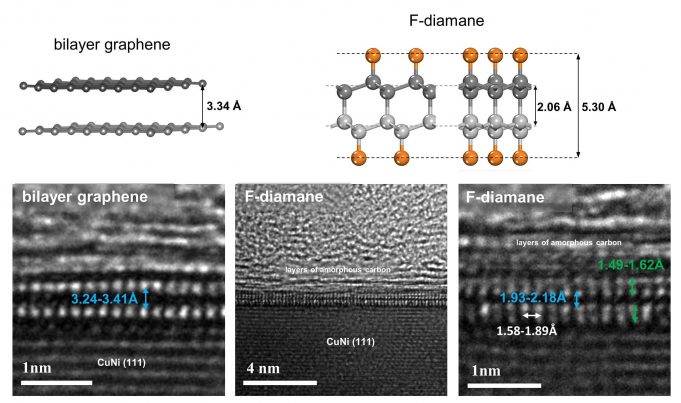
Can two layers of the "king of the wonder materials," i.e. graphene, be linked and converted to the thinnest diamond-like material, the "king of the crystals?" Researchers of the Center for Multidimensional Carbon Materials (CMCM) within the Institute for...

Taking a cue from the self-cleaning properties of the lotus leaf, researchers at Ben-Gurion University of the Negev have shed new light on microscopic forces and mechanisms that can be optimized to remove dust from solar panels to maintain...
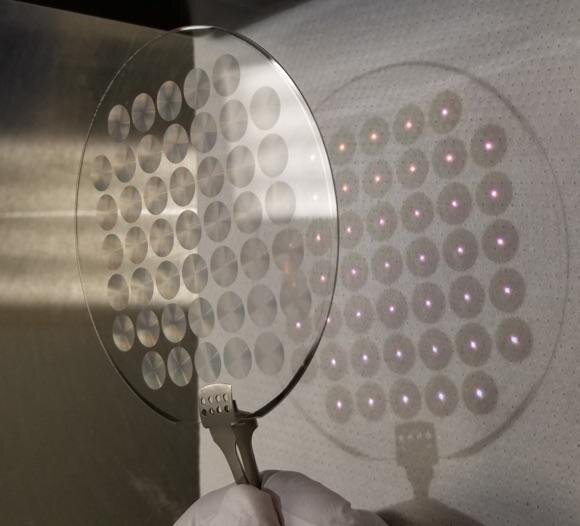
Metalenses—flat surfaces that use nanostructures to focus light—are poised to revolutionize everything from microscopy to cameras, sensors, and displays. But so far, most of the lenses have been about the size of a piece of glitter. While lenses this...

A novel engineering process can deliver a safe and effective dose of medicine for brain tumors without exposing patients to toxic side effects from traditional chemotherapy.
University of Cincinnati professor Andrew Steckl, working with researchers from Johns Hopkins University, developed...
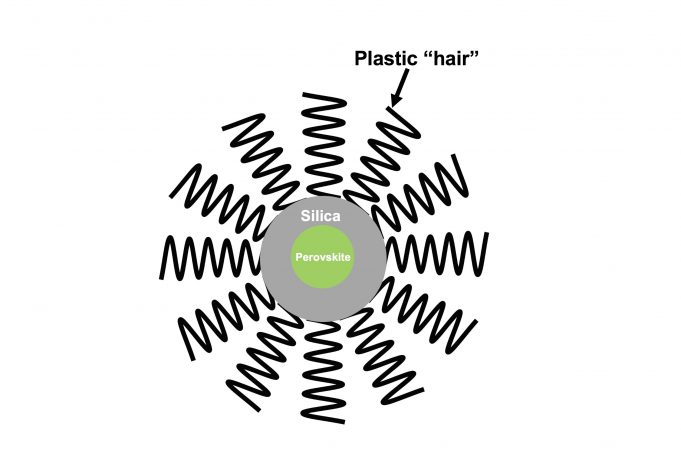
Perovskite nanocrystals hold promise for improving a wide variety of optoelectronic devices—from lasers to light emitting diodes (LEDs) - but problems with their durability still limit the material's broad commercial use.
Researchers at the Georgia Institute of Technology have demonstrated...

The first ever integrated nanoscale device which can be programmed with either photons or electrons has been developed by scientists in Harish Bhaskaran's Advanced Nanoscale Engineering research group at the University of Oxford.
In collaboration with researchers at the universities...
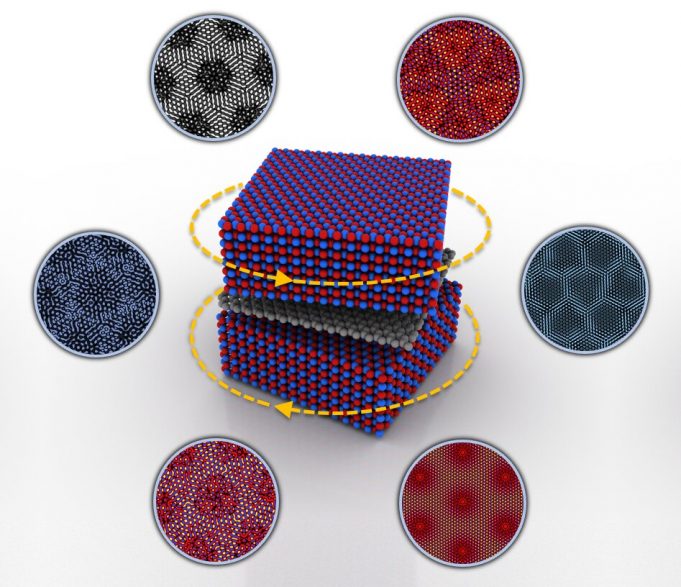
A recent study from the labs of James Hone (mechanical engineering) and Cory Dean (physics) demonstrates a new way to tune the properties of two-dimensional (2-D) materials simply by adjusting the twist angle between them. The researchers built devices...

Modern construction is a precision endeavor. Builders must use components manufactured to meet specific standards -- such as beams of a desired composition or rivets of a specific size. The building industry relies on manufacturers to create these components...


