





MIT chemists have devised a way to rapidly synthesize and screen millions of novel proteins that could be used as drugs against Ebola and other viruses.
All proteins produced by living cells are made from the 20 amino acids that...

Many natural organisms have the ability to repair themselves. Now, manufactured machines will be able to mimic this property. In findings published this week in Nature Materials, researchers at Carnegie Mellon University have created a self-healing material that spontaneously...

Artificial cells that release materials when exposed to light have been embedded in a durable membrane, allowing chemical reactions to be controlled.
These structures could be used to control the synthesis of drugs in the body on demand, as well...

Rutgers University-New Brunswick engineers have created a 3-D-printed smart gel that walks underwater and grabs objects and moves them.
The watery creation could lead to soft robots that mimic sea animals like the octopus, which can walk underwater and bump...

A method to activate targeted drugs, or smart drugs, only at the selected site of action, an approach that improves the drug's therapeutic effect and minimizes side effects, has been developed in a study led by Georgia State University.
Smart...

What if a major heat-trapping greenhouse gas could be consumed to produce a valuable chemical that is in short supply? Chemists at the U.S. Department of Energy's (DOE) Brookhaven National Laboratory have identified a catalyst—a substance that speeds up...

Researchers at Yale and Donghua University in China have developed a new process for creating lithium metal that may boost the energy and capacity of rechargeable batteries.
Lithium metal is considered the best option as a material for anodes in...
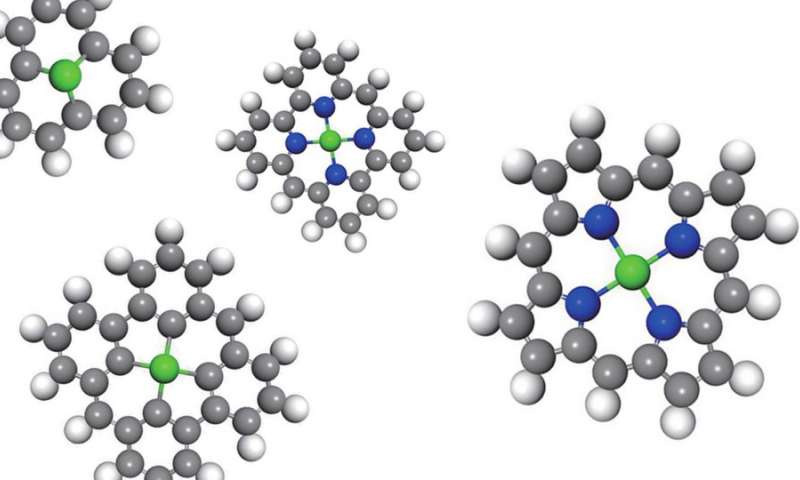
New guidelines laid down by Nebraska and Chinese researchers could steer the design of less costly, more efficient catalysts geared toward revving up the production of hydrogen as a renewable fuel.
Nebraska's Xiao Cheng Zeng and colleagues have identified several...

Researchers have used lasers to connect, arrange and merge artificial cells, paving the way for networks of artificial cells that act like tissues.
The team say that by altering artificial cell membranes they can now get the cells to stick...

Makers of cars, planes, buses - anything that needs strong, lightweight and heat resistant parts - are poised to benefit from a new manufacturing process that requires only a quick touch from a small heat source to send a...

Pharmaceuticals owe their effects mostly to their chemical composition, but the packaging of these drugs into specific physical formulations also need to be done to exact specifications. For example, many drugs are encapsulated in solid microparticles, the size and...


