



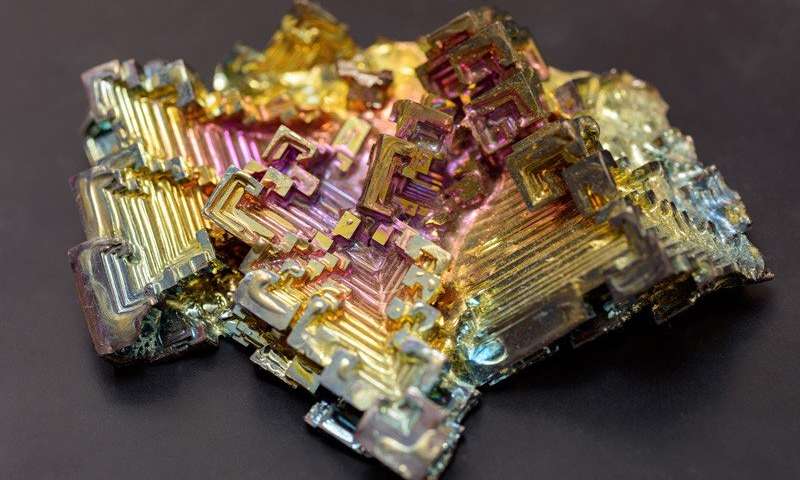
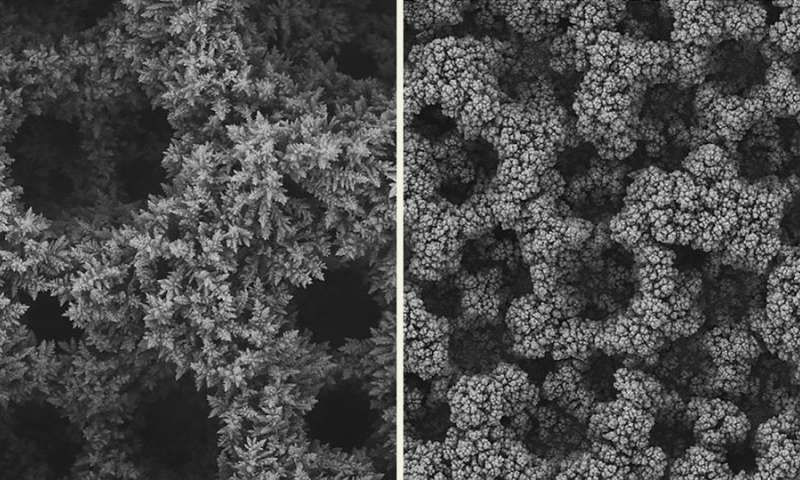
The chunk of metal sitting on a table in Joel Rosenthal's office at the University of Delaware looks like it should belong in a wizard's pocket. Shiny silver with shocks of pink and splashes of gold, it's called bismuth,...

Drugs available to treat multiple sclerosis, a leading cause of neurological disability affecting roughly 2.3 million people worldwide, alter the body's immune system to reduce disease symptoms and disability.
They do not induce, however, repair of damaged axons, the long...

As scientists gain insights into which genes drive diseases, they are pursuing the next logical question: Can gene editing technologies be developed to treat or even cure those diseases? Much of that effort has focused on developing technologies such...

Alzheimer's disease patients lose up to 60% of a component called plasmalogen from the membranes of the cells in their brains, but it's still not known how or why. In a paper to be published in the June 1...

Purdue researchers have observed a way that the brittle nature of ceramics can be overcome as they sustain heavy loads, leading to more resilient structures such as aircraft engine blade coatings and dental implants.
While inherently strong, most ceramics tend...

A Northwestern University research team has found ways to stabilize a new battery with a record-high charge capacity. Based on a lithium-manganese-oxide cathode, the breakthrough could enable smart phones and battery-powered automobiles to last more than twice as long...

Researchers at the Ruhr-Universität Bochum have discovered why bioelectrodes containing the photosynthesis protein complex photosystem I are not stable in the long term. Such electrodes could be useful for converting light energy into chemical energy in an environmentally friendly...

Chinese scientists have turned copper–iodine cluster molecules into aggregated, highly luminescent nanostructures for use in light-emitting diodes (LEDs). The solid-state assemblies made of complexes of the copper–iodine cluster with phosphor–organic compounds as ligands are easily prepared, cheap, and can...
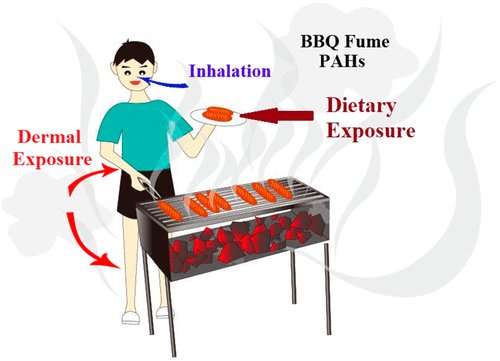
With summer coming, it's only a matter of time before the smells and tastes of barbecued foods dominate the neighborhood. But there's a downside to grilling that can literally get under your skin. In a study appearing in Environmental...
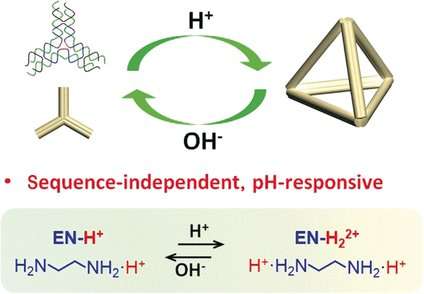
DNA, the carrier of genetic information, has become established as a highly useful building material in nanotechnology. One requirement in many applications is the controlled, switchable assembly of nanostructures. In the journal Angewandte Chemie, scientists have now introduced a...
Fossil fuels have long been the precursor to plastic, but new research from the University of Nebraska-Lincoln and European collaborators could help send that era up in smoke—carbon dioxide, to be exact.
Produced almost entirely from burning fossil fuels, carbon...


