




Evolution by Darwinian natural selection is immensely powerful—both in nature and within laboratories. Using 'laboratory evolution', we can take an enzyme which combines random mutations and functional selection, and improve its function by more than 1000 times. You can...

University of Birmingham scientists are paving the way to swap the lithium in lithium-ion batteries with sodium, according to research published in the Journal of the American Chemical Society.
Lithium-ion batteries (LIB) are rechargeable and are widely used in laptops,...

Physicists at the University of Bath have discovered how to manipulate and control individual molecules for a millionth of a billionth of a second, after being intrigued by some seemingly odd results.
Their new technique is the most sensitive way...

Researchers at UCLA and Columbia University have developed a novel method for tracking the activity of small molecules in the brain, including the neurotransmitters serotonin and dopamine. Pairing tiny artificial receptors with semiconductor devices that are able to function...

A group of new smart materials discovered by researchers at Texas A&M University and their colleagues has the potential to significantly improve the efficiency of fuel burn in jet engines, cutting the cost of flying. The materials, which could...
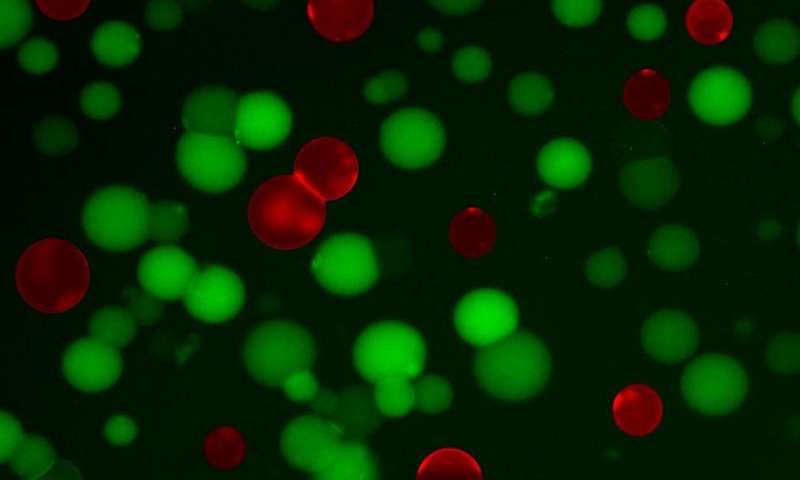
"Lego block" artificial cells that can kill bacteria have been created by researchers at the University of California, Davis Department of Biomedical Engineering. The work is reported Aug. 29 in the journal ACS Applied Materials & Interfaces.
"We engineered artificial...
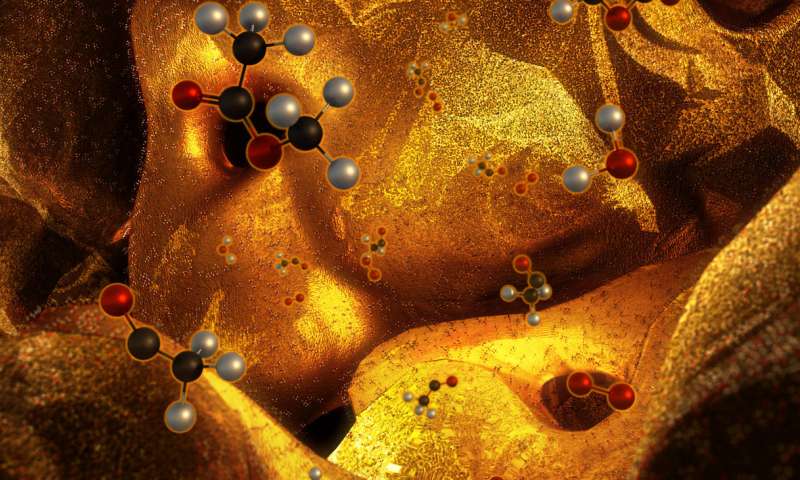
Nanoporous metals are superior catalysts for chemical reactions due to their large surface area and high electrical conductivity, making them perfect candidates for applications such as electrochemical reactors, sensors and actuators.
In a study published today in the journal Science...
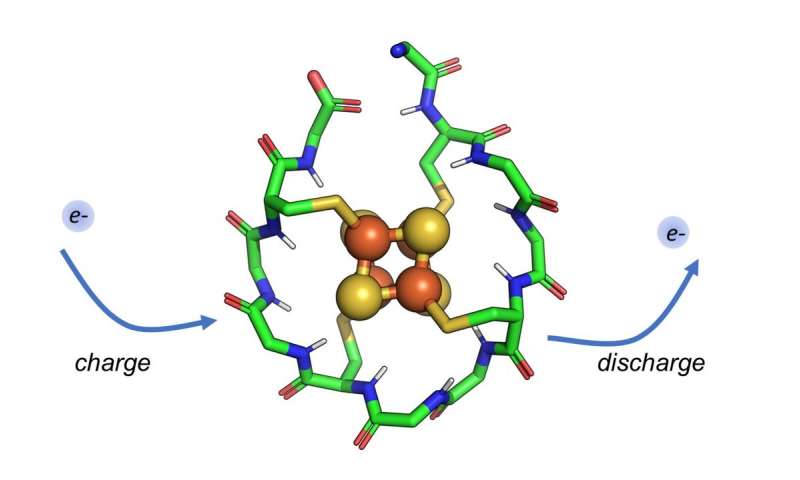
How did life arise on Earth? Rutgers researchers have found among the first and perhaps only hard evidence that simple protein catalysts—essential for cells, the building blocks of life, to function—may have existed when life began.
Their study of a...

As chemistry has gotten more advanced and the chemical reactions more complex, it's no longer always practical for researchers to sit down at a lab bench and start mixing chemicals to see what they can come up with.
Tom Miller,...

A team of Brigham and Women's Hospital researchers have developed a way to bioprint tubular structures that better mimic native vessels and ducts in the body. The 3-D bioprinting technique allows fine-tuning of the printed tissues' properties, such as...
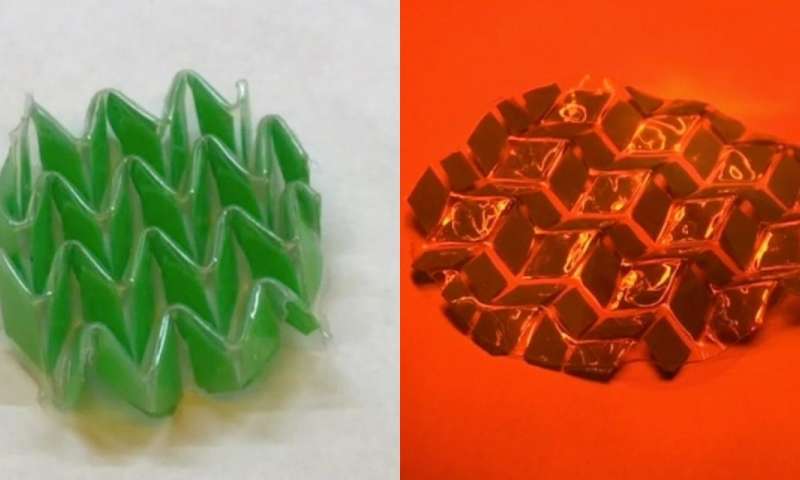
A new material developed by University of Colorado Boulder engineers can transform into complex, pre-programmed shapes via light and temperature stimuli, allowing a literal square peg to morph and fit into a round hole before fully reverting to its...


