


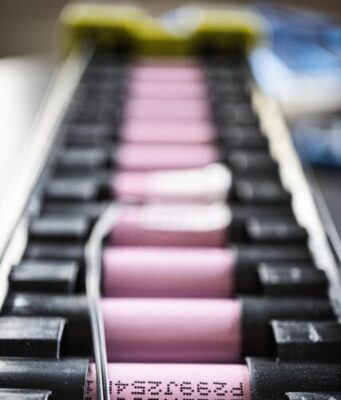


Tufts University engineers have developed a novel fabrication method to create dyed threads that change color when they detect a variety of gases. The researchers demonstrated that the threads can be read visually, or even more precisely by use...

By focusing light down to the size of an atom, scientists at the University of California, Irvine have produced the first images of a molecule's normal modes of vibration—the internal motions that drive the chemistry of all things, including...

Traditional surgery to reshape a nose or ear entails cutting and suturing, sometimes followed by long recovery times and scars. But now, researchers have developed a "molecular surgery" process that uses tiny needles, electric current and 3-D-printed molds to...

Scientists for the first time have found strong evidence that RNA and DNA could have arisen from the same set of precursor molecules even before life evolved on Earth about four billion years ago.
The discovery, published April 1 in Nature...

Researchers at the RIKEN Center for Sustainable Resource Science (CSRS) in Japan have developed a new computational mass-spectrometry system for identifying metabolomes—entire sets of metabolites for different living organisms. When the new method was tested on select tissues from...

In recent years, researchers have tried to capture the electrical current that bacteria generate through metabolism. So far, however, the transfer of current from the bacteria to a receiving electrode has been highly inefficient. Now, researchers from institutions including...
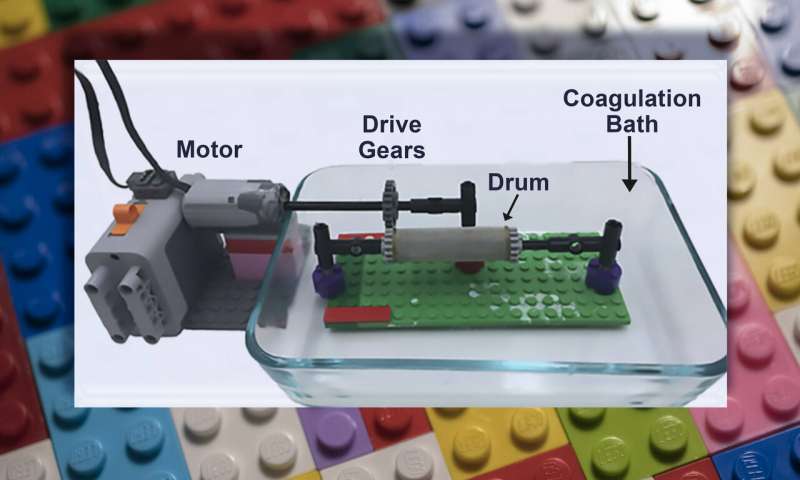
A new technique to spin starch fibers using Lego pieces could have future applications for lab-grown "clean" meat, according to a team of food scientists from Penn State and the University of Alabama.
"There's a lot of interest in natural fibers,"...

New research from Washington University in St. Louis explains the cellular processes that allow a sun-loving microbe to "eat" electricity—transferring electrons to fix carbon dioxide to fuel its growth.
Led by Arpita Bose, assistant professor of biology in Arts &...

It's a popular phrase used to describe people, things, and ideas that just don't mix—"like oil and water." Except it's not entirely true. Oil and water can mix, and can be very difficult to completely separate when brought together....
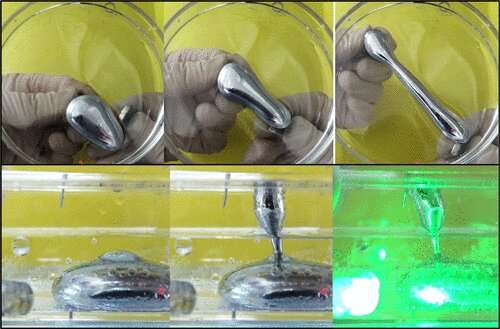
In the blockbuster Terminator movie franchise, an evil robot morphs into different human forms and objects and oozes through narrow openings, thanks to its "liquid-metal" composition. Although current robots don't have these capabilities, the technology is getting closer with the development...

Stanford researchers have devised a way to generate hydrogen fuel using solar power, electrodes and saltwater from San Francisco Bay.
The findings, published March 18 in Proceedings of the National Academy of Sciences, demonstrate a new way of separating hydrogen and...


