




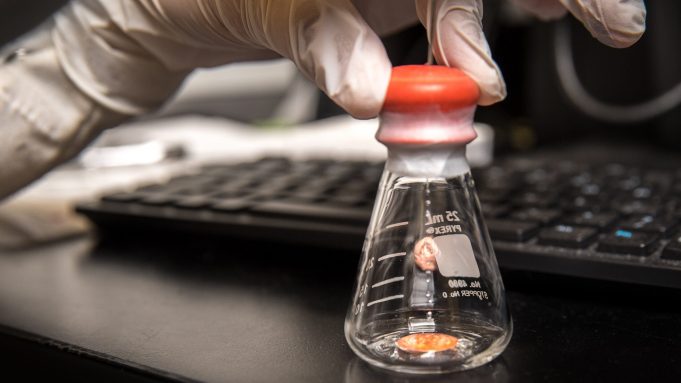
A research team led by the University of California San Diego has discovered the root cause of why lithium metal batteries fail—bits of lithium metal deposits break off from the surface of the anode during discharging and are trapped...

Scientists have developed a large-scale economical method to extract hydrogen (H2) from oil sands (natural bitumen) and oil fields. This can be used to power hydrogen-powered vehicles, which are already marketed in some countries, as well as to generate...

Researchers at Columbia University have developed a way to harness more power from singlet fission to increase the efficiency of solar cells, providing a tool to help push forward the development of next-generation devices.
In a study published this month...

Scientists at the Max Planck Institute for Polymer Research (MPI-P) led by Dr. Kamal Asadi have solved a four-decade-long challenge of producing very thin nylon films that can be used in electronic memory components, for instance. The thin nylon...
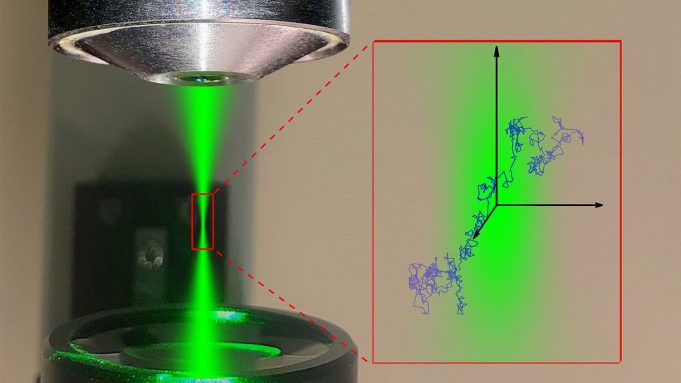
In high school chemistry, we all learned about chemical reactions. But what brings two reacting molecules together? As explained to us by Einstein, it is the random motion of inert molecules driven by the bombardment of solvent molecules. If...
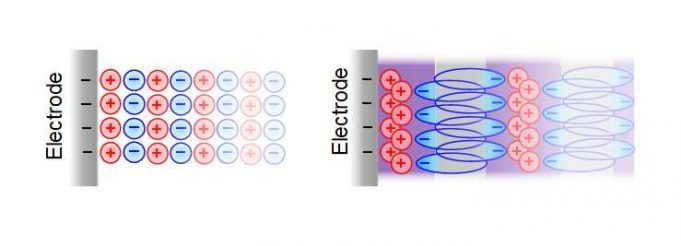
An international team of scientists, including a professor of chemistry from the University of Bristol, has worked out a way to improve energy storage devices called supercapacitors, by designing a new class of detergents chemically related to laxatives.
Their paper,...
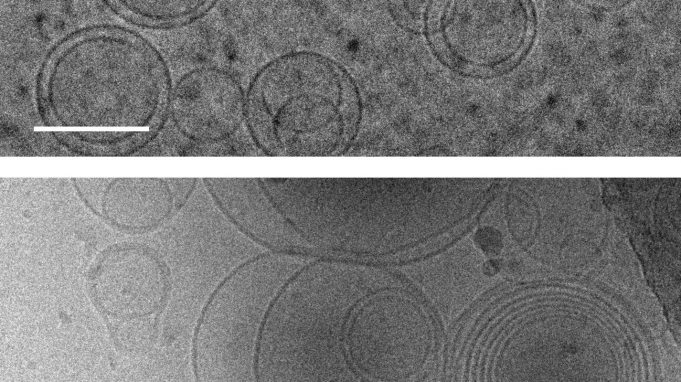
Life on Earth arose about 4 billion years ago when the first cells formed within a primordial soup of complex, carbon-rich chemical compounds.
These cells faced a chemical conundrum. They needed particular ions from the soup in order to perform...
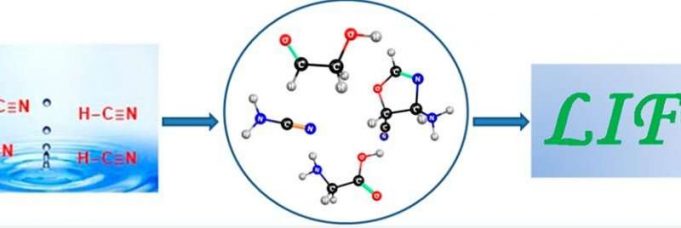
A famous experiment in 1953 showed that amino acids, the building blocks of proteins, could have formed spontaneously under the atmospheric conditions of early Earth. However, just because molecules could form doesn't mean that the process was likely. Now,...

As populations boom and chronic droughts persist, coastal cities like Carlsbad in Southern California have increasingly turned to ocean desalination to supplement a dwindling fresh water supply. Now scientists at the Department of Energy's Lawrence Berkeley National Laboratory (Berkeley...

There are many ways to generate electricity—batteries, solar panels, wind turbines, and hydroelectric dams, to name a few examples… and now, there's rust.
New research conducted by scientists at Caltech and Northwestern University shows that thin films of rust—iron oxide—can...
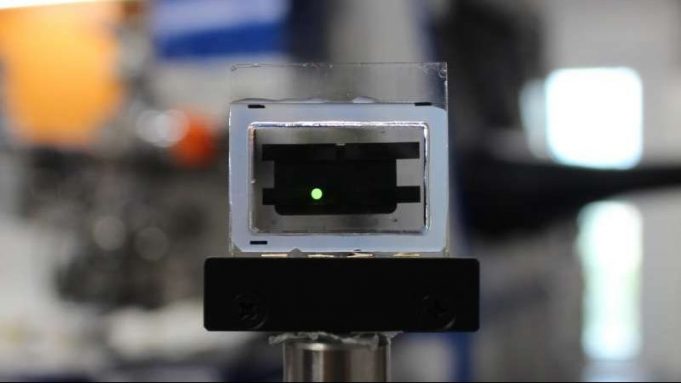
By combining thin organic layers with thick layers of hybrid perovskite, researchers at Kyushu University in Japan have developed micrometer-thick organic light-emitting diodes that could improve the affordability and viewing angles of high-performance displays and televisions in the near...


