




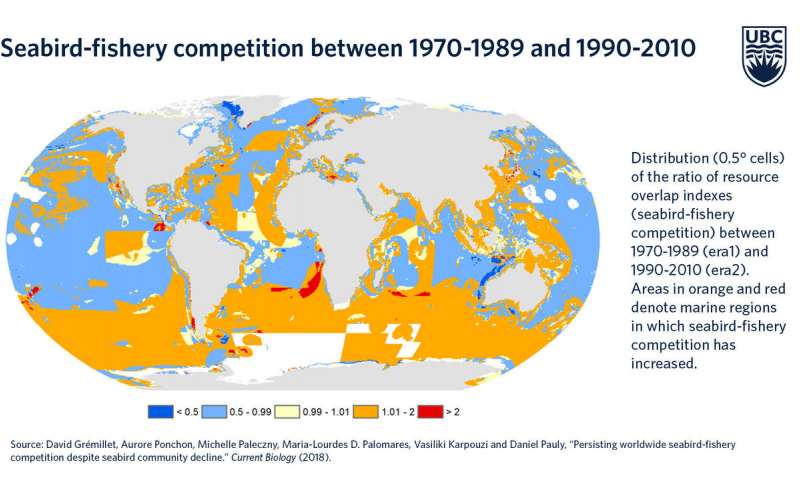
Industrial fisheries are starving seabirds like penguins and terns by competing for the same prey sources, new research from the French National Center for Scientific Research in Montpellier and the Sea Around Us initiative at the University of British...

Parrots are famously talkative, and a blue-fronted Amazon parrot named Moises—or at least its genome—is telling scientists volumes about the longevity and highly developed cognitive abilities that give parrots so much in common with humans. Perhaps someday, it will...
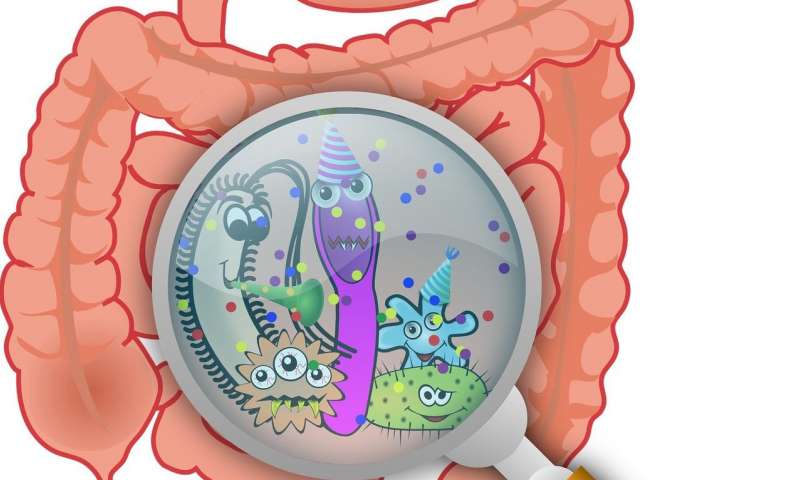
A study carried out in collaboration with the University of Birmingham has used an innovative approach to identify thousands of antibiotic resistance genes found in bacteria that inhabit the human gut.
The human gut is home to trillions of microorganisms,...

Bacteria can become insensitive to antibiotics by picking up resistance genes from the environment. Unfortunately for patients, the stress response induced by antibiotics activates competence in microorganisms, the ability to take up and integrate foreign DNA. Microbiologists from the...
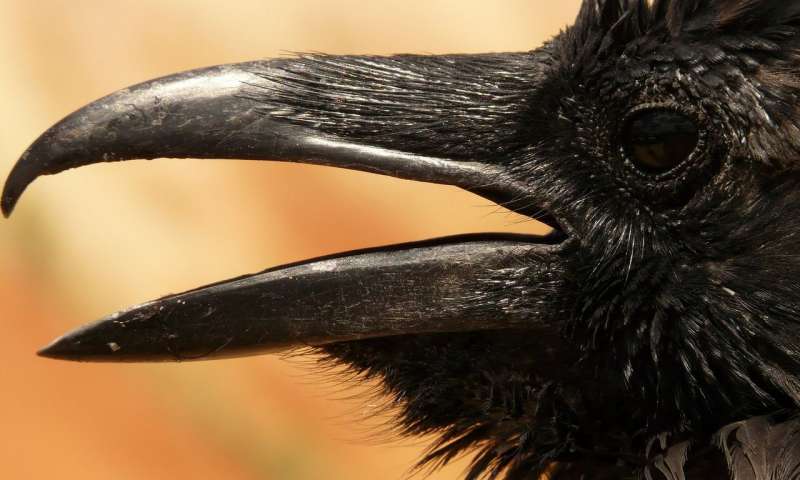
Planning and self control in animals do not require human-like mental capacities, according to a study from Stockholm University. Newly developed learning models, similar to models within artificial intelligence research, show how planning in ravens and great apes can...

Genes that act late in life could explain why women have poorer health than men in older age, according to new research.
Scientists have long wondered why older women are less healthy than older men, given that men at any...

World's first cannabis chromosome map reveals the plant's evolutionary past and points to its future as potential medicine.
THC and CBD, bioactive substances produced by cannabis and sought by medical patients and recreational users, sprung to life thanks to ancient...

Until recently, scientists thought of viruses as mostly small infectious agents, tiny compared to typical bacteria and human cells. So imagine the surprise when biologist Jeff Blanchard and Ph.D. student Lauren Alteio at the University of Massachusetts Amherst, with...
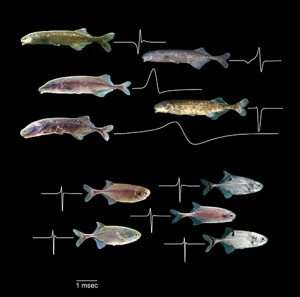
Helmet-heads of the freshwater fish world, African mormyrid fishes are known for having a brain-to-body size ratio that is similar to humans.
But there's actually a great deal of variation in the size of mormyrid brains. These differences provide an...

A new technology that relies on a moth-infecting virus and nanomagnets could be used to edit defective genes that give rise to diseases like sickle cell, muscular dystrophy and cystic fibrosis.
Rice University bioengineer Gang Bao has combined magnetic nanoparticles...

Climate change could pose a threat to male fertility—according to new research from the University of East Anglia.
New findings published today in the journal Nature Communications reveal that heatwaves damage sperm in insects—with negative impacts for fertility across generations.
The...


