




Researchers at the University of Sydney have produced hard data that demonstrates collaborating with Indigenous peoples changed the outcome of a scientific research project. It is the first empirical evidence that culturally diverse teams produce improved results in conservation...

In the last six years, a tool called CRISPR-Cas9 has transformed genetic research, allowing scientists to snip and edit DNA strands at precise locations like a pair of tiny scissors.
But sometimes, it takes more than scissors to do the...

The diversity of the crop Sorghum, a cereal used to make alcoholic drinks, has been decreasing over time due to agricultural practice. To maintain the diversity of the crop and keep it growing farmers will need to revise how...

It takes at least 10 million years for life to fully recover after a mass extinction, a speed limit for the recovery of species diversity that is well known among scientists. Explanations for this apparent rule have usually invoked...

A recent study of centuries-old French-Canadian genealogical data by a Brown University economist revealed evidence that supports his own 17-year-old theory that natural selection played a pivotal role in the emergence of economic growth and industrialization.
Oded Galor, a professor...

A team of researchers from several institutions in the U.K. has found evidence that suggests some seabirds may benefit from the existence of human-built offshore structures. In their paper published in the journal Communications Biology, the group describes their study...
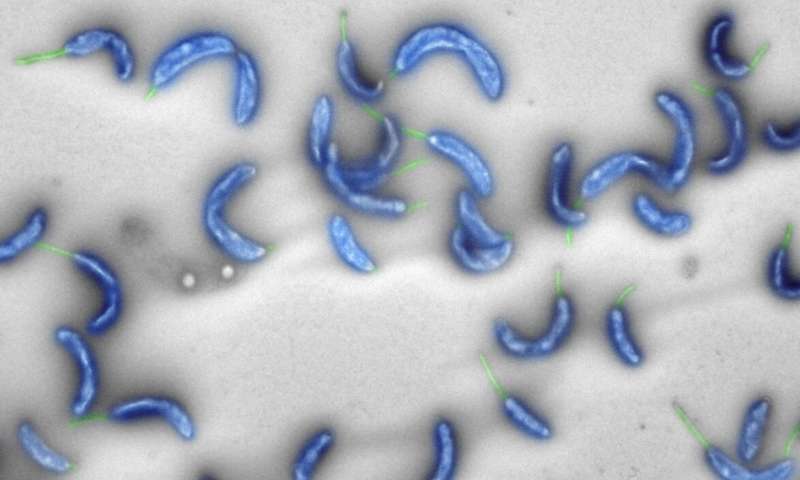
All the genome sequences of organisms known throughout the world are stored in a database belonging to the National Center for Biotechnology Information in the United States. As of today, the database has an additional entry: Caulobacter ethensis-2.0. It...

Many insect pollinator species are disappearing from areas of Great Britain, a new study has found.
The research, led by the Centre for Ecology & Hydrology, measured the presence of 353 wild bee and hoverfly species across the country, from 1980 to...

A team of engineers at the University of California, Berkeley and the Keck Graduate Institute (KGI) of The Claremont Colleges combined CRISPR with electronic transistors made from graphene to create a new hand-held device that can detect specific genetic...

A fungicide commonly used by the agricultural industry to protect grains, fruit and vegetables from mold damage seems to kill fungi by a previously uncharacterized mechanism that delivers a metabolic shock to cells, new research finds.
The fungicide, fludioxonil, was...

Bacteria may travel thousands of miles through the air worldwide instead of hitching rides with people and animals, according to Rutgers and other scientists. Their "air bridge" hypothesis could shed light on how harmful bacteria share antibiotic resistance genes.
"Our...


