




Flocks of birds may appear to move with a single mind, but new research shows jackdaws stick with their mates—even though it harms the flock.
Victorian naturalists were so perplexed by flocks moving together like a single super-organism that they...

First they mapped the genome of wheat; now they have reconstructed its breeding history. Joining forces with other European researchers, scientists at the Helmholtz Zentrum München have examined the genetic diversity of wheat varieties in the WHEALBI study. By...

Before they evolved the ability to fly, two-legged dinosaurs may have begun to flap their wings as a passive effect of running along the ground, according to new research by Jing-Shan Zhao of Tsinghua University, Beijing, and his colleagues.
The...

A University of Sussex mathematician, Dr. Konstantin Blyuss, working with biologists at the National Academy of Sciences of Ukraine, has developed a chemical-free way to precisely target a parasitic worm that destroys wheat crops.
This breakthrough method of pest control...

Most of the knowledge that indigenous communities in South America have about plants is not written down. Now, ecologists at the University of Zurich have analyzed comprehensive information about the services provided by palm trees from multiple regions and...
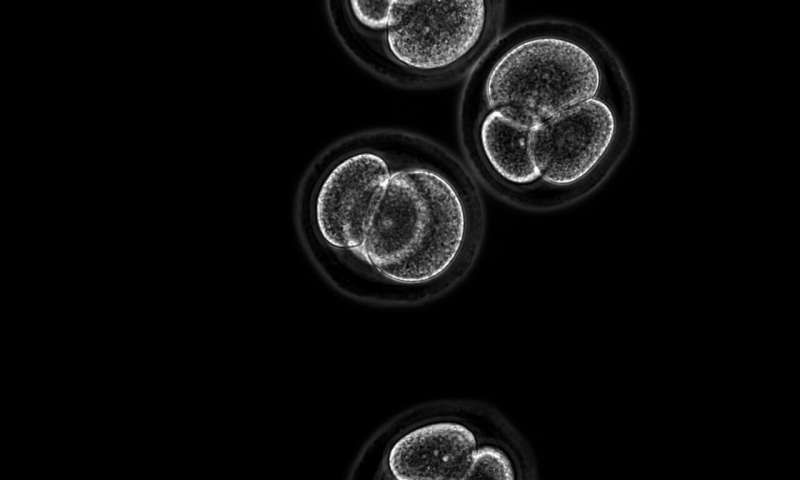
A new, groundbreaking study by the Hebrew University of Jerusalem (HU) found a way to transform skin cells into the three major stem cell types that comprise early-stage embryos. This work has significant implications for modelling embryonic disease and...

A collaborative team led by Prof. Bai Yang and Prof. Chu Chengcai from the Institute of Genetics and Developmental Biology, Chinese Academy of Sciences (CAS), recently examined the variation in root microbiota within 68 indica and 27 japonica rice...

The discovery of the Medusavirus holds clues to the evolution of more complex life. A paper published in the Journal of Virology earlier this year has been creating waves because of the ability of the Medusavirus to turn amoeba into "stone."...

Researchers at the University of Sydney have discovered an antidote to the deadly sting delivered by the most venomous creature on earth—the Australian box jellyfish.
The Australian box jellyfish (Chironex fleckeri) has about 60 tentacles that can grow up to...

African apes adapted to living on the ground, a finding that indicates human evolved from an ancestor not limited to tree or other elevated habitats. The analysis adds a new chapter to evolution, shedding additional light on what preceded...
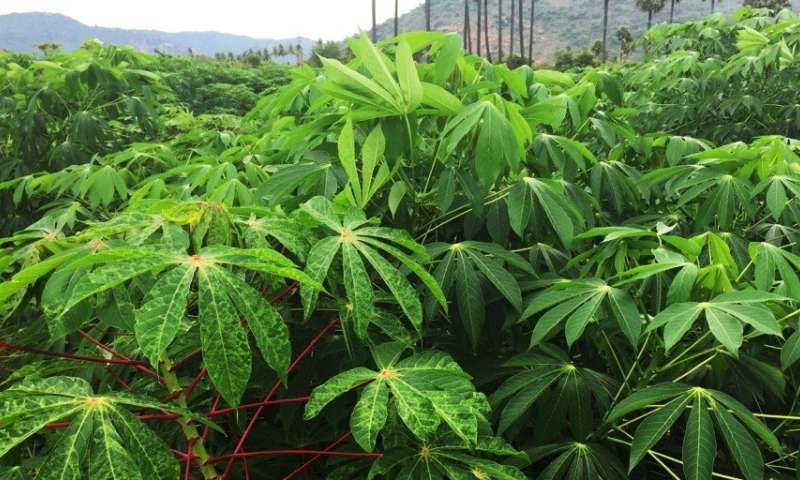
Using gene-editing technology to create virus-resistant cassava plants could have serious negative ramifications, according to new research by plant biologists at the University of Alberta, the University of Liège in Belgium and the Swiss Federal Institute of Technology.
Their research...


