




Researchers at the Donnelly Centre in Toronto have found that dozens of genes, previously thought to have similar roles across different organisms, are in fact unique to humans and could help explain how our species came to exist.
These genes code for...
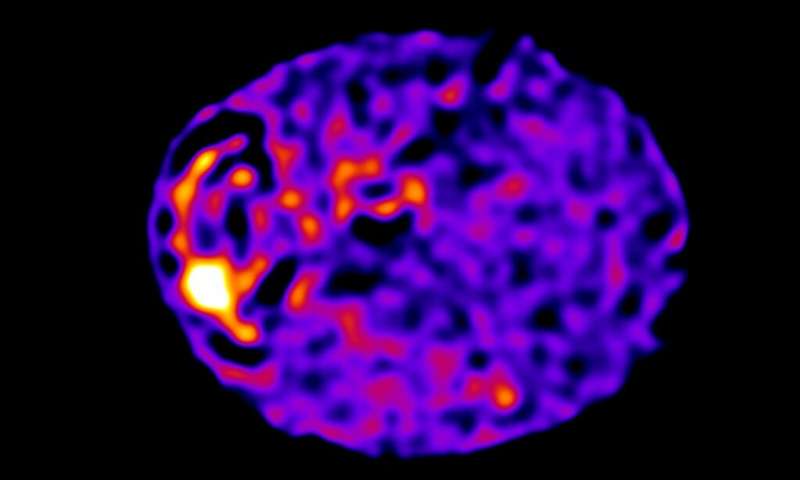
Cells in the body are wired like computer chips to direct signals that instruct how they function, research suggests.
Unlike a fixed circuit board, however, cells can rapidly rewire their communication networks to change their behaviour.
The discovery of this cell-wide web turns our...
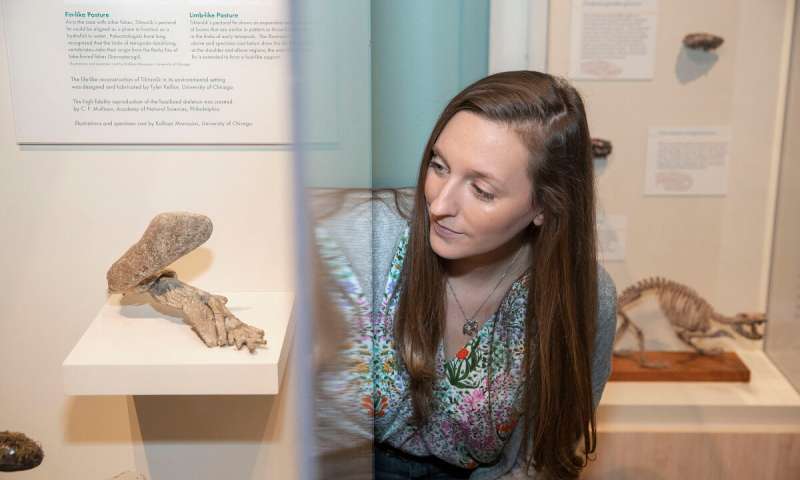
About 400 million years ago, vertebrates first began to crawl from the primordial seas onto land. Last week, thanks to a cutting-edge mathematical-analysis technique, a global research team uncovered how a crucial stage in evolution made that advance possible....

Scientists have developed a new approach to describe the behaviours of microscopic marine larvae, which will improve future predictions of how they disperse and distribute.
A study by the University of Plymouth and the National Oceanography Centre, published in Proceedings of...
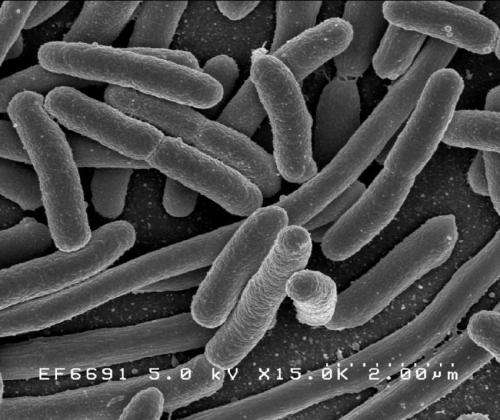
It's not exactly the set of TV's "American Ninja Warrior," but a tiny obstacle course for bacteria has shown researchers how E. coli changes its behavior to rapidly clear obstructions to food. Their work holds implications for not only biology and...

Conservation decisions based on population counts may fail to protect large, slow-breeding animals from irrevocable decline, according to new research coinciding with Endangered Species Day.
"Critical thresholds in so-called vital rates—such as mortality and fertility rates among males and females of various...

IMP scientists from the lab of Alexander Stark show why certain activators—enhancers or cofactor proteins—activate specific promoters. The findings, which are now reported in the journal Nature, could have implications for gene therapies.
Transcriptional regulation is a fundamental mechanism of life,...

Ten per cent of the oxygen we breathe comes from just one kind of bacteria in the ocean. Now laboratory tests have shown that these bacteria are susceptible to plastic pollution, according to a study published in Communications Biology.
"We found...

An all-Princeton research team has identified bacteria that can detect the speed of flowing fluids.
Many kinds of cells can sense flow, just as our skin cells can feel the difference between a gentle breeze and a strong wind. But we...

A molecule sold as a food additive has an underground role, too: helping roots grow faster.
When added to soil, the molecule, called beta-cyclocitral, speeds root growth in riceand tomato plants, scientists report May 8, 2019, in the journal Proceedings of the National Academy of Sciences....

Proteins can provide a detailed look inside the human body and how it protects itself from many diseases. Proteins, which make up about 15% of body mass, are the most abundant solid substances in the human body. They are...


