




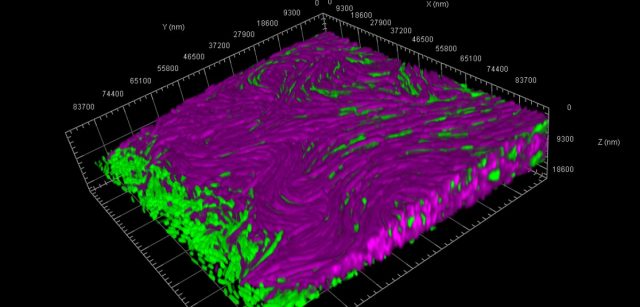
A new study from researchers at Oxford University's Departments of Zoology and Biochemistry shows that warring bacteria will engage in suicidal attacks in vast numbers to take down competitors.
Bacteria are aggressive organisms that have evolved a host of draconian...

Evolutionary biologists have for a long time disagreed on the rate of evolution when new species emerge. Are new species the result of gradual changes—as Charles Darwin suggested—or is evolution speeding up for short periods of time when new...

The most common organism in the oceans, and possibly on the entire planet, is a family of single-celled marine bacteria called SAR11. These drifting organisms look like tiny jelly beans and have evolved to outcompete other bacteria for scarce...
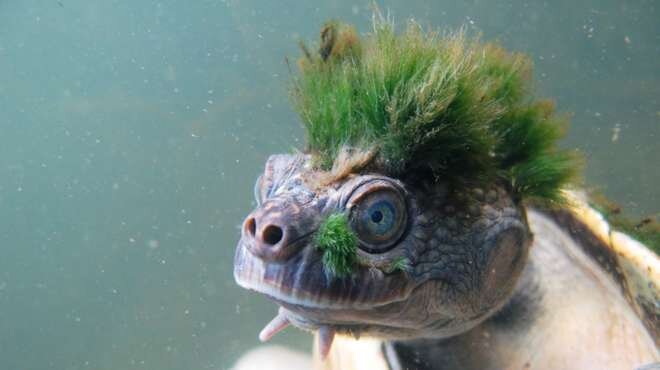
A ZSL study published in Nature Communications today maps the evolutionary history of the world's terrestrial vertebrates—amphibians, birds, mammals and reptiles—for the first time, exploring how areas with large concentrations of evolutionarily distinct and threatened species are being impacted by our...
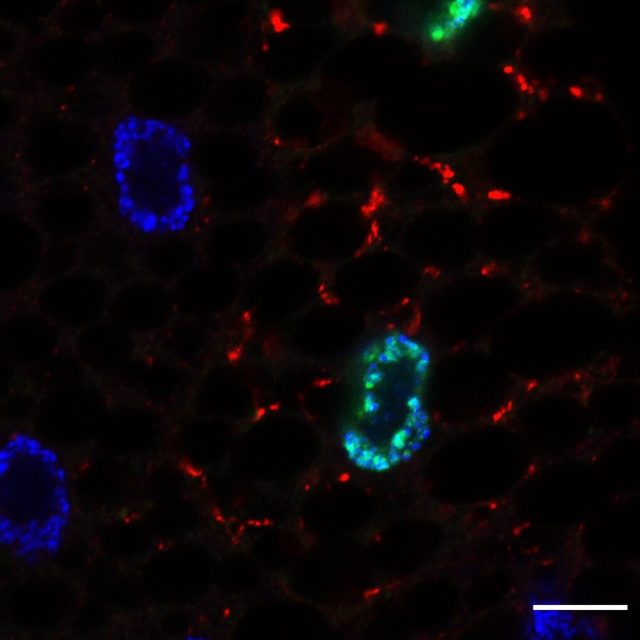
As modern life-styles and high calorie diets drive the UK's obesity levels up, researchers from the University of Warwick have found how cells respond to fasting and activate the process called autophagy, which means a healthier lifestyle can be...

The normal functioning of our hearts is maintained by our body's control center—the brain—via an intricate network of nerves. When this communication is disrupted, it results in heart disease, including heart attacks, sudden cardiac death and problems in blood...

A newly developed video technique has allowed scientists at Goethe University Frankfurt at the Bee Research Institute of the Polytechnical Society to record the complete development of a honeybee in its hive for the first time. It also led...

Stem cell researchers from the University of Copenhagen have designed a model of an early embryonic brain. The model will increase our understanding of how the human brain develops and can thereby accelerate the development of stem cell treatments...
A key epigenetic mark can block the binding of an important gene regulatory protein, and therefore prohibit the gene from being turned off, a new UNSW study in CRISPR-modified mice—published this month in Nature Communications—has shown.
The study has implications for...

When University of Ottawa biologists Kim Mitchell and Vance Trudeau began studying the effects of gene mutations in zebrafish, they uncovered new functions that regulate how males and females interact while mating. We sat down with senior author Professor...

An international team of scientists have identified candidate resistance genes that could protect ash trees from the Emerald Ash Borer (EAB), a deadly pest that is expected to kill billions of trees worldwide.
In the new study, published today in Nature...


