




New research by an international team of chemists describes a new type of artificial cell that can communicate with other cells within the body—with potential applications in the field of smart pharmaceuticals.
"In the future, artificial cells like this one...

Psychedelic drugs such as LSD, psilocybin, and mescaline cause severe and often long-lasting hallucinations, but they show great potential in treating serious psychiatric conditions, such as major depressive disorder. To fully investigate this potential, scientists need to know how...
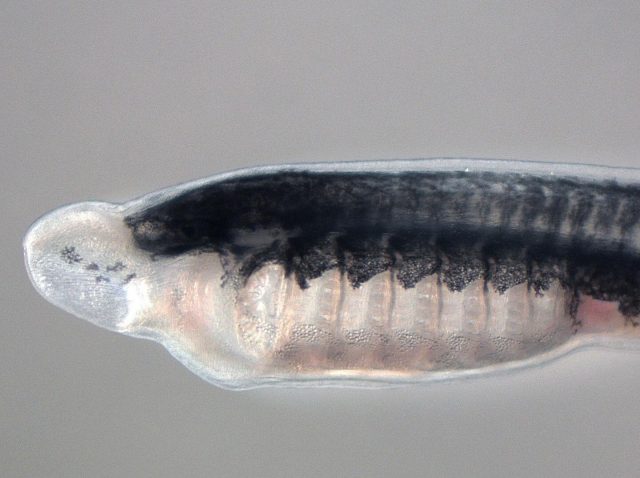
New University of Colorado Boulder-led research finds that the traits that make vertebrates distinct from invertebrates were made possible by the emergence of a new set of genes 500 million years ago, documenting an important episode in evolution where...

A molecule known as ACE2 sits like a doorknob on the outer surfaces of the cells that line the lungs. Since January 2020, researchers have known that SARS-CoV-2, the novel coronavirus that causes COVID-19, primarily uses ACE2 to enter...

A University of Central Florida researcher is co-author of a new paper that may help answer why some animals have a magnetic 'sixth' sense, such as sea turtles' ability to return to the beach where they were born.
The question...

Scientists have found that the tobacco plant Nicotiana can maintain grafts between a broad range of species. Using Nicotiana as an intermediary, they succeeded in indirectly grafting a tomato scion and a rootstock of Florist's daisy, which bore a...
Conservation action has prevented the global extinction of at least 28 bird and mammal species since 1993, a study led by Newcastle University, UK and BirdLife International has shown. The species include Puerto Rican Amazon Amazona vittata, Przewalski's Horse...
Researchers from McGill University have revealed the steps by which two very distinct organisms—bacteria and carpenter ants—have come to depend on one another for survival to become a single complex life form. The study, published today in Nature, shows that...

Researchers have revealed a new molecular mechanism by which bacteria adhere to cellulose fibers in the human gut. Thanks to two different binding modes, they can withstand the shear forces in the body. Scientists of the University of Basel...

By tweaking the genes of microbes in the soil, it may be possible to make arid ecosystems more resilient to climate change and overgrazing, according to a new study. The research is in early stages, and currently consists of...

A novel machine learning model developed by researchers at Michigan State University suggests that mutations to the SARS-CoV-2 genome have made the virus more infectious.
The model, developed by lead researcher Guowei Wei, professor in the departments of Mathematics and...


