




People taking cholesterol-lowering drugs may fare better than others if they catch the novel coronavirus. A new study hints at why: the virus relies on the fatty molecule to get past the cell's protective membrane.
To cause COVID-19, the SARS-CoV-2...
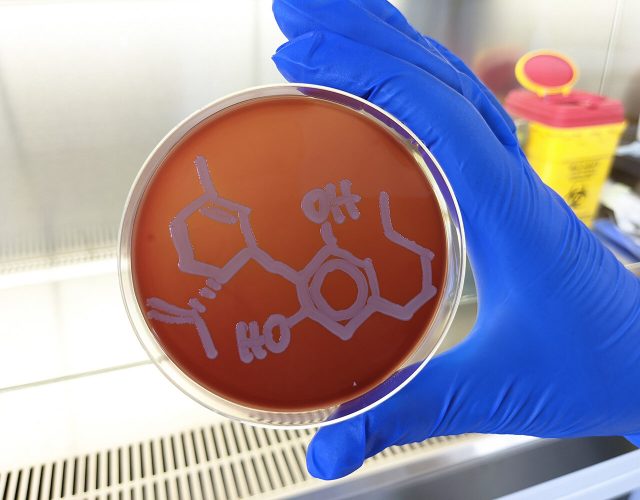
Synthetic cannabidiol, better known as CBD, has been shown for the first time to kill the bacteria responsible for gonorrhea, meningitis and legionnaires disease.
The research collaboration between The University of Queensland and Botanix Pharmaceuticals Limited could lead to the first new...

More than 3,000 animal species in the world today are considered endangered, with hundreds more categorized as vulnerable. Currently, ecologists don't have reliable tools to predict when a species may become at risk.
A new paper published in Nature Ecology and...

A team of scientists from the Leibniz Institute for Zoo and Wildlife Research (Leibniz-IZW) inGermany, Givskud Zoo–Zootopia in Denmark and the University of Milan in Italy succeeded in producing the very first African lionin-vitroembryos after the vitrification of immature...

Scientists studying the body's natural defenses against bacterial infection have identified a nutrient—taurine—that helps the gut recall prior infections and kill invading bacteria, such as Klebsiella pneumoniae (Kpn). The finding, published in the journal Cell by scientists from five institutes of the National...

Each year, thousands of migratory mule deer and pronghorn antelope journey northwest from their winter homes in the Green River Basin, a grassland valley in western Wyoming, to their summer homes in the mountainous landscape near Grand Teton National...

Scientists have used gene-editing advances to achieve a tenfold increase in the production of super-bug targeting formicamycin antibiotics.
The John Innes Centre researchers used the technology to create a new strain of Streptomyces formicae bacteria which over-produces the medically promising...

A major risk of being hospitalised is catching a bacterial infection.
Hospitals, especially areas including intensive care units and surgical wards, are teeming with bacteria, some of which are resistant to antibiotics—they are infamously known as 'superbugs'.
Superbug infections are difficult and...
Biotechnologists at Delft University of Technology have built an artificial chromosome in yeast. The chromosome can exist alongside natural yeast chromosomes, and serves as a platform to safely and easily add new functions to the micro-organism. Researchers can use...

When Michigan State University's Gemma Reguera first proposed her new research project to the National Science Foundation, one grant reviewer responded that the idea was not "environmentally relevant."
As other reviewers and the program manager didn't share this sentiment, NSF...

New probes allow scientists to see four-stranded DNA interacting with molecules inside living human cells, unraveling its role in cellular processes.
DNA usually forms the classic double helix shape of two strands wound around each other. While DNA can form...


