



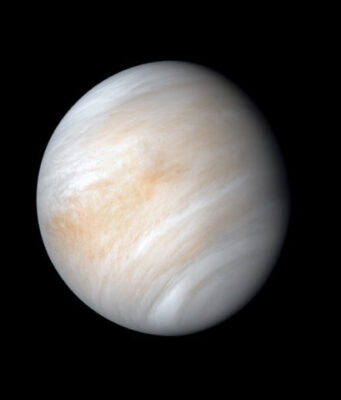

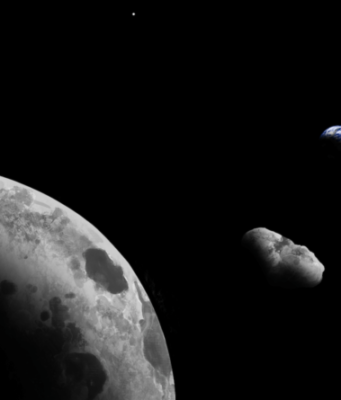

"But where did the hot Neptunes go?" This is the question astronomers have been asking for a long time, faced with the mysterious absence of planets the size of Neptunes very close to their star. A team of researchers,...
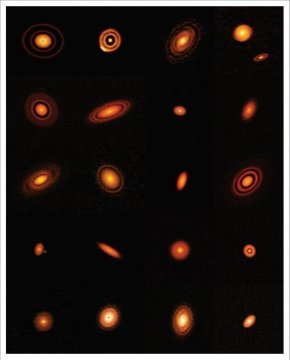
Astronomers have cataloged nearly 4,000 exoplanets in orbit around distant stars. Though the discovery of these newfound worlds has taught us much, there is still a great deal we do not know about the birth of planets and the...

In findings published today in The Astrophysical Journal, University of Texas at Austin astronomers report that they have stumbled on an extraordinary galaxy that may corroborate a recently contested theory about dark matter.
Dark matter is matter that does not...
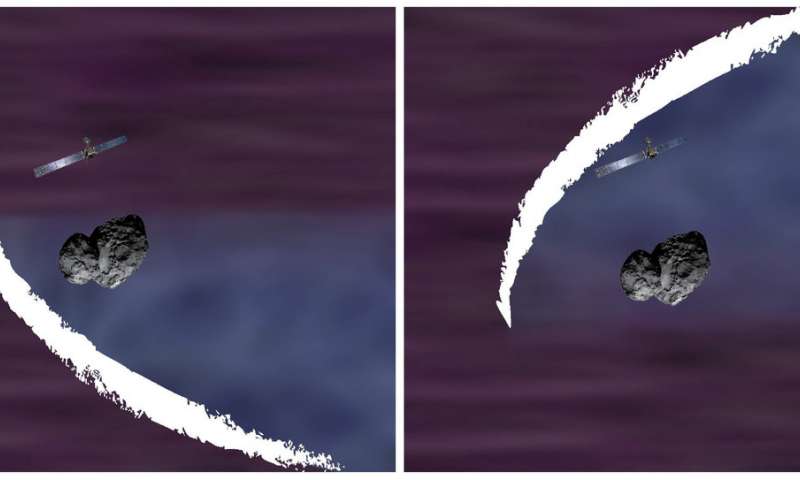
A new study reveals that, contrary to first impressions, Rosetta did detect signs of an infant bow shock at the comet it explored for two years – the first ever seen forming anywhere in the solar system.
From 2014 to...

Astronomers use stellar eclipses to study the atmosphere of accretion disks around compact stars. SRON-researchers observed this method on a low-mass X-ray binary. They find a thicker atmosphere than predicted and distinguish two different gas components. The research was...
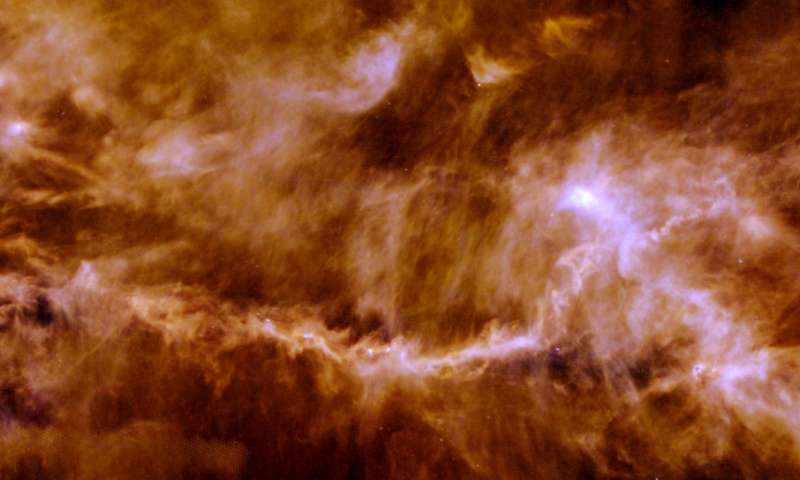
"Super-Earths" and Neptune-sized planets could be forming around young stars in much greater numbers than scientists thought, new research by an international team of astronomers suggests.
Observing a sampling of young stars in a star-forming region in the constellation Taurus,...

About 2.6 million years ago, an oddly bright light arrived in the prehistoric sky and lingered there for weeks or months. It was a supernova some 150 light years away from Earth. Within a few hundred years, long after...

A team led by Southwest Research Institute has concluded that the surface of dwarf planet Ceres is rich in organic matter. Data from NASA's Dawn spacecraft indicate that Ceres's surface may contain several times the concentration of carbon than...
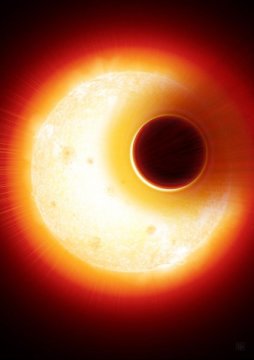
Although helium is a rare element on Earth, it is ubiquitous in the Universe. It is, after hydrogen, the main component of stars and gaseous giant planets. Despite its abundance, helium was only detected recently in the atmosphere of...
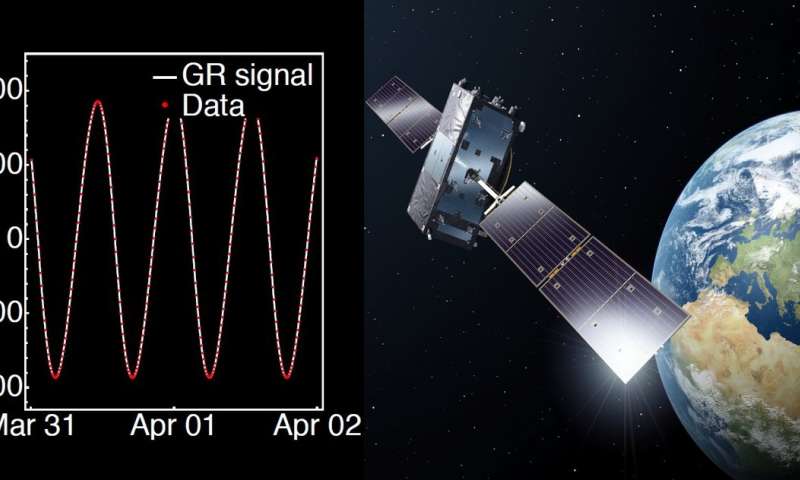
Europe's Galileo satellite navigation system – already serving users globally – has now provided a historic service to the physics community worldwide, enabling the most accurate measurement ever made of how shifts in gravity alter the passing of time,...

It's the first time a visitor from another star system has been seen nearby. But what is it? An asteroid, a comet … or an alien artifact?
Scientists at the SETI Institute have attempted to address this question by using...


