



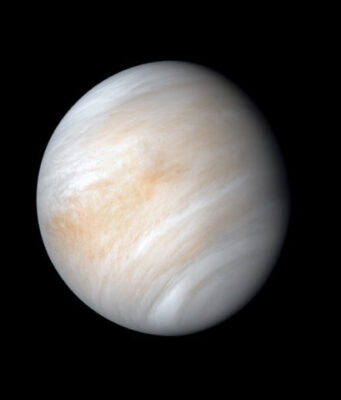


Among the most extreme planets discovered beyond the edges of our solar system are lava planets: fiery hot worlds that circle so close to their host star that some regions are likely oceans of molten lava. According to scientists...

Researchers at the U.S. Department of Energy's (DOE) Princeton Plasma Physics Laboratory (PPPL) have gained a better understanding of a promising method for improving the confinement of superhot fusion plasma using magnetic fields. Improved plasma confinement could enable a...

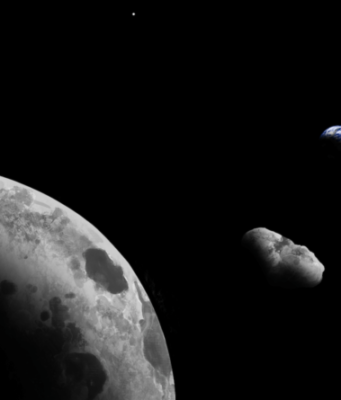
An international team of planetary scientists led by astronomers at AOP have found an asteroid trailing behind Mars with a composition very similar to the moon's. The asteroid could be an ancient piece of debris, dating back to the...
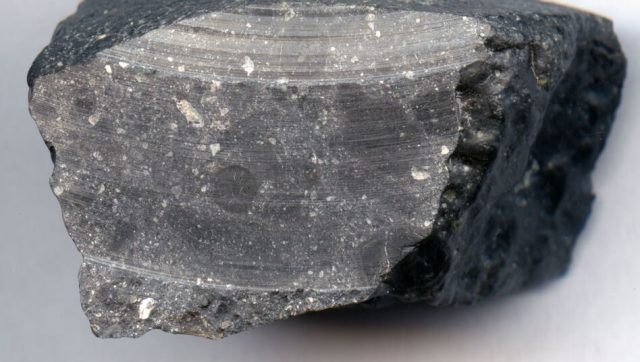
A meteorite that originated on Mars billions of years ago reveals details of ancient impact events on the red planet. Certain minerals from the Martian crust in the meteorite are oxidized, suggesting the presence of water during the impact...

A new study reveals that the Chicxulub impact crater and its hydrothermal system hosted a subterranean ecosystem that could provide a glimpse of Earth's primordial life.
The Chicxulub impact crater, roughly 180 kilometers in diameter, is the best-preserved large impact structure...

A new study using data from NASA's Chandra X-ray Observatory and Hubble Space Telescope gives new insight into an important question: how habitable are planets that orbit the most common type of stars in the Galaxy? The target of...

New work led by Carnegie's Matt Clement reveals the likely original locations of Saturn and Jupiter. These findings refine our understanding of the forces that determined our Solar System's unusual architecture, including the ejection of an additional planet between...

Our galaxy may be teeming with rogue planets, gravitationally unbound to any star. An international team of scientists, led by Polish astronomers, has announced the discovery of the smallest Earth-sized free-floating planet found to date.
Over 4,000 extrasolar planets have been discovered...

The Big Bang may have started the universe, but it's likely that littler bangs played a key role in life on Earth, say Albion College Physics Professor Nicolle Zellner and Chemistry Professor Vanessa McCaffrey. They (along with former student...

Centaurs are minor planets believed to have originated in the Kuiper Belt in the outer solar system. They sometimes have comet-like features such as tails and comae—clouds of dust particles and gas—even though they orbit in a region between...

The gravitational force in the Universe under which it has evolved from a state almost uniform at the Big Bang until now, when matter is concentrated in galaxies, stars and planets, is provided by what is termed 'dark matter."...


