


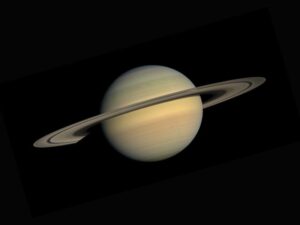
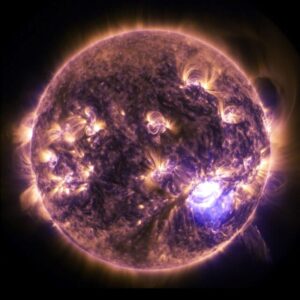


New data from NASA's Cassini, Voyager and Interstellar Boundary Explorer missions show that the heliosphere -- the bubble of the sun's magnetic influence that surrounds the inner solar system -- may be much more compact and rounded than previously...

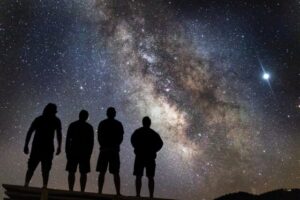
The Milky Way.
Credit: © mandritoiu / Fotolia
In addition to solo stars like our Sun, the universe contains binary systems comprising two massive stars that interact with each other. In many binaries the two stars are close enough to exchange...

This artist's impression shows the exoplanet LHS 1140b, which orbits a red dwarf star 40 light-years from Earth and may be the new holder of the title 'best place to look for signs of life beyond the Solar System'....

Two black holes entwined in a gravitational tango in an earlier artist's conception of black holes.
Credit: NASA
As two galaxies enter the final stages of merging, scientists have theorized that the galaxies' supermassive black holes will form a "binary," or...

This is an illustration of LISA Pathfinder on its way to Earth-sun L1.
Credit: ESA/C. Carreau
LISA Pathfinder, a mission led by ESA (the European Space Agency) with contributions from NASA, has successfully demonstrated critical technologies needed to build a space-based...

Artist concept of the planetary body 2014 UZ224, more informally known as DeeDee. ALMA was able to observe the faint millimeter-wavelength "glow" emitted by the object, confirming it is roughly 635 kilometers across. At this size, DeeDee should have...

Aircraft-induced hole observed at the West Antarctic Ice Sheet Divide Camp, Antarctica (79 28.058 °S 112 05.189 °W, 1806 m elevation) on Dec. 12, 2009, 1400 New Zealand Time. The cloud's bright cumuliform structure with gray fallstreaks below are...

CLOUD chamber.
Credit: CERN
In a study led by the University of Leeds, scientists have solved one of the most challenging and long-standing problems in atmospheric science: to understand how particles are formed in the atmosphere.
The research paper, published online today...

Graphic illustrating CERN's CLOUD experiment.
Credit: Fabienne Marcastel / © 2011 CERN
In a paper published in the journal Nature, the CLOUD experiment at CERN has reported its first results. The CLOUD experiment has been designed to study the effect of...

What our Milky Way might look like to alien astronomers: This image of NGC 2683, a spiral galaxy also known as the "UFO Galaxy" due to its shape, was taken by the Hubble Space Telescope. Since trying to find...

U astronomers and colleagues have found two ultra-compact dwarf galaxies, VUCD3 and M59cO, with supermassive black holes. The findings suggest that the dwarfs are likely tiny leftovers of larger galaxies that were stripped of their outer layers after colliding...


