






Astronomers have tested a method for reconstructing the state of the early Universe by applying it to 4000 simulated universes using the ATERUI II supercomputer at the National Astronomical Observatory of Japan (NAOJ). They found that together with new...

Our universe is dominated by a mysterious matter known as dark matter. Its name comes from the fact that dark matter does not absorb, reflect or emit electromagnetic radiation, making it difficult to detect.
Now, a team of researchers has...

NASA, in collaboration with other leading space agencies, aims to send its first human missions to Mars in the early 2030s, while companies like SpaceX may do so even earlier. Astronauts on Mars will need oxygen, water, food, and...

Using observations from NASA's Transiting Exoplanet Survey Satellite (TESS), an international team of astronomers has discovered a trio of hot worlds larger than Earth orbiting a much younger version of our Sun called TOI 451. The system resides in...

Advances in astronomical observations have resulted in the discovery of an extraordinary number of extrasolar planets, some of which are believed to have a rocky composition similar to Earth. Learning more about their interior structure could provide important clues...

Scientists have challenged our current understanding of how galaxies form by unveiling pictures of a young galaxy in the early life of the Universe which appears surprisingly mature.https://dc52961d40a606470db30c0b3de6919f.safeframe.googlesyndication.com/safeframe/1-0-37/html/container.html
The galaxy, dubbed ALESS 073.1, appears to have all of the features...

Remnants of planets with Earth-like crusts have been discovered in the atmospheres of four nearby white dwarf stars by University of Warwick astronomers, offering a glimpse of the planets that may have once orbited them up to billions of...
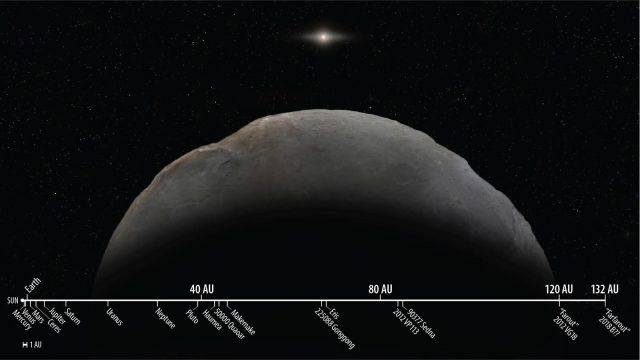
A team of astronomers, including associate professor Chad Trujillo of Northern Arizona University's Department of Astronomy and Planetary Science, have confirmed a planetoid that is almost four times farther from the Sun than Pluto, making it the most distant...
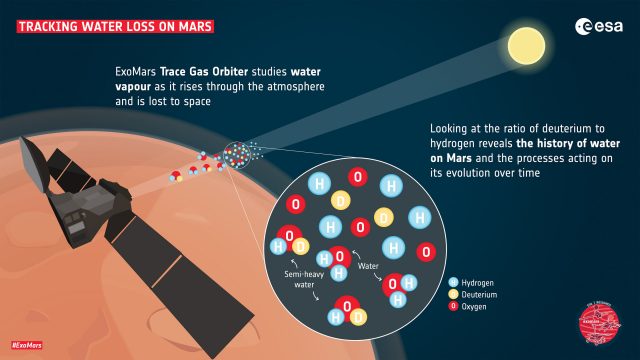
Researchers said Wednesday they had observed water vapour escaping high up in the thin atmosphere of Mars, offering tantalising new clues as to whether the Red Planet could have once hosted life.
The traces of ancient valleys and river channels...

Anew analysis of ceramic chips embedded in meteorites suggests the formation of our solar system was not as quiet and orderly as we once thought
A new study from University of Chicago scientists builds evidence that the baby solar system likely witnessed...

If there's an advanced extraterrestrial civilization inhabiting a nearby star system, we might be able to detect it using its own atmospheric pollution, according to new NASA research. The study looked at the presence of nitrogen dioxide gas (NO2),...


