



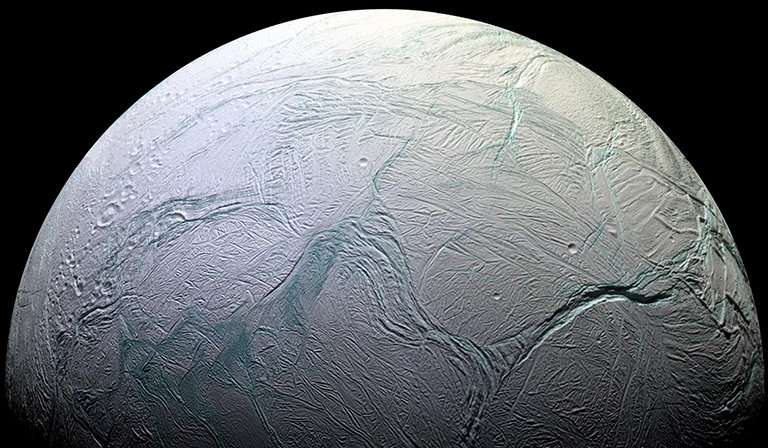
Using mass spectrometry data from NASA's Cassini spacecraft, scientists found that large, carbon-rich organic molecules are ejected from cracks in the icy surface of Saturn's moon Enceladus. Southwest Research Institute scientists think chemical reactions between the moon's rocky core...
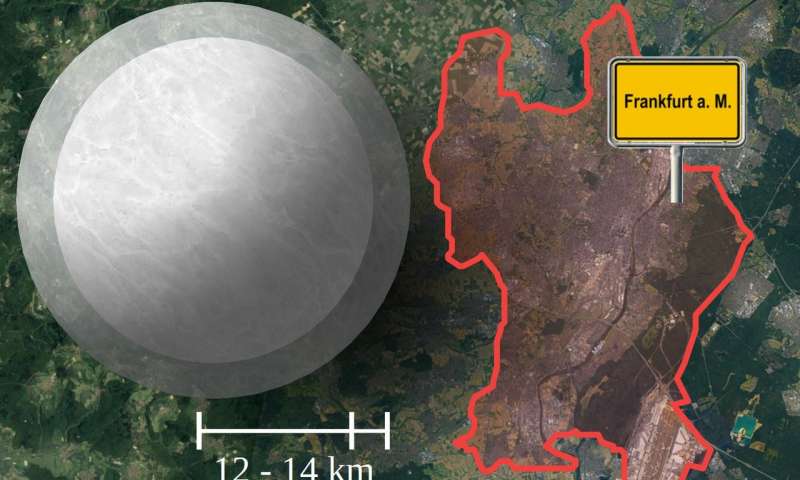
How large is a neutron star? Previous estimates varied from eight to 16 kilometres. Astrophysicists at the Goethe University Frankfurt and the FIAS have now succeeded in determining the size of neutron stars to within 1.5 kilometres by using...

Scientists at MIT and elsewhere have analyzed data from K2, the follow-up mission to NASA's Kepler Space Telescope, and have discovered a trove of possible exoplanets amid some 50,000 stars.
In a paper that appears online today in The Astronomical...

The Fermi Paradox remains a stumbling block when it comes to the search for extra-terrestrial intelligence (SETI). Named in honor of the famed physicist Enrico Fermi who first proposed it, this paradox addresses the apparent disparity between the expected...

It's impossible to obtain direct images of exoplanets as they are masked by the high luminous intensity of their stars. However, astronomers led by UNIGE propose detecting molecules present in the exoplanet's atmosphere in order to make it visible,...

ESA's XMM-Newton observatory has discovered the best-ever candidate for a very rare and elusive type of cosmic phenomenon: a medium-weight black hole in the process of tearing apart and feasting on a nearby star.
There are various types of black...
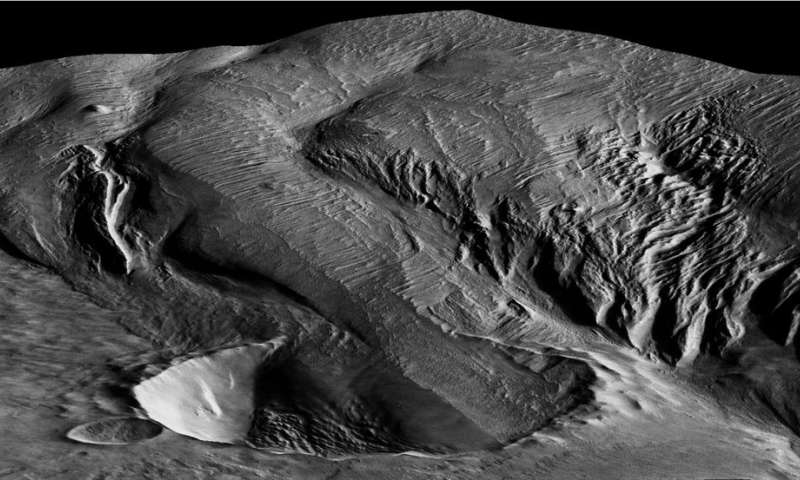
Explosive volcanic eruptions that shot jets of hot ash, rock and gas skyward are the likely source of a mysterious Martian rock formation, a new study finds. The new finding could add to scientists' understanding of Mars's interior and...

A new database of plasma simulations, combined with observational data and powerful visualisation tools, is providing planetary scientists with an unprecedented way to explore some of the Solar System's most interesting plasma environments.
This digital space exploration story starts with...
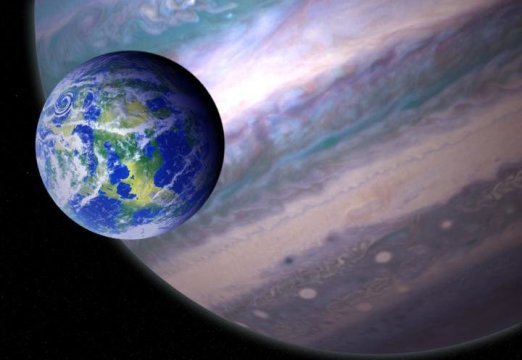
We've all heard about the search for life on other planets, but what about looking on other moons?
In a paper published June 13 in The Astrophysical Journal, researchers at the University of California, Riverside and the University of Southern...

For the first time, astronomers have directly imaged the formation and expansion of a fast-moving jet of material ejected when the powerful gravity of a supermassive black hole ripped apart a star that wandered too close to the cosmic...

Researchers at the University of California, Santa Cruz (UCSC), believe clouds of dust, rather than twin black holes, can explain the features found in active galactic nuclei (AGNs). The team publish their results today (14 June) in a paper...


