




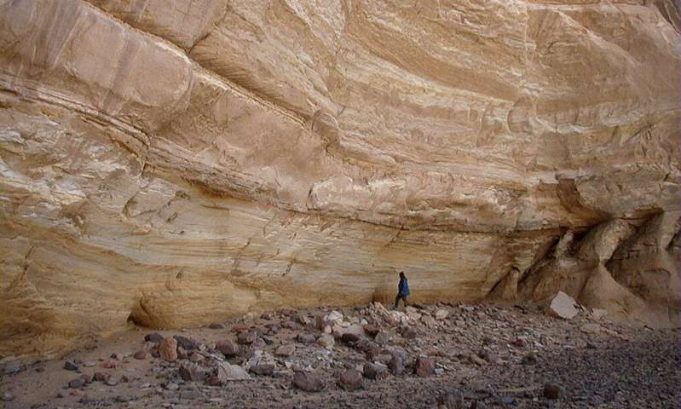
By analysing a prehistoric site in the Libyan desert, a team of researchers from the universities of Huddersfield, Rome and Modena & Reggio Emilia has been able to establish that people in Saharan Africa were cultivating and storing wild...
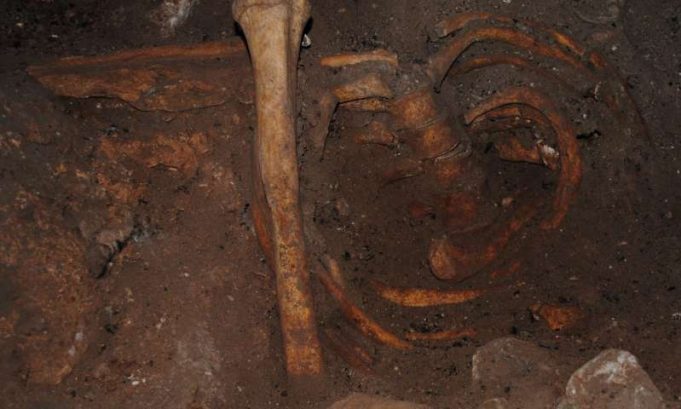
An international team of researchers, led by Johannes Krause and Choongwon Jeong from the Max Planck Institute for the Science of Human History (Jena, Germany), and Abdeljalil Bouzouggar from the Institut National des Sciences de l'Archéologie et du Patrimoine...

Anthropologists at the Smithsonian's National Museum of Natural History and an international team of collaborators have discovered that early humans in East Africa had -- by about 320,000 years ago -- begun trading with distant groups, using color pigments...
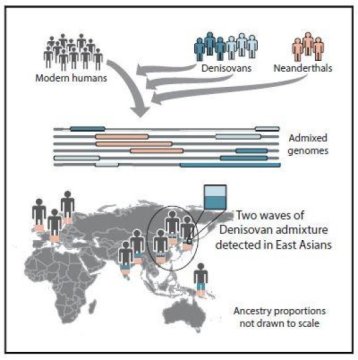
Modern humans co-existed and interbred not only with Neanderthals, but also with another species of archaic humans, the mysterious Denisovans. While developing a new genome-analysis method for comparing whole genomes between modern human and Denisovan populations, researchers unexpectedly discovered...

A comprehensive new study looking at variations in Ichthyosaurus, a common British Jurassic ichthyosaur (sea-going reptile) also known as 'Sea Dragons', has provided important information into recognizing new fossil species.
Professor Judy Massare (SUNY College at Brockport, NY, USA) and Dean Lomax (The...

A new study has re-discovered fossil collections from a 19th century hermit that validate 'phantom' fossil footprints collected in the 1950s showing dicynodonts coexisting with dinosaurs.
Before the dinosaurs, around 260 million years ago, a group of early mammal relatives...

The transition from Late Antiquity to the Middle Ages in Europe is marked by two key events in European history, i.e., the fall of the Western Roman Empire and the migration into this Empire by various barbarian tribes such...
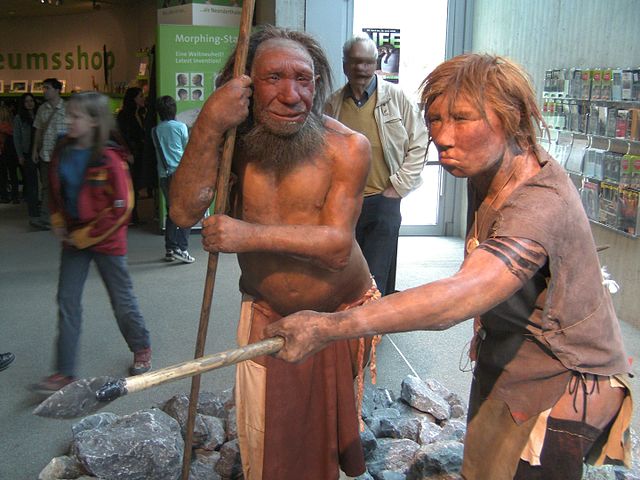
They have an unwarranted image as brutish and uncaring, but new research has revealed just how knowledgeable and effective Neanderthal healthcare was.
The study, by the University of York, reveals that Neanderthal healthcare was uncalculated and highly effective -- challenging...
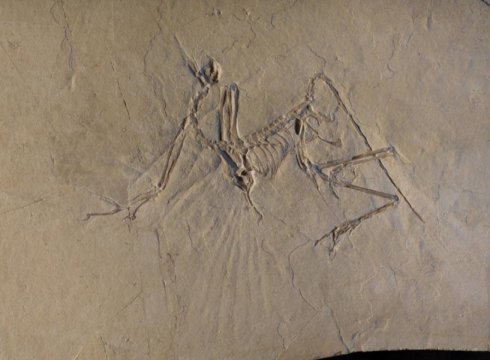
The question of whether the Late Jurassic dino-bird Archaeopteryx was an elaborately feathered ground dweller, a glider, or an active flyer has fascinated palaeontologists for decades. Valuable new information obtained with state-of-the-art synchrotron microtomography at the ESRF, the European Synchrotron (Grenoble,...
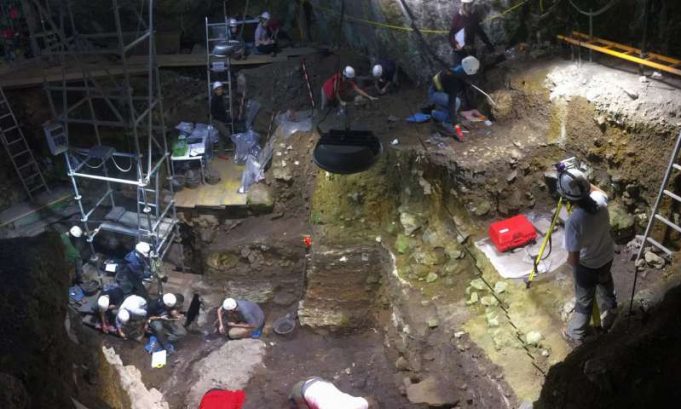
In a multidisciplinary study published in PNAS, an international team of researchers combined archaeological, genetic and stable isotope data to encapsulate 4000 years of Iberian biomolecular prehistory.
The team analyzed human remains of 13 individuals from the north and south of...

Imagine a year in Africa that summer never arrives. The sky takes on a gray hue during the day and glows red at night. Flowers do not bloom. Trees die in the winter. Large mammals like antelope become thin,...


