




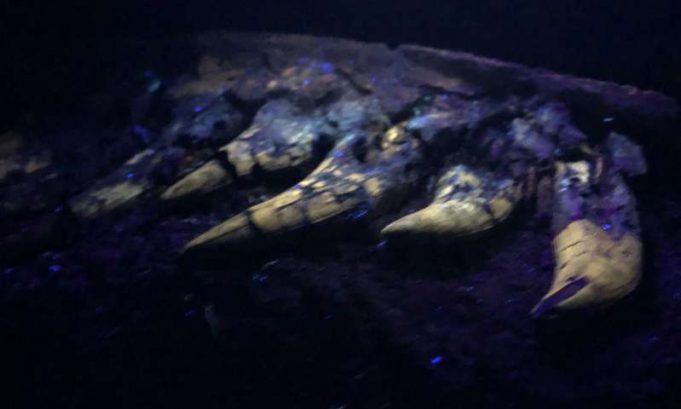
For now, there are just a few things researchers and students at the University of Kansas want people to dig about the new dinosaur they recently excavated in Montana's Hell Creek Formation.
First off, it's a "fabulous" complete section of...
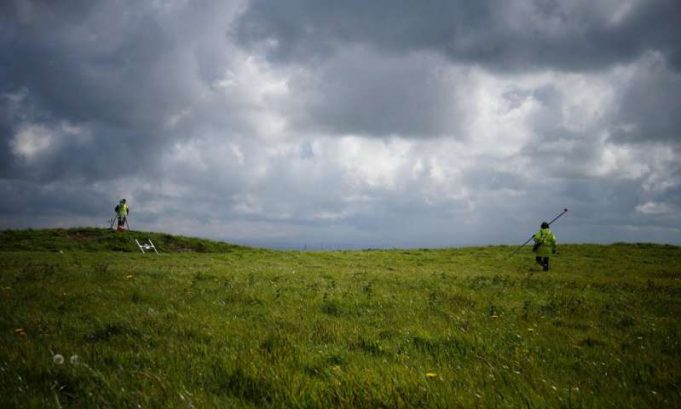
An Archaeologist at The Australian National University (ANU) has discovered a prehistoric Bronze-Age barrow, or burial mound, on a hill in Cornwall and is about to start excavating the untouched site which overlooks the English Channel.
The site dates back...

After a great mass extinction shook the world about 252 million years ago, animal life outside of the ocean began to take hold. The earliest mammals entered the scene, and reptiles—including early dinosaurs—lived on Pangea, the name given to...

Human footprints found off Canada's Pacific coast may be 13,000 years old, according to a study published March 28, 2018 in the open-access journal PLOS ONE by Duncan McLaren and colleagues from the Hakai Institute and University of Victoria,...
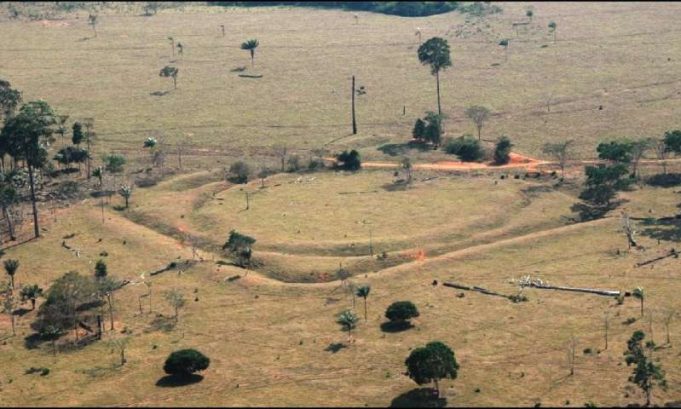
Parts of the Amazon previously thought to have been almost uninhabited were really home to thriving populations of up to a million people, new research shows.
Archaeologists have uncovered evidence that there were hundreds of villages in the rainforest away...

Swansea University Egyptology lecturer Dr Ken Griffin has found a depiction of one of the most famous pharaoh's in history Hatshepsut (one of only a handful of female pharaohs) on an object in the Egypt Centre stores, which had...

An influential physician and a philosopher of early Western medicine, Galen of Pergamon was the doctor of emperors and gladiators. One of his many works, "On the Mixtures and Powers of Simple Drugs," was an important pharmaceutical text that...
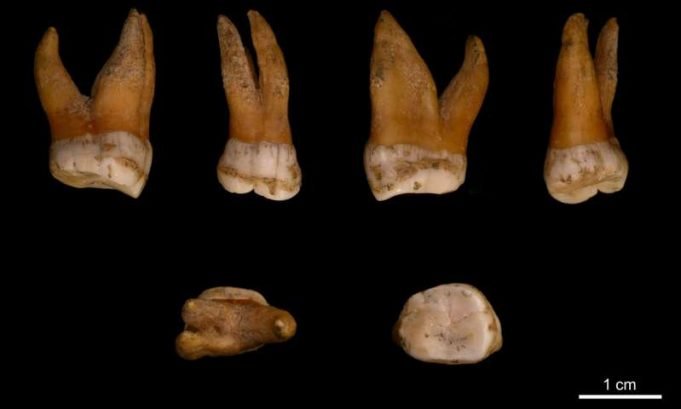
Researchers at the Max Planck Institute for Evolutionary Anthropology in Leipzig, Germany, have sequenced the genomes of five Neandertals that lived between 39,000 and 47,000 years ago. These late Neandertals are all more closely related to the Neandertals that...

An analysis of 115,000-year-old bone tools discovered in China suggests that the toolmaking techniques mastered by prehistoric humans there were more sophisticated than previously thought.
Marks found on the excavated bone fragments show that humans living in China in the...

Police detectives analyze isotopes in human hair to find out where a murder victim was born and grew up. Ashley Sharpe, an archaeologist at the Smithsonian Tropical Research Institute in Panama, and colleagues combined clues from carbon, nitrogen, oxygen...
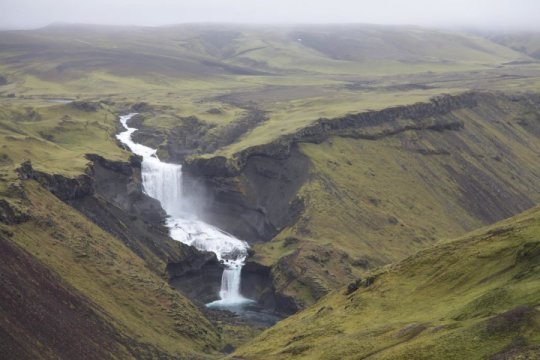
Memories of the largest lava flood in the history of Iceland, recorded in an apocalyptic medieval poem, were used to drive the island's conversion to Christianity, new research suggests.
A team of scientists and medieval historians, led by the University...


