





Australian archaeologists have discovered some of the most detailed examples of rare, small-scale rock art in the form of miniature stencils in a rockshelter traditionally owned by the Marra people.
The research, published in the journal Antiquity, examined the unusual art...
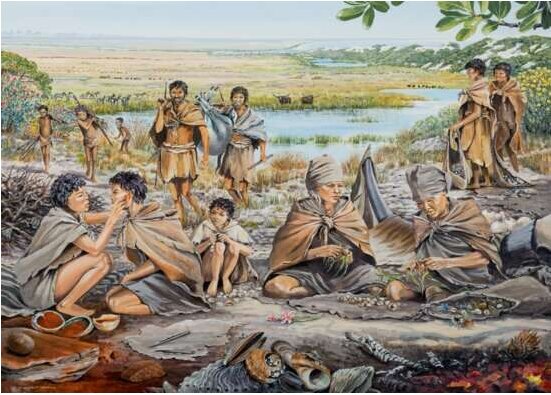
Home to some of the richest evidence for the behavior and culture of the earliest clearly modern humans, the submerged shelf called the Palaeo-Agulhas Plain (PAP) once formed its own ecosystem. Co-author Curtis Marean, Ph.D., Arizona State University, has...

In Europe, Italians have the highest genetic diversity. The gradient of their genetic variability, scattered all over the peninsula, encloses on a small scale the whole genetic variance between southern and continental Europeans. This amazing diversity started to accumulate...

Using human population genetics, ancient pathogen genomics and isotope analysis, a team of researchers assessed the population history of the Lake Baikal region, finding the deepest connection to date between the peoples of Siberia and the Americas. The current...

Climate scientists from the IBS Center for Climate Physics discover that, contrary to previously held beliefs, Neanderthal extinction was neither caused by abrupt glacial climate shifts, nor by interbreeding with Homo sapiens. According to new supercomputer model simulations, only...
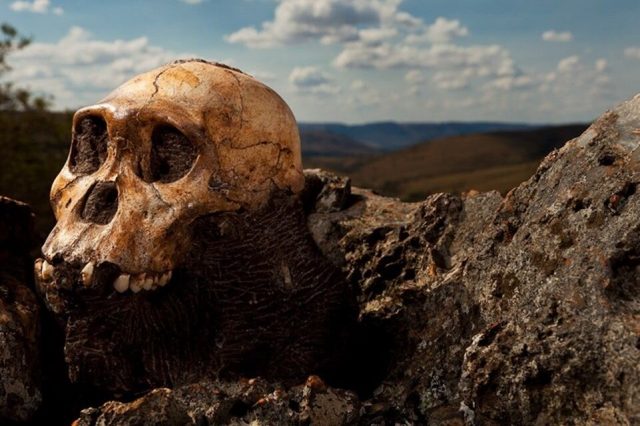
Research by anthropologists at the University of Kent has identified hand use behaviour in fossil human relatives that is consistent with modern humans.
The human lineage can be defined by a transition in hand use. Early human ancestors used their...

A chance discovery by a volunteer dinosaur digger has unearthed an unusual toothless dinosaur, known as an elaphrosaur, that roamed Australia 110 million years ago.
In early 2015, Dinosaur Dreaming volunteer Jessica Parker found a strange and delicate bone during...
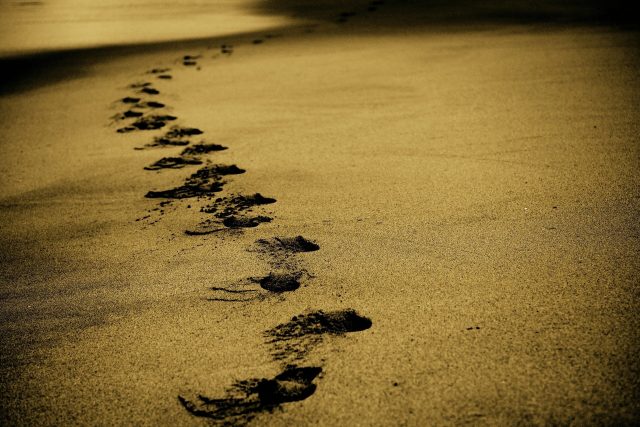
The largest collection of footprints from the human fossil record in Africa is described in Scientific Reports this week. The findings, which further our understanding of human life during the Late Pleistocene period (126,000 to 11,700 years ago), suggest a division...

Long legs may make good runners, but they're great for walking, too. Scientists have generally assumed that long-limbed dinosaurs evolved their leggy proportions for speed to catch prey and avoid predators.
But a new study by the University of Maryland's...

Human self-control evolved in our early ancestors, becoming particularly evident around 500,000 years ago when they developed the skills to make sophisticated tools, a new study suggests.
While early hominins such as Homo erectus could craft basic handaxes as early...

Blade-like tools and animal tooth pendants previously discovered in Europe, and once thought to possibly be the work of Neanderthals, are in fact the creation of Homo sapiens, or modern humans, who emigrated from Africa, finds a new analysis...


