




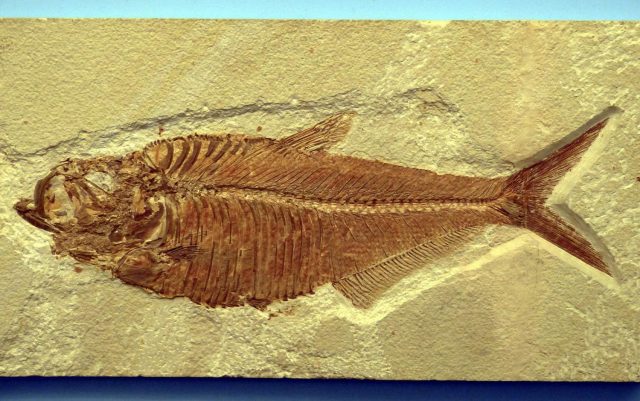
Step aside, skeletons—a new world of biochemical 'signatures' found in all kinds of ancient fossils is revealing itself to paleontologists, providing a new avenue for insights into major evolutionary questions.
In a new study published in the journal Science Advances, Yale...

A team led by Newcastle University, UK, used analysis of ancient coprolites—fossilized excrement—to identify that samples from one of the most famous "pre-Clovis" sites at Paisley Caves, in Oregon, north America, contained human fecal biomarkers.
Their results mean that archeologists...
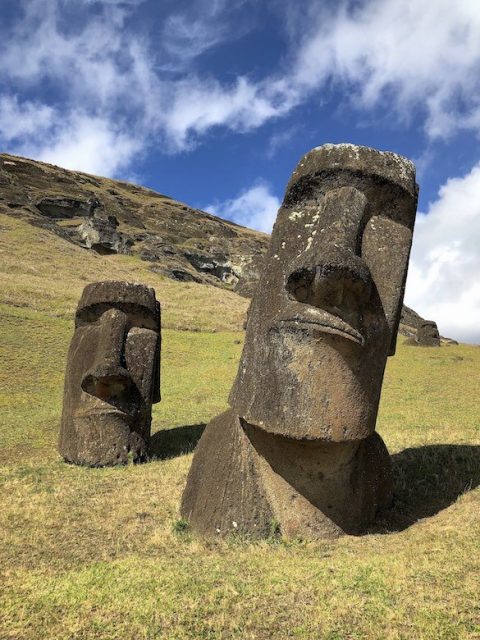
Through deep genetic analyses, Stanford Medicine scientists and their collaborators have found conclusive scientific evidence of contact between ancient Polynesians and Native Americans from the region that is now Colombia—something that's been hotly contested in the historic and archaeological...

The shrine of Saint Thomas Becket, the most important pilgrimage destination in medieval England—visited for hundreds of years by pilgrims seeking miraculous healing—has been digitally reconstructed for the public, according to how experts believe it appeared before its destruction.
In...

Dinosaurs and flying pterosaurs may be known for their remarkable size, but a newly described species from Madagascar that lived around 237 million years ago suggests that they originated from extremely small ancestors. The fossil reptile, named Kongonaphon kely,...

It was all about the ochre.
Thousands of years ago, the first inhabitants of the Americas journeyed deep into caves in present-day Mexico to mine red ochre, a highly valued, natural clay earth pigment used as paint.
Now, according to a new...

The first underwater Aboriginal archeological sites have been discovered off northwest Australia dating back thousands of years ago when the current seabed was dry land.
The discoveries were made through a series of archeological and geophysical surveys in the Dampier...

Nature is full of colors, from the radiant shine of a peacock's feathers or the bright warning coloration of toxic frogs to the pearl-white camouflage of polar bears.
Usually, fine structural detail necessary for the conservation of color is rarely...

People in what is now Washington State were smoking Rhus glabra, a plant commonly known as smooth sumac, more than 1,400 years ago.
The discovery, made by a team of Washington State University researchers, marks the first-time scientists have identified...

The part of the Middle East where the Tigris and Euphrates rivers flow, known in ancient times as Mesopotamia, is often called the cradle of civilization. Today the region corresponds to what is now Kuwait, the eastern parts of...
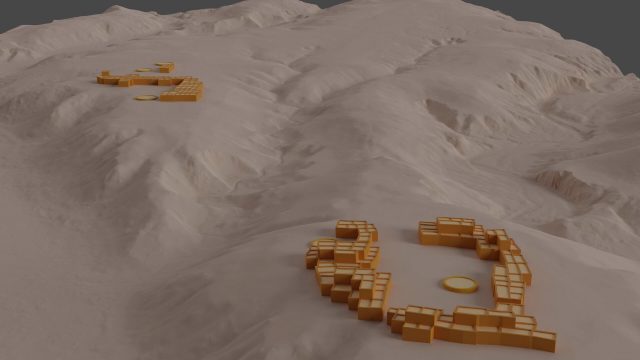
Today's modern cities, from Denver to Dubai, could learn a thing or two from the ancient Pueblo communities that once stretched across the southwestern United States. For starters, the more people live together, the better the living standards.
That finding...


