




All the major groups of animals appear in the fossil record for the first time around 540-500 million years ago -- an event known as the Cambrian Explosion -- but new research from the University of Oxford in collaboration...

Most renderings and reconstructions of pterodactyls and other extinct flying reptiles show a flight pose much like that of bats, which fly with their hind limbs splayed wide apart. But a new method for inferring how ancient animals might...
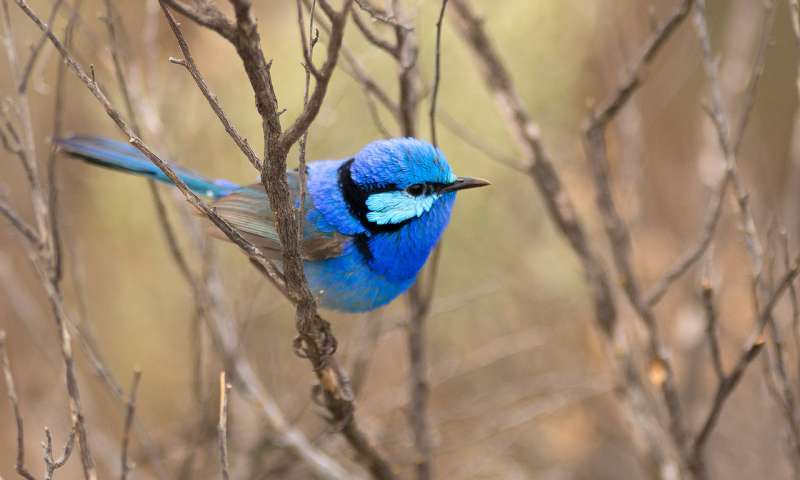
Cooperation among different species of birds is common. Some birds build their nests near those of larger, more aggressive species to deter predators, and flocks of mixed species forage for food and defend territories together in alliances that can...

With individuals weighing in at more than 140 pounds, the critically endangered Chinese giant salamander is well known as the world's largest amphibian. But researchers reporting in the journal Current Biology on May 21 now find that those giant...

Green blood is one of the most unusual characteristics in the animal kingdom, but it's the hallmark of a group of lizards in New Guinea. Prasinohaema are green-blooded skinks, or a type of lizard. The muscles, bones and tongues...

Most dinosaurs buried their eggs and hoped for the best, but some species—including a few hefty ones—built nests and pampered unhatched offspring much as birds do today, researchers reported Wednesday.
Which raises an intriguing question: How did creatures nearly as...

Scientists have created a new type of genetic replication system which demonstrates how the first life on Earth -- in the form of RNA -- could have replicated itself. The scientists from the Medical Research Council (MRC) Laboratory of...

New research has revealed a deadly disease that threatens the survival of the world's frogs originated from East Asia, and global trade was almost certainly responsible for the disease's spread.
The frog chytrid fungus (Batrachochytrium dendrobatidis) has long been identified...

After 25 years of collecting fossils at a Pennsylvania site, scientists at the Academy of Natural Sciences of Drexel University now have a much better picture of an ancient, extinct 12-foot fish and the world in which it lived.
Although...

Scientists have unlocked the secrets of how some predatory spiders catch their prey whilst hunting by successfully training one to jump different distances and heights for the first time.
The study, conducted by researchers at The University of Manchester, is...

Weedy plants will thrive and displace long-lived, ecologically valuable kelp forests under forecast ocean acidification, new research from the University of Adelaide shows.
Published in the journal Ecology, the researchers describe how kelp forests are displaced by weedy marine plants...


