





An international team of scientists led by the University of Groningen's Zernike Institute for Advanced Materials created quantum bits that emit photons that describe their state at wavelengths close to those used by telecom providers. These qubits are based...

Strawberries, blueberries, blackberries, raspberries, and... groundcherries? A little-known fruit about the size of a marble could become agriculture's next big berry crop.
To prepare the groundcherry (Physalis pruinosa) for mainstream farming, Howard Hughes Medical Institute Investigator Zachary Lippman, Joyce Van...

More than forty years after the first initiatives were taken to ban the use of PCBs, the chemical pollutants remain a deadly threat to animals at the top of the food chain. A new study, just published in the...
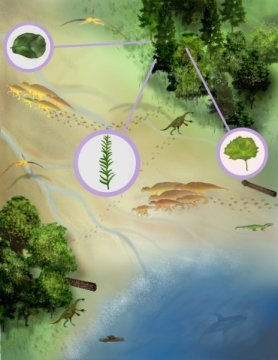
A newly discovered fossil suggests that large, flowering trees grew in North America by the Turonian age, showing that these large trees were part of the forest canopies there nearly 15 million years earlier than previously thought. Researchers from...

After decades of conflicting evidence and numerous publications, scientists at international conservation charity ZSL's (Zoological Society of London) Institute of Zoology, have finally put the 'world's largest bird' debate to rest. Published today (26 September 2018) in Royal Society...
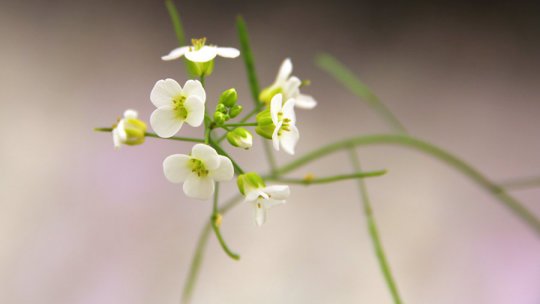
Many wild and cultivated plants arise through the combination of two different species. The genome of these so-called polyploid species often consists of a quadruple set of chromosomes -- a double set for each parental species -- and thus...

On a recent expedition to the remote Brazilian archipelago of St. Paul's Rocks, a new species of reef fish—striped a vivid pink and yellow—enchanted its diving discoverers from the California Academy of Sciences. First spotted at a depth of...
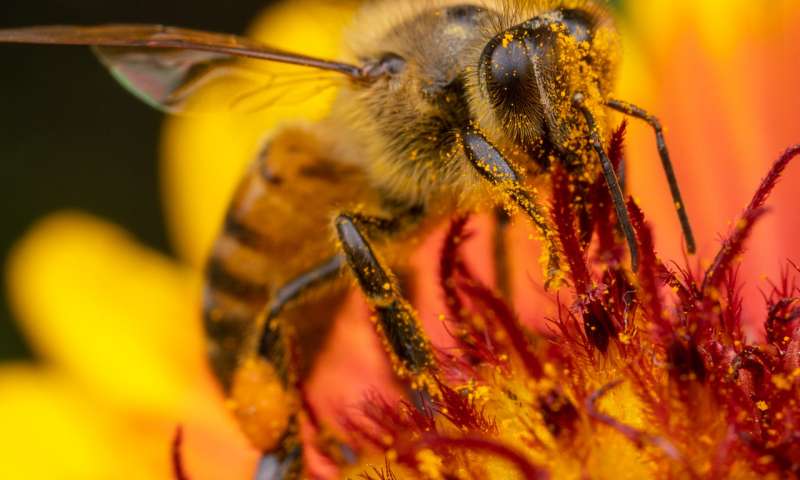
The world's most widely used weed killer may also be indirectly killing bees. New research from The University of Texas at Austin shows that honey bees exposed to glyphosate, the active ingredient in Roundup, lose some of the beneficial...

In 1959, Russian scientists began an experiment to breed a population of silver foxes, selecting and breeding foxes that exhibited friendliness toward people. They wanted to know if they could repeat the adaptations for tameness that must have occurred...
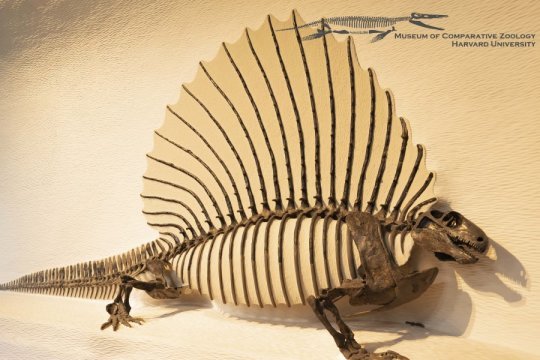
Mammals are unique in many ways. We're warm-blooded and agile in comparison with our reptilian relatives.
But a new study, funded by the National Science Foundation (NSF) and led by Harvard University researchers Stephanie Pierce and Katrina Jones, suggests we're...

A couple of sugars, a dash of enzymes, a pinch of salt, a splash of polyethylene glycol, carefully arranged in watery baths. And researchers had made a synthetic organelle, which they used in a new study to explore some...


