




Orangutan populations are still declining rapidly, despite claims by the Indonesian Government that things are looking better for the red apes. In the journal Current Biology, a team of scientists including Maria Voigt of the German Centre for Integrative...
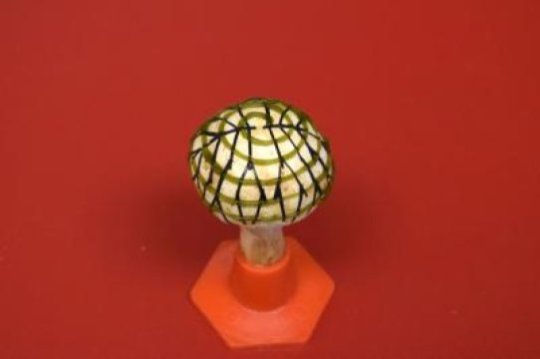
In their latest feat of engineering, researchers at Stevens Institute of Technology have taken an ordinary white button mushroom from a grocery store and made it bionic, supercharging it with 3D-printed clusters of cyanobacteria that generate electricity and swirls...

Moths are a mainstay food source for bats, which use echolocation (biological sonar) to hunt their prey. Scientists such as Thomas Neil, from the University of Bristol in the U.K., are studying how moths have evolved passive defenses over...
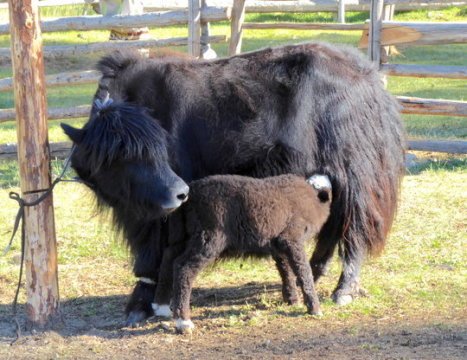
Although dairy pastoralism once made Mongolian steppe herders successful enough to conquer most of Asia and Europe, the origins of this way of life on the East Asian steppe are still unclear. Now an international team of researchers led...

A new study says the colors found in modern birds' eggs did not evolve independently, as previously thought, but evolved instead from dinosaurs.
According to researchers at Yale, the American Museum of Natural History, and the University of Bonn, birds...

When the male bearded manakin snaps its wings at lightning speed, it's more than part of an elaborate, acrobatic mating ritual. The tiny muscle doing the heavy lifting is also the reason this exotic bird has evolved into four...

Compounds derived from coconut oil are better than DEET at repelling blood-sucking insects, according to a new U.S. Department of Agriculture (USDA) study.
Using repellents is one of the most efficient ways to prevent disease transmission and discomfort associated with...

If you encountered an elephant bird today, it would be hard to miss. Measuring in at over 10 feet tall, the extinct avian is the largest bird known to science. However, while you looked up in awe, it's likely...

A meticulous re-creation of a 3-decade-old study of birds on a mountainside in Peru has given scientists a rare chance to prove how the changing climate is pushing species out of the places they are best adapted to.
Surveys of...

In autumn, it is not only the colours that catch the eye, but also the different sizes and shapes of leaves. But what makes leaves of different plants differ so much in their shapes? Scientists at the Max Planck...
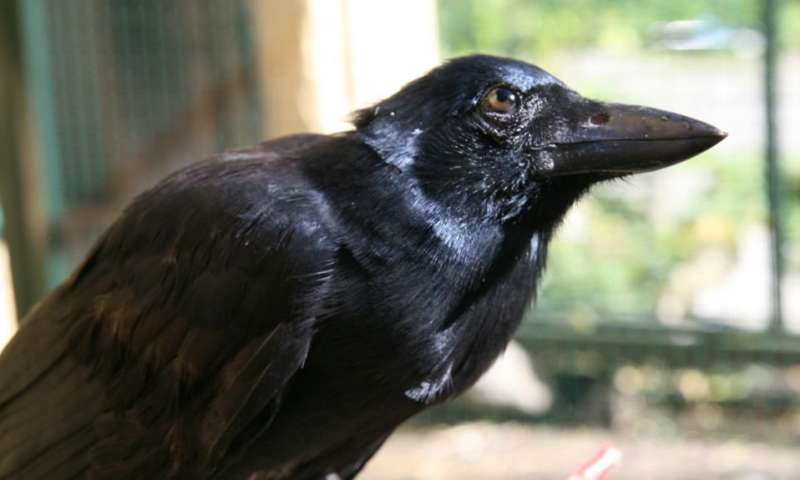
An international team of scientists from the Max Planck Institute for Ornithology and the University of Oxford has revealed that New Caledonian crows are able to create tools by combining two or more otherwise non-functional elements, an ability so...


