

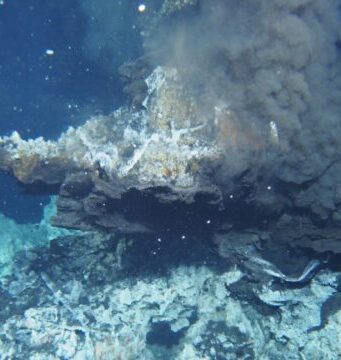


Based on new data published today in the journal Science, it seems increasingly likely that an asteroid or comet impact 66 million years ago reignited massive volcanic eruptions in India, half a world away from the impact site in the...
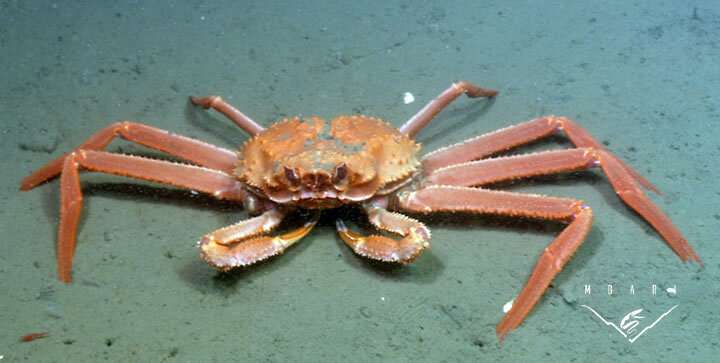
Researchers have documented a group of tanner crabs vigorously feeding at a methane seep on the seafloor off British Columbia—one of the first times a commercially harvested species has been seen using this energy source.
There are many implications, researchers...
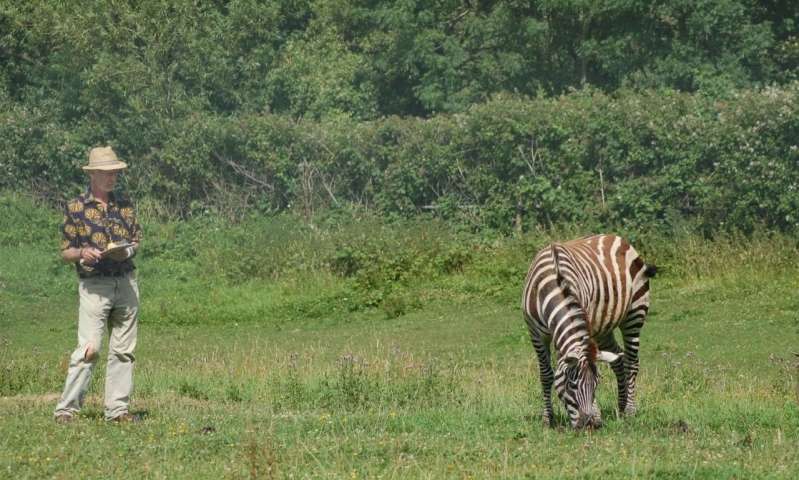
Why do zebras have stripes? A study published in PLOS ONE today takes us another step closer to answering this puzzling question and to understanding how stripes actually work.
The evolution of the zebra's two-tone coat has intrigued scientists for...

The great white shark is one of the most recognized marine creatures on Earth, generating widespread public fascination and media attention, including spawning one of the most successful movies in Hollywood history. This shark possesses notable characteristics, including its...

The key to breeding disease-resistant honeybees could lie in a group of genes—known for controlling hygienic behaviour—that enable colonies to limit the spread of harmful mites and bacteria, according to genomics research conducted at York University.
Some worker honeybees detect...
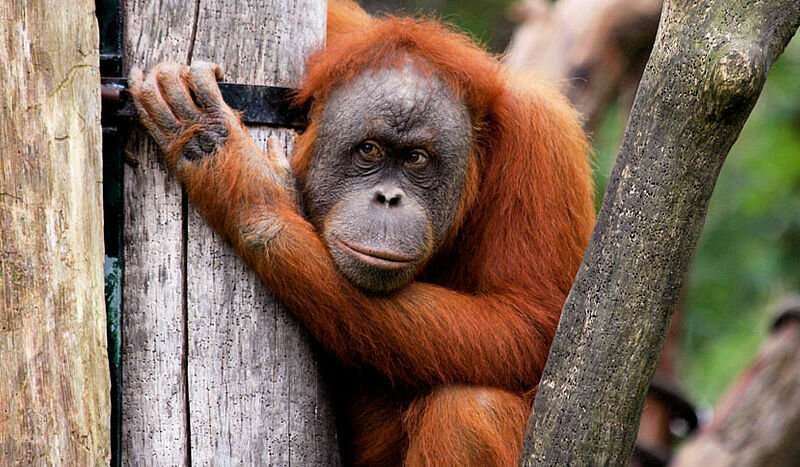
Flexible tool use is closely associated with higher mental processes such as the ability to plan actions. Now a group of cognitive biologists and comparative psychologists from the University of Vienna, the University of St Andrews and the University...
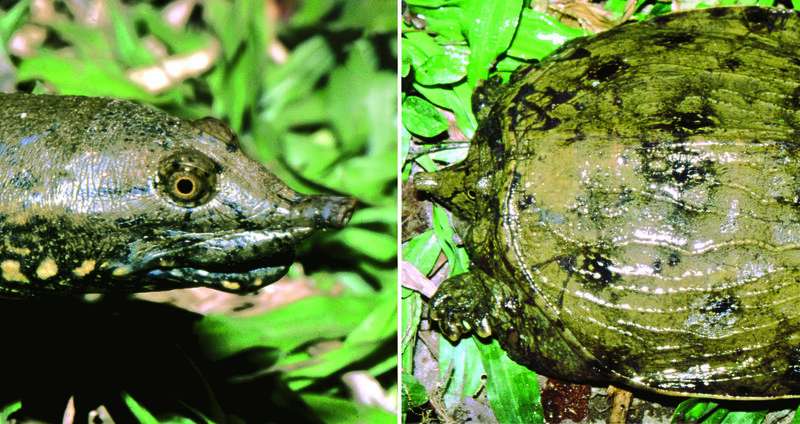
For decades, it has been assumed that the Chinese Softshell Turtles from East Asia all belonged to one and the same species, Pelodiscus sinensis. Widely distributed all the way from the Russian Far East through the Korean Peninsula to...

A new study has documented unexpected consequences following the decline of great white sharks from an area off South Africa. The study found that the disappearance of great whites has led to the emergence of sevengill sharks, a top...

A new to science species of tarantula with a peculiar horn-like protuberance sticking out of its back was recently identified from Angola, a largely underexplored country located at the intersection of several Afrotropical ecoregions.
Collected as part of the National...

Humans have a "disproportionately huge effect" on the other species of vertebrates that share Earth's surface with us, causing more than 25 percent of the deaths among an array of species all over the globe, according to a recently...

A new Duke University-led study provides the first detailed record of the diving behavior of Cuvier's beaked whales in U.S. Atlantic waters.
Cuvier's beaked whales are the world's deepest-diving mammal, but studies of their behavior are constrained by the animals'...


