



Bedbugs—some of the most unwanted human bed-mates—have been parasitic companions with other species aside from humans for more than 100 million years, walking the earth at the same time as dinosaurs.
Work by an international team of scientists, including the...

Chimpanzees in captivity can successfully work out how to use tools to excavate underground food, even if they've never been presented with an underground food scenario before, according to a study published May 15, 2019 in the open-access journal PLOS...

The deep sea is home to fish species that can detect various wavelengths of light in near-total darkness. Unlike other vertebrates, they have several genes for the light-sensitive photopigment rhodopsin, which likely enables these fish to detect bioluminescent signals...
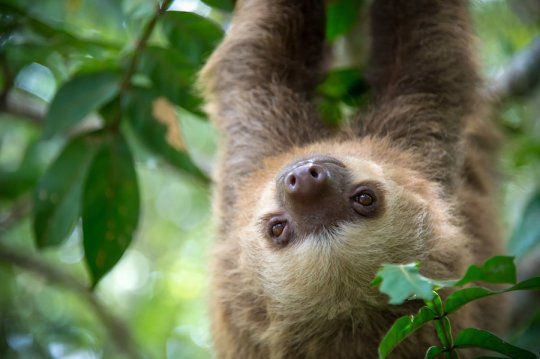
Differences in numbers of vertebrae are most extreme in mammals which do not rely on running and leaping, such as those adapted to suspensory locomotion like apes and sloths, a team of anthropologists has concluded in a study appearing...

Rewards are frequently used to promote learning, but rewards may actually mask true knowledge, finds a new Johns Hopkins University study with rodents and ferrets.
The findings, published May 14 in Nature Communications, show a distinction between knowledge and performance, and...
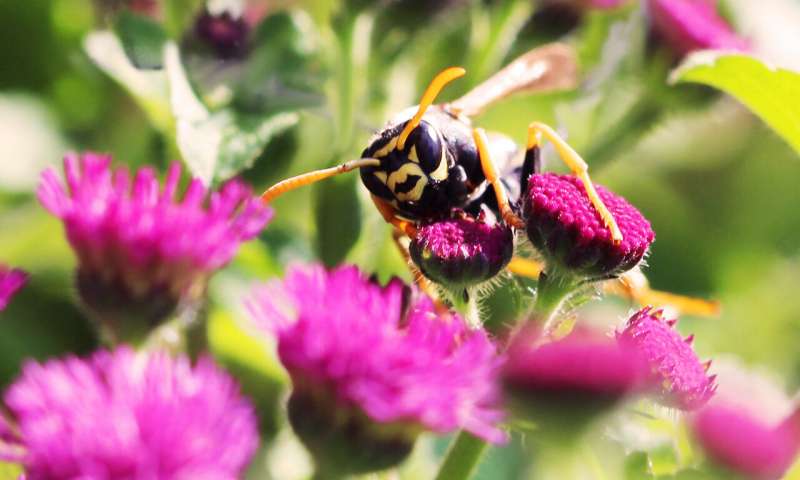
A new University of Michigan study provides the first evidence of transitive inference, the ability to use known relationships to infer unknown relationships, in a nonvertebrate animal: the lowly paper wasp.
For millennia, transitive inference was considered a hallmark of...

Parasitoid wasps lay their eggs on a spider's back. This team proposes that by injecting the spider host with the molting hormone, ecdysone, the wasp induces the spider to make a special web for the wasp's pupa.
Setting off a...

Drawing design inspiration from the skin of stealthy sea creatures, engineers at the University of California, Irvine have developed a next-generation, adaptive space blanket that gives users the ability to control their temperature. The innovation is detailed in a...

Let's say you wanted to solve a 20,000-year-old mystery, where would you start? Perhaps archaeology and geology come to mind. Or, you could sift through a 3-metre pile of bat faeces.
Researchers from James Cook University in Cairns, Australia, chose...
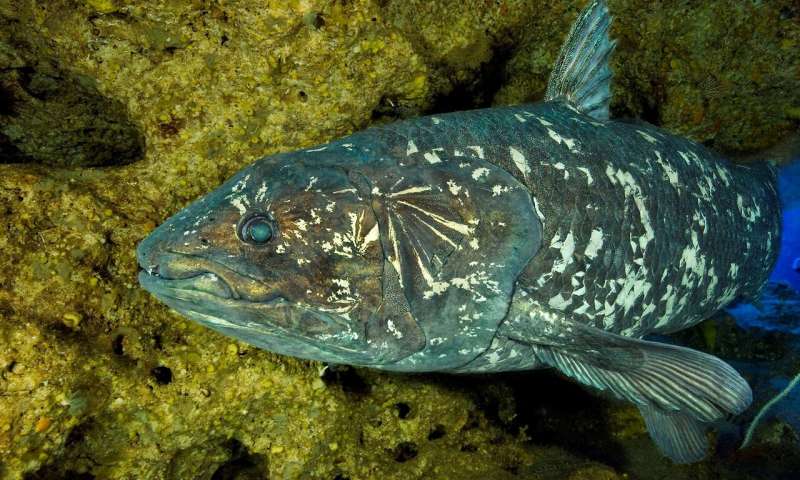
A new study into one of the world's oldest types of fish, Coelacanth, provides fresh insights into the development of the skull and brain of vertebrates and the evolution of lobe-finned fishes and land animals, as published in Nature.
Coelacanth (Latimeria...

At least one running argument among cat lovers is now over: Whiskers, Lucy and Tigger are definitely better off staying indoors, scientists reported Wednesday.
Pet cats allowed outdoors, in fact, are nearly three times as likely to become infected with...


