

science

Scientists discover that charcoal traps ammonia pollution

Cornell University scientists Rachel Hestrin and Johannes Lehmann, along with collaborators from Canada and Australia, have shown that charcoal can mop up large quantities...
Earth’s magnetic shield booms like a drum when hit by impulses

The Earth's magnetic shield booms like a drum when it is hit by strong impulses, according to new research from Queen Mary University of...
Seven moral rules found all around the world

Anthropologists at the University of Oxford have discovered what they believe to be seven universal moral rules.
The rules: help your family, help your group,...
Stonehenge mystery solved? Prehistoric French may have inspired it and other...

Although Stonehenge may be the most famous of Europe's megaliths, it's far from the only one: There are about 35,000 of these mysterious stone...
Arctic sea ice loss in the past linked to abrupt climate...
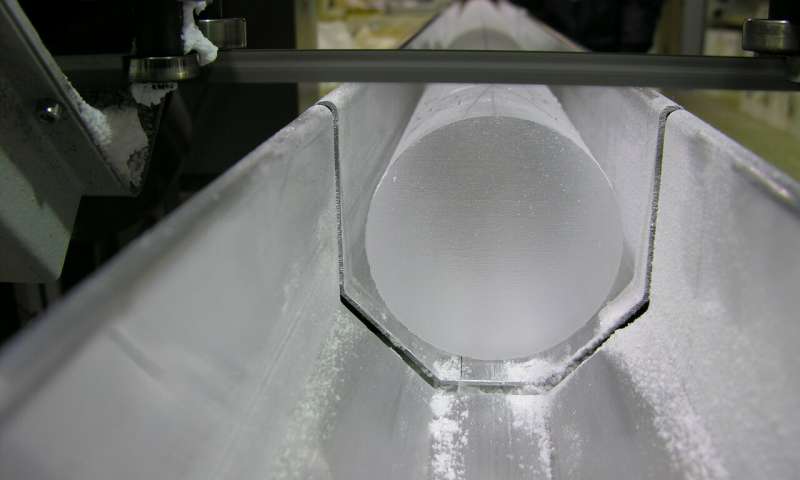
A new study on ice cores shows that reductions in sea ice in the Arctic in the period between 30-100,000 years ago led to...
Engineers develop room temperature, two-dimensional platform for quantum technology

Quantum computers promise to be a revolutionary technology because their elementary building blocks, qubits, can hold more information than the binary, 0-or-1 bits of...
Developing a flight strategy to land heavier vehicles on Mars
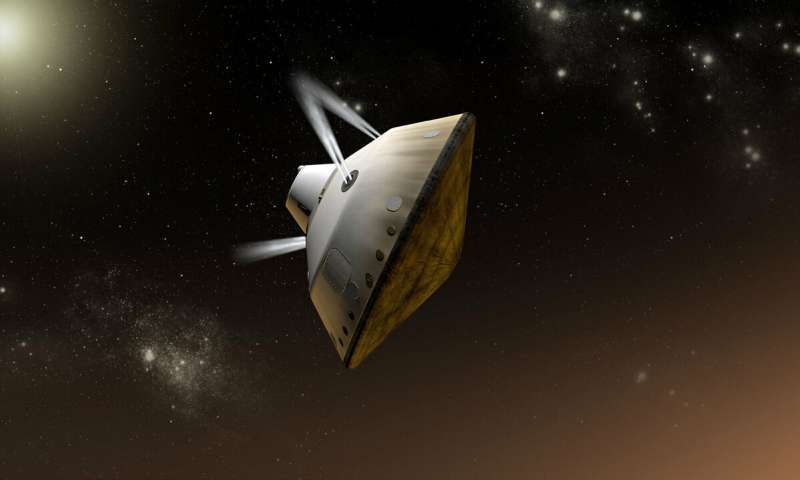
The heaviest vehicle to successfully land on Mars is the Curiosity Rover at 1 metric ton, about 2,200 pounds. Sending more ambitious robotic missions...
NASA finds possible second impact crater under Greenland ice
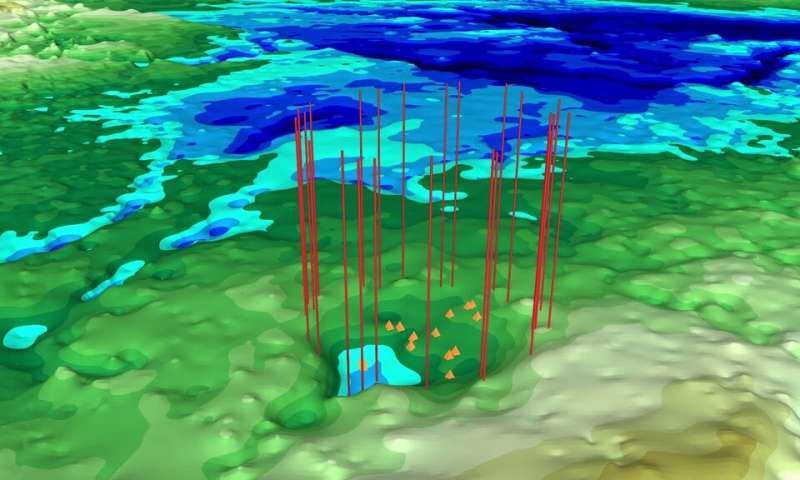
A NASA glaciologist has discovered a possible second impact crater buried under more than a mile of ice in northwest Greenland.
his follows the finding,...
World seeing ‘catastrophic collapse’ of insects: study
Nearly half of all insect species worldwide are in rapid decline and a third could disappear altogether, according to a study warning of dire...
On the land, one-quarter of vertebrates die because of humans

Humans have a "disproportionately huge effect" on the other species of vertebrates that share Earth's surface with us, causing more than 25 percent of...
Macaque fossils discovered at the bottom of the North Sea

Together with two colleagues from the Netherlands, Senckenberg scientist Ralf-Dietrich Kahlke examined the teeth of several macaques from the bottom of the North Sea....


