

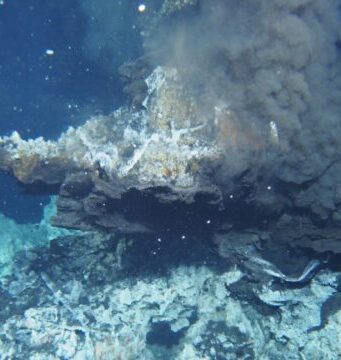

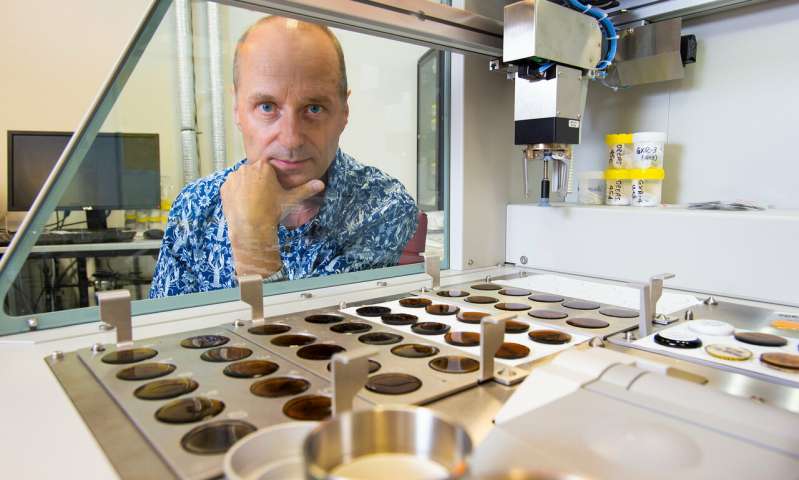
A QUT geologist has published a new theory on the thermal evolution of Earth billions of years ago that explains why diamonds have formed as precious gemstones rather than just lumps of common graphite.
In the study, published in the...

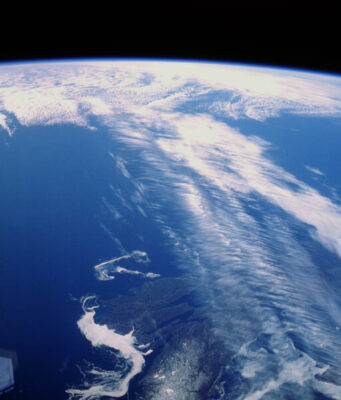
The storm on Lake Michigan lasted only 15 minutes, but the conditions it put into motion took seven lives.
It was the Fourth of July in 2003, near Warren Dunes State Park along the Michigan coast. People left the water...

Nitric oxide is a fascinating and versatile molecule, important for all living things as well as our environment. It is highly reactive and toxic; it is used as a signaling molecule; it depletes the ozone layer in our planet's...

Over the last 540 million years, the Earth has weathered three major ice ages—periods during which global temperatures plummeted, producing extensive ice sheets and glaciers that have stretched beyond the polar caps.
Now scientists at MIT, the University of California...

All over China, a huge change has been taking place without any of us noticing. Rice paddies have been (and are being) converted at an astonishing rate into aquaculture ponds to produce more protein for the worlds growing populations....
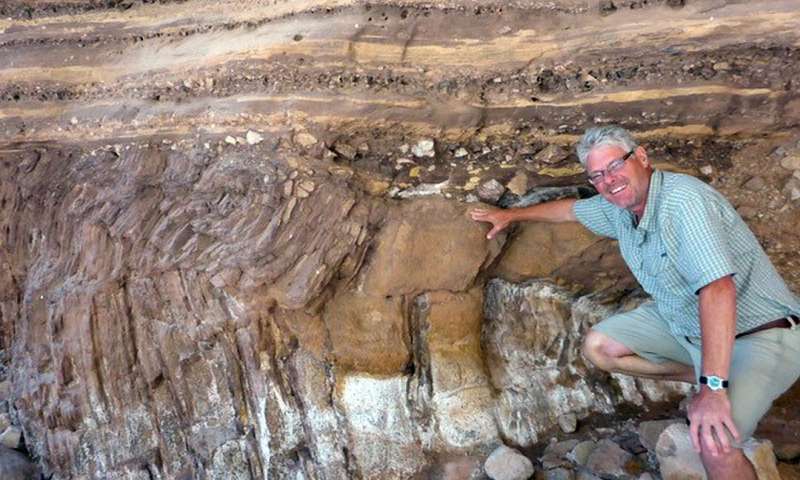
Prehistoric worms populated the sea bed 500 million years ago—evidence that life was active in an environment thought uninhabitable until now, research by the University of Saskatchewan (USask) shows.
The sea bed in the deep ocean during the Cambrian period was thought...

Most schoolchildren learn that the Earth has three (or four) layers: a crust, mantle and core, which is sometimes subdivided into an inner and outer core. That's not wrong, but it does leave out several other layers that scientists...
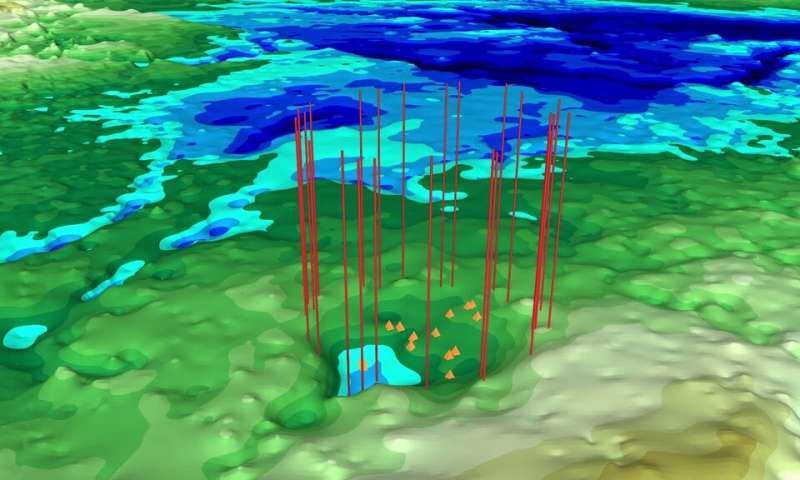
A NASA glaciologist has discovered a possible second impact crater buried under more than a mile of ice in northwest Greenland.
his follows the finding, announced in November 2018, of a 19-mile-wide crater beneath Hiawatha Glacier—the first meteorite impact crater...

Three and a half billion years ago, Earth hosted life, but was it barely surviving, or thriving? A new study carried out by a multi-institutional team with leadership including the Earth-Life Science Institute (ELSI) of Tokyo Institute of Technology...
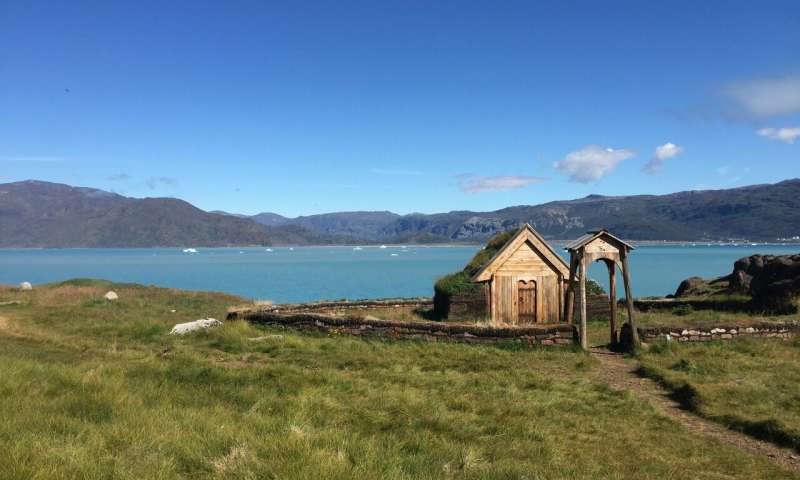
A new study may resolve an old debate about how tough the Vikings actually were.
Although TV and movies paint Vikings as robust souls, braving subzero temperatures in fur pelts and iron helmets, new evidence indicates they might have been...
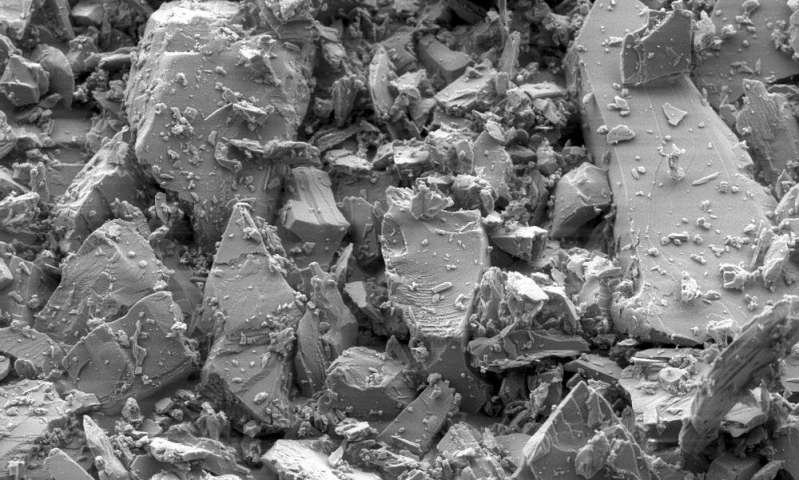
A U.S.-German research team has simulated meteorite impacts in the lab and followed the resulting structural changes in two feldspar minerals with X-rays as they happened. The results of the experiments at DESY and at Argonne National Laboratory in...


