

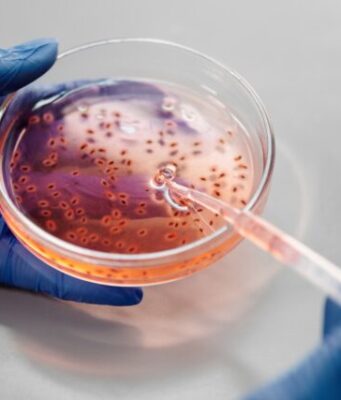



People living some 3500 years ago in Mesopotamia, which now is modern-day Iraq, enjoyed a pint as much as we do today.
A paper published in the Journal of Archaeological Science shows that Mesopotamia's Late Bronze Age inhabitants enjoyed drinking...

A cranium of a four-million-year-old fossil, that, in 1995 was described as the oldest evidence of human evolution in South Africa, has shown similarities to that of our own, when scanned through high resolution imaging systems.
The cranium of the...

Images of an Australasian cockatoo have been discovered in a manuscript dating from 13th century Sicily, now held in the Vatican library.
This finding reveals that trade in the waters in and around Australia's north was flourishing as far back...
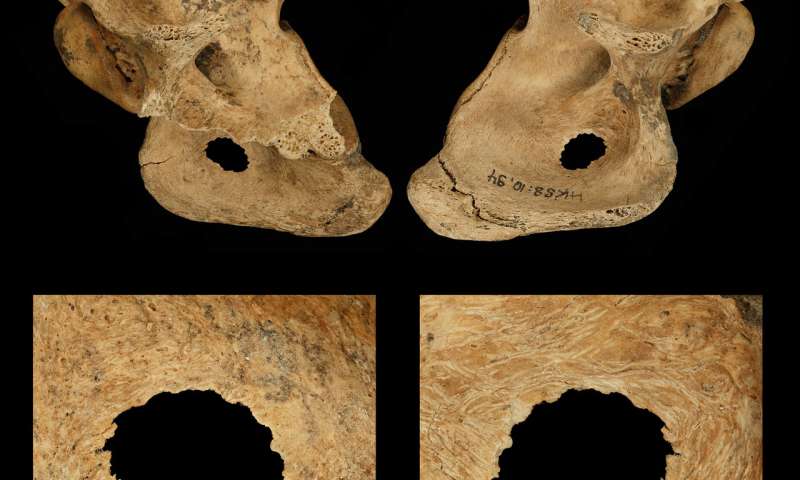
Neanderthals were capable of sophisticated, collective hunting strategies, according to an analysis of prehistoric animal remains from Germany that contradicts the enduring image of these early humans as knuckle-dragging brutes.
The cut marks—or "hunting lesions"—on the bones of two 120,000-year-old...

Archaeologists at Lund University in Sweden have found carbonised germinated grains showing that malt was produced for beer brewing as early as the Iron Age in the Nordic region. The findings made in Uppåkra in southern Sweden indicate a...

Dinosaurs are often depicted as fierce creatures, baring their teeth, with tongues wildly stretching from their mouths like giant, deranged lizards. But new research reveals a major problem with this classic image: Dinosaurs couldn't stick out their tongues like...

Earth's first complex animals were an eclectic bunch that lived in the shallow oceans between 580-540 million years ago.
The iconic Dickinsonia—large flat animals with a quilt-like appearance—were joined by tube-shaped organisms, frond-like creatures that looked more like plants, and...

An international team of scientists have used the latest genetic and anatomical techniques to study the remains of a cow with a short face like a bulldog that fascinated Charles Darwin when he first saw it in Argentina 180...

About 99 million years ago, a tiny juvenile frog in present-day Myanmar was suddenly trapped in sap with a beetle, perhaps its intended next meal.
Unlucky for the frog, but lucky for science.
An extinct species now named Electrorana limoae, it's...
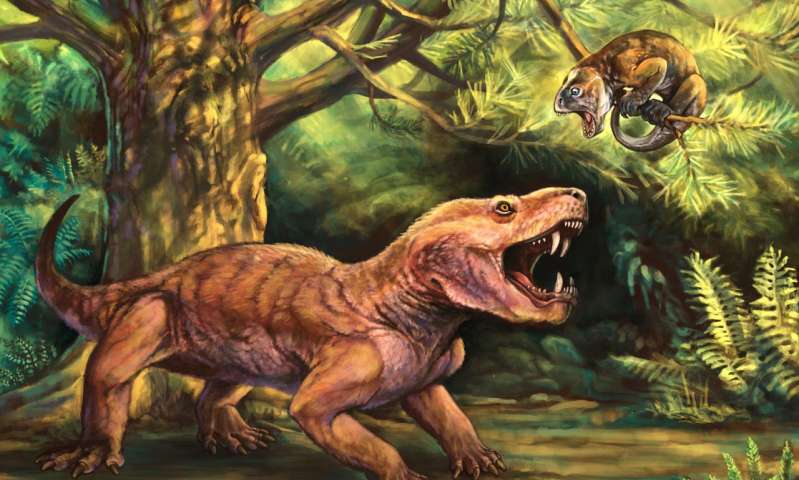
Fossils representing two new species of saber-toothed prehistoric predators have been described by researchers from the North Carolina Museum of Natural Sciences (Raleigh, USA) and the Vyatka Paleontological Museum (Kirov, Russia). These new species improve the scientists' understanding of...

Even with a highly skilled neurosurgeon, the most effective anesthesia, and all the other advances of modern medicine, most of us would cringe at the thought of undergoing cranial surgery today.
After all, who needs a hole in the head?...


