





A research team including Matthew Sanger, assistant professor of anthropology at Binghamton University, State University at New York, has found a copper band that indicates ancient Native Americans engaged in extensive trade networks spanning far greater distances than what...

Despite over a century of intense study, we still know very little about the people buried at Stonehenge or how they came to be there. Now, a new University of Oxford research collaboration, published in Scientific Reports suggests that...

The severity of drought conditions during the demise of the Maya civilisation about one thousand years ago has been quantified, representing another piece of evidence that could be used to solve the longstanding mystery of what caused the downfall...

Two pygmy populations on the same tropical island. One went extinct tens of thousands of years ago; the other still lives there. Are they related?
It's a simple question that took years to answer.
As no one has been able to...
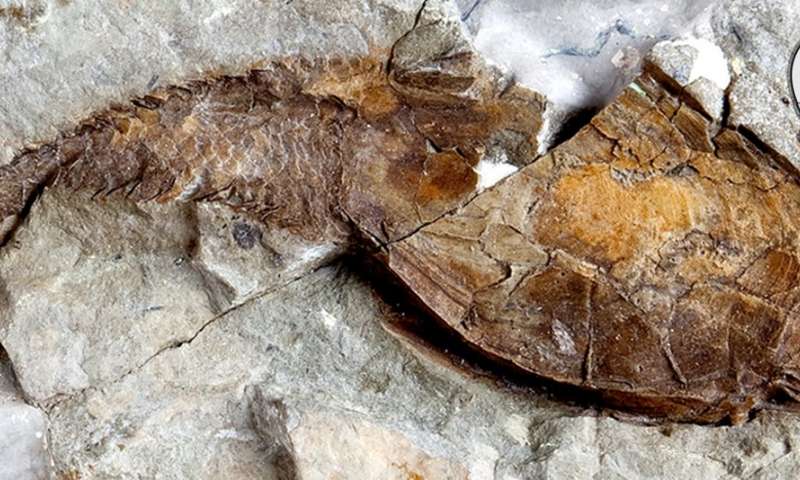
Scientists at The University of Manchester and the University of Bristol have used powerful X-rays to peer inside the skeletons of some of our oldest vertebrate relatives, solving a 160-year-old mystery about the origin of our skeletons.
Living vertebrates have...

Critical review of growing archaeological and palaeoenvironmental datasets relating to the Middle and Late Pleistocene (300-12 thousand years ago) hominin dispersals within and beyond Africa, published today in Nature Human Behaviour, demonstrates unique environmental settings and adaptations for Homo sapiens relative to...
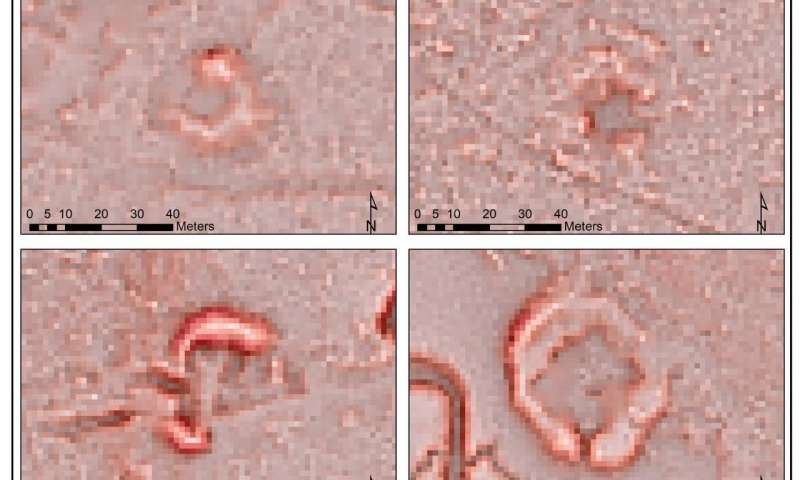
Researchers at Binghamton University, State University at New York have used a new image-based analysis technique to identify once-hidden North American mounds, which could reveal valuable information about pre-contact Native Americans.
"Across the East Coast of the United States, some...
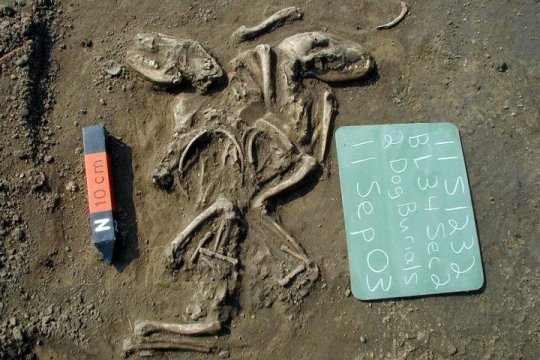
A study reported in the journal Science offers an enhanced view of the origins and ultimate fate of the first dogs in the Americas. The dogs were not domesticated North American wolves, as some have speculated, but likely followed...
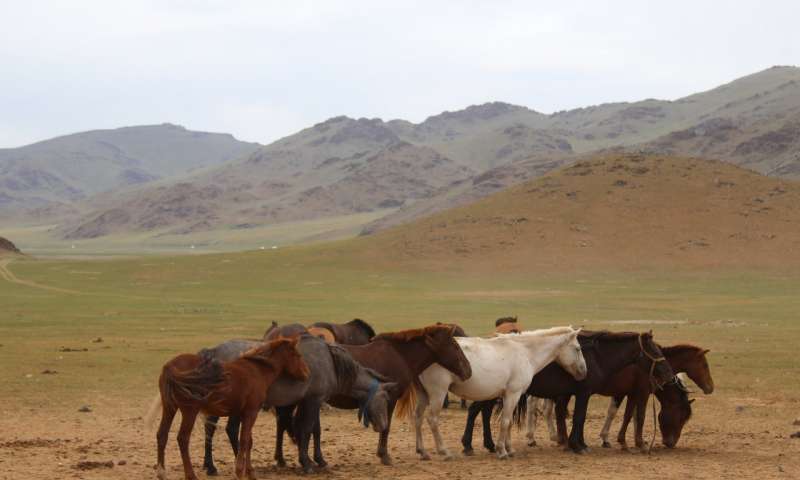
A team of scholars led by William Taylor of the Max Planck Institute for the Science of Human History analyzed horse remains from an ancient Mongolian pastoral culture known as the Deer Stone-Khirigsuur Culture (ca. 1300-700 BC). Deer stones,...

An international team of scientists reports the oldest unambiguous hunting lesions documented in the history of humankind. The lesions were found on skeletons of two large-sized extinct fallow deer killed by Neandertals about 120,000 years ago around the shores...

Melbourne scientists have taken a significant step toward developing a new vaccine for malaria, revealing for the first time an 'atomic-scale' blueprint of how the parasite invades human cells.
Using the Nobel Prize-winning technology cryo-EM (cryo-electron microscopy), the researchers mapped...


