




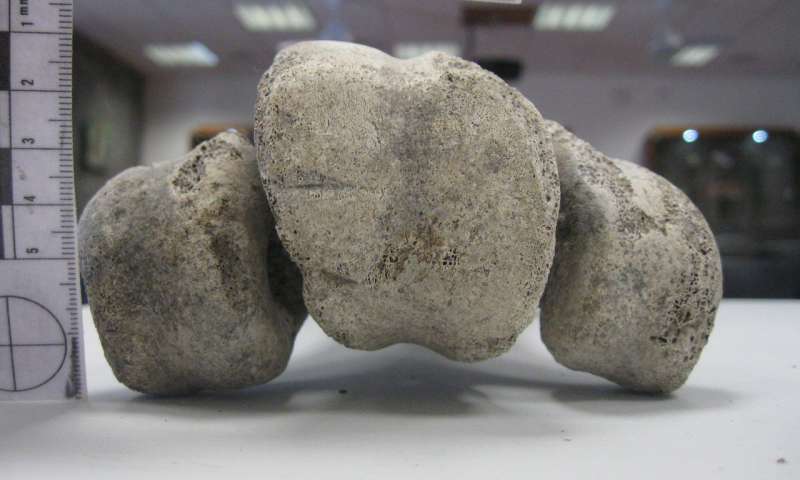
Analysis of bones, from what was once the world's largest bird, has revealed that humans arrived on the tropical island of Madagascar more than 6,000 years earlier than previously thought—according to a study published today, 12 September 2018, in...
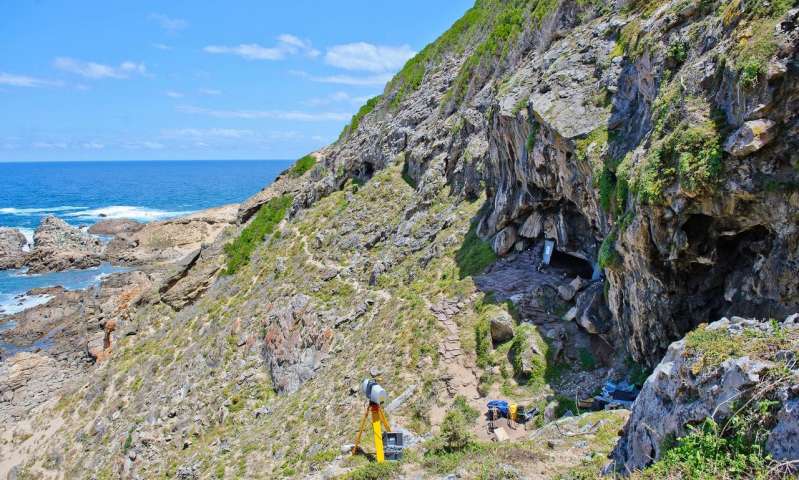
The earliest evidence of a drawing made by humans has been found in Blombos Cave in the southern Cape in South Africa.
The drawing, which consists of three red lines cross-hatched with six separate lines, was intentionally drawn on a...

Stanford University archaeologists are turning the history of beer on its head.
A research team led by Li Liu, a professor of Chinese archaeology at Stanford, has found evidence of the earliest brewmasters to date, a finding that might stir...

Analysis of fatty residue in pottery from the Dalmatian Coast of Croatia revealed evidence of fermented dairy products—soft cheeses and yogurts—from about 7,200 years ago, according to an international team of researchers.
"This pushes back cheese-making by 4,000 years," said...

Two newly discovered dinosaurs may be missing links in an unusual lineage of predators that lived between 160 million and 90 million years ago, new research suggests.
The two species, Xiyunykus and Bannykus, were theropods—a group of bipedal, largely carnivorous...
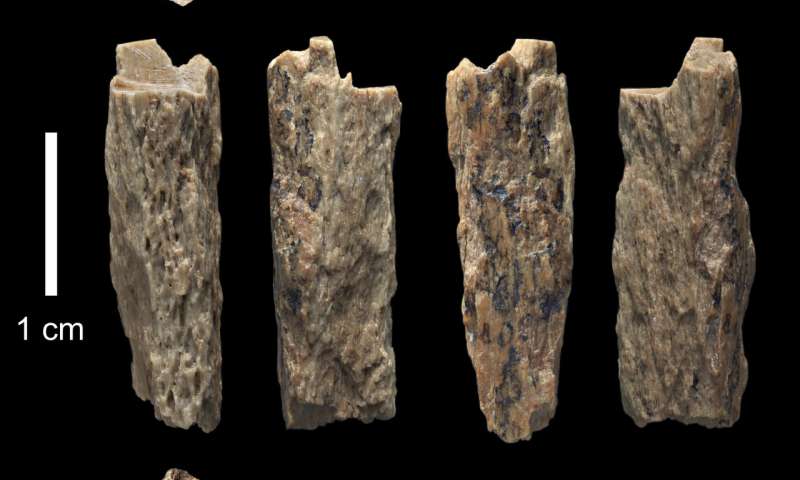
Denny was an inter-species love child.
Her mother was a Neanderthal, but her father was Denisovan, a distinct species of primitive human that also roamed the Eurasian continent 50,000 years ago, scientists reported Wednesday in the journal Nature.
Nicknamed by Oxford...

Discovered more than half a century ago in Kenya and sitting in museum storage ever since, the roughly 20-million-year-old fossil Propotto leakeyi was long classified as a fruit bat.
Now, it's helping researchers rethink the early evolution of lemurs, distant...

Scientists on Monday unveiled a previously unknown species of giant pterosaur, the first creatures with a backbone to fly under their own power.
Neither dino nor bird, pterosaurs—more commonly known as pterodactyls—emerged during the late Triassic period more than 200...

New archaeological research from The Australian National University (ANU) has found that Homo erectus, an extinct species of primitive humans, went extinct in part because they were 'lazy'.
An archaeological excavation of ancient human populations in the Arabian Peninsula during...
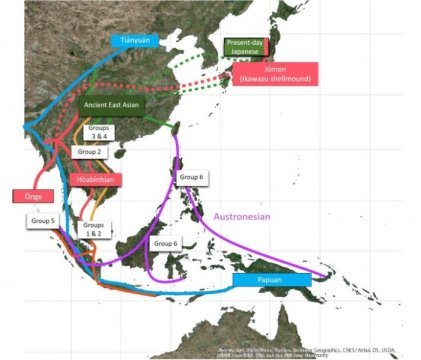
Uncovering the expansion processes of human habitats in the past is of great importance for understanding the origins and establishment of present-day populations and the acquisition of genetic characteristics of individuals as well as for investigating mechanisms of resistance...

New archaeological research from The Australian National University (ANU) has found that Homo erectus, an extinct species of primitive humans, went extinct in part because they were 'lazy'.
An archaeological excavation of ancient human populations in the Arabian Peninsula during...


