





A new relative of the Tyrannosaurus rex—much smaller than the huge, ferocious dinonsaur made famous in countless books and films, including, yes, "Jurassic Park—has been discovered and named by a Virginia Tech paleontologist and an international team of scientists.
The newly...

The duck-billed hadrosaurs walked the Earth over 90-million years ago and were one of the most successful groups of dinosaurs. But why were these 2-3 tonne giants so successful? A new study, published in Paleobiology, shows that their special adaptations...

The biblical King Balak may have been a historical figure, according to a new reading of the Mesha Stele, an inscribed stone dating from the second half of the 9th century BCE.
A name in Line 31 of the stele,...
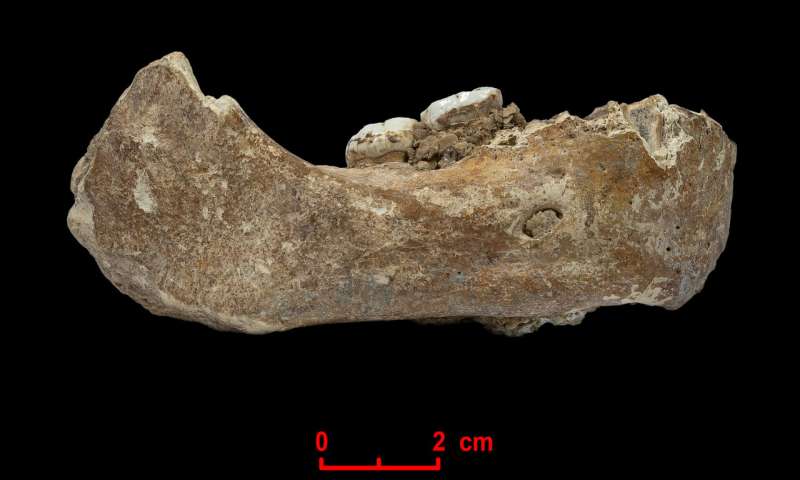
So far, Denisovans were only known from a small collection of fossil fragments from Denisova Cave in Siberia. A research team now describes a 160,000-year-old hominin mandible from Xiahe in China. Using ancient protein analysis, the researchers found that...
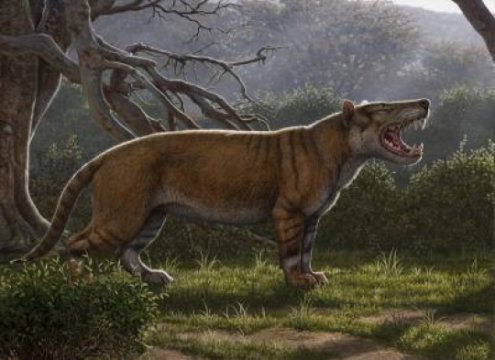
Paleontologists at Ohio University have discovered a new species of meat-eating mammal larger than any big cat stalking the world today. Larger than a polar bear, with a skull as large as that of a rhinoceros and enormous piercing...

The crab family just got a bunch of new cousins—including a 95-million-year-old chimera species that will force scientists to rethink the definition of a crab.
An international team of researchers led by Yale paleontologist Javier Luque announced the discovery of...

Humans settled in southwestern Amazonia and even experimented with agriculture much earlier than previously thought, according to an international team of researchers.
"We have long been aware that complex societies emerged in Llanos de Moxos in southwestern Amazonia, Bolivia, around...

History can tell us a lot about the Crusades, the series of religious wars fought between 1095 and 1291, in which Christian invaders tried to claim the Near East. But the DNA of nine 13th century Crusaders buried in...

A thousand years ago, the Wari empire stretched across Peru. At its height, it covered an area the size of the Eastern seaboard of the US from New York City to Jacksonville. It lasted for 500 years, from 600...
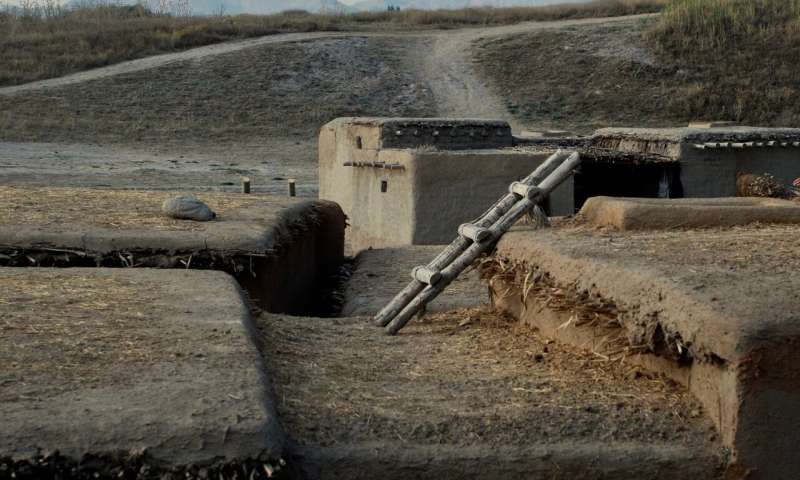
The transition from hunting and gathering to farming and herding is considered a crucial turning point in the history of humanity. Scholars think the intensive food production that came along with the Neolithic Revolution, starting around 10,000 B.C., allowed...

The complete skeletal remains of a new species of Mongolian dinosaur fill in a gap in the evolution of hadrosaurs, according to a study released April 17, 2019 in the open-access journal PLOS ONE by Khishigjav Tsogtbataaar of the Mongolian Academy...


