




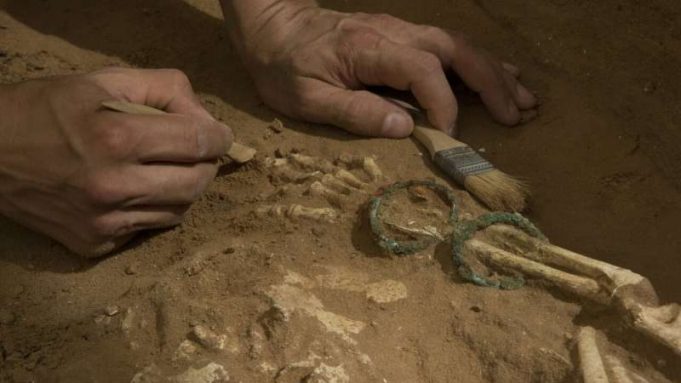
An international team led by scientists from the Max Planck Institute for the Science of Human History and the Leon Levy Expedition have retrieved and analyzed genome-wide data from people who lived during the Bronze and Iron Ages (~3,600...

The question of how to best adapt to extreme climate is a critical issue facing modern societies worldwide. In "The Role of Diet in Resilience and Vulnerability to Climate Change among Early Agricultural Communities in the Maya Lowlands," published...
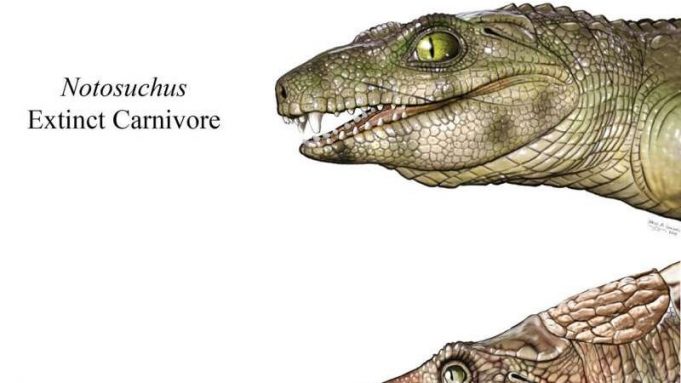
Based on careful study of fossilized teeth, scientists Keegan Melstom and Randall Irmis at the Natural History Museum of Utah at the University of Utah have found that multiple ancient groups of crocodyliforms—the group including living and extinct relatives...
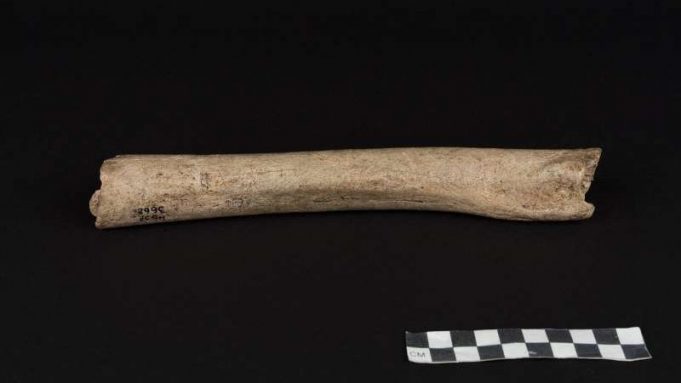
Researchers at the Max Planck Institute for Evolutionary Anthropology in Leipzig, Germany, have retrieved nuclear genome sequences from the femur of a male Neanderthal discovered in 1937 in Hohlenstein-Stadel Cave, Germany, and from the maxillary bone of a Neanderthal...

Throughout life's history on earth, biological diversity has gone through ebbs and flows—periods of rapid evolution and of dramatic extinctions. We know this, at least in part, through the fossil record of marine invertebrates left behind since the Cambrian...
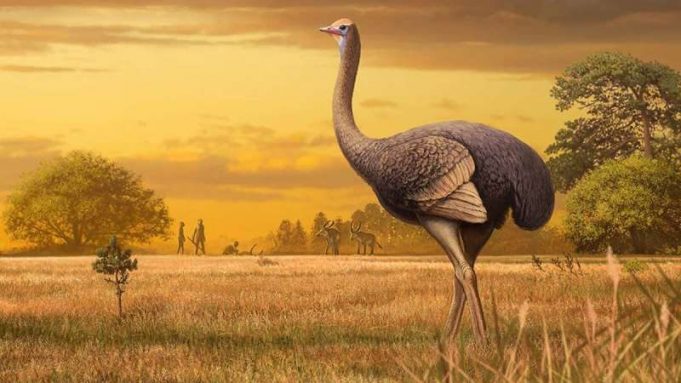
Talk about your big bird.
At 1,000 pounds and over 10 feet tall, it was one of the largest birds that ever lived in Earth's history. And almost 2 million years ago, early Europeans lived alongside some of these huge...
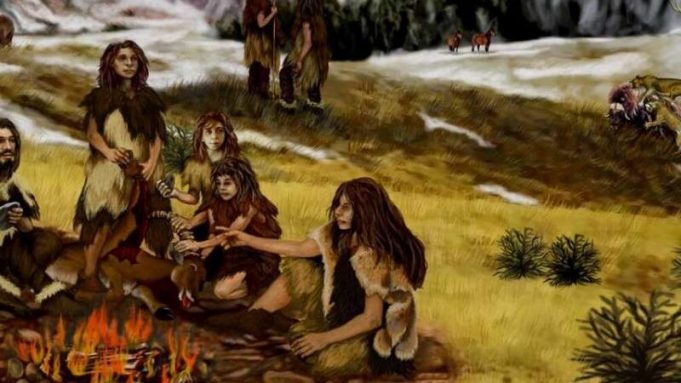
Archaeologists working in two Italian caves have discovered some of the earliest known examples of ancient humans using an adhesive on their stone tools—an important technological advance called "hafting."
The new study, which included CU Boulder's Paola Villa, shows that...
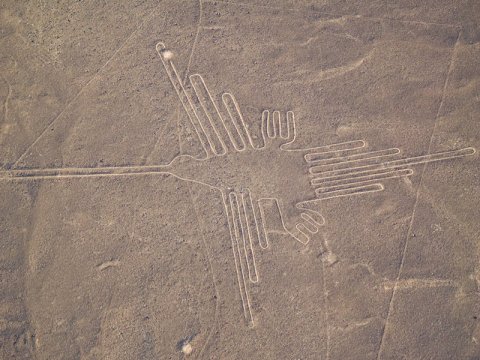
A scientific approach has been used to re-identify huge birds etched into the desert plains of southern Peru around 2,000 years ago. The birds appear to be exotic to the region and further studies could help explain their significance....
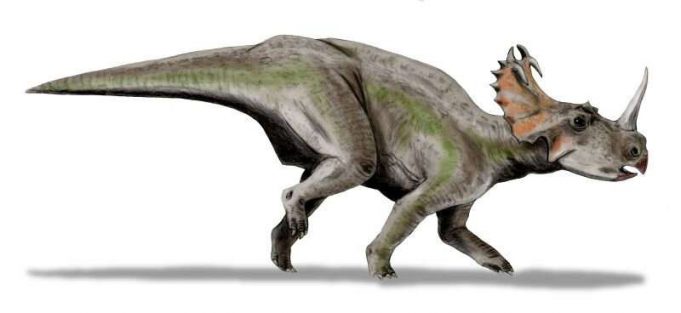
Bad news, Jurassic Park fans -- the odds of scientists cloning a dinosaur from ancient DNA are pretty much zero. That's because DNA breaks down over time and isn't stable enough to stay intact for millions of years. And...
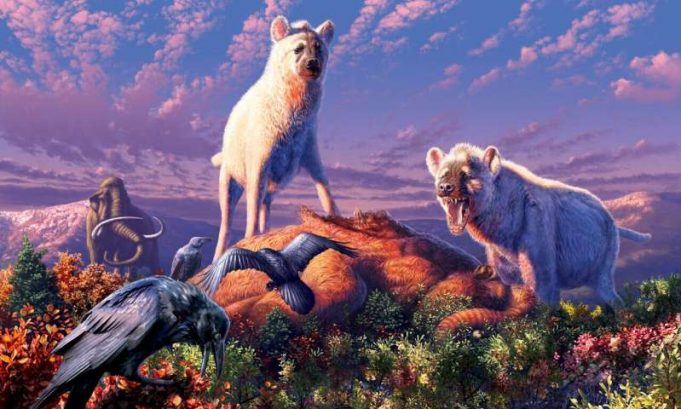
Modern hyenas are known as hunters and scavengers in Asian and African ecosystems such as the savanna.
But in ancient times, these powerful carnivores also roamed a very different landscape, inhabiting the frigid Arctic during the last ice age, according to...
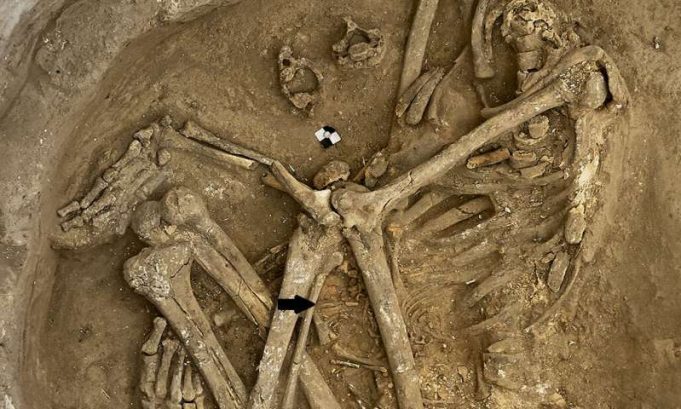
Some 9,000 years ago, residents of one of the world's first large farming communities were also among the first humans to experience some of the perils of modern urban living.
Scientists studying the ancient ruins of Çatalhöyük, in modern Turkey,...


