

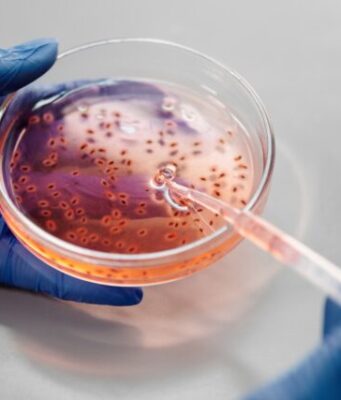



People in England were using balance weights and scales to measure the value of materials as early as the late second and early first millennia BC. This is what Professor Lorenz Rahmstorf, scientist at the University of Göttingen and...
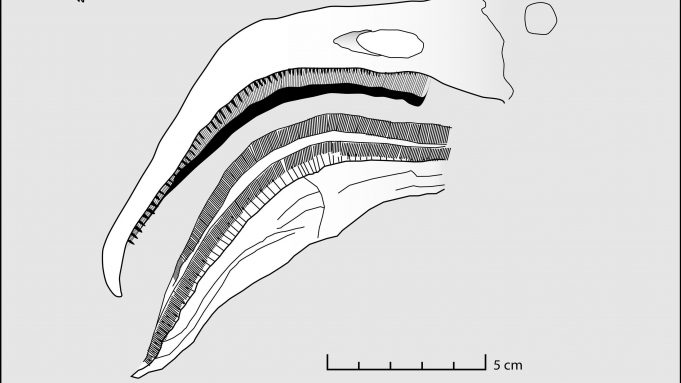
Modern flamingoes employ filter feeding and their feces is, as a result, rich in remains of microscopically small aquatic prey. Very similar contents are described from more than 150-million-year-old pterosaur droppings, according to a recent paper in PeerJ. This represents...
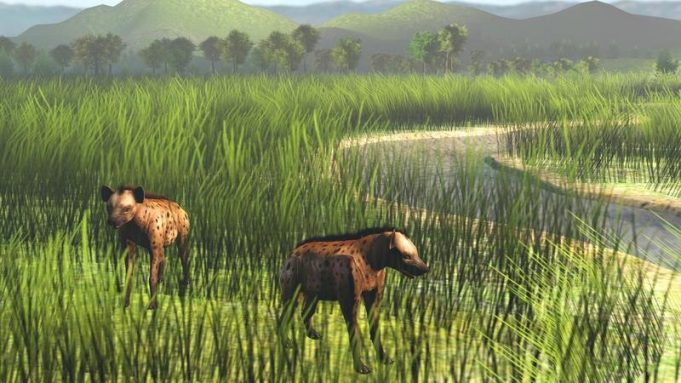
New research from the University of Tübingen indicates that the Thai-Malay Peninsula—where parts of Malaysia, Myanmar and Thailand are located—was at least partly an open savannah during the Ice Age, when the peninsula was part of a much larger...
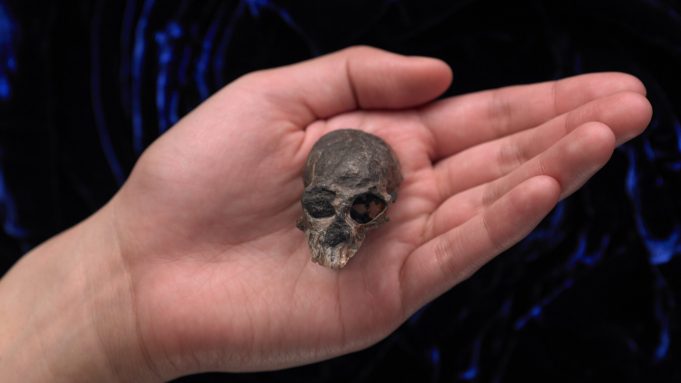
It has long been thought that the brain size of anthropoid primates—a diverse group of modern and extinct monkeys, humans, and their nearest kin—progressively increased over time. New research on one of the oldest and most complete fossil primate...

Neanderthals and other early humans produced a tarry glue from birch bark; this was long considered proof of a high level of cognitive and cultural development. Researchers had long believed that birch tar—used by the Neanderthals to make tools—could...
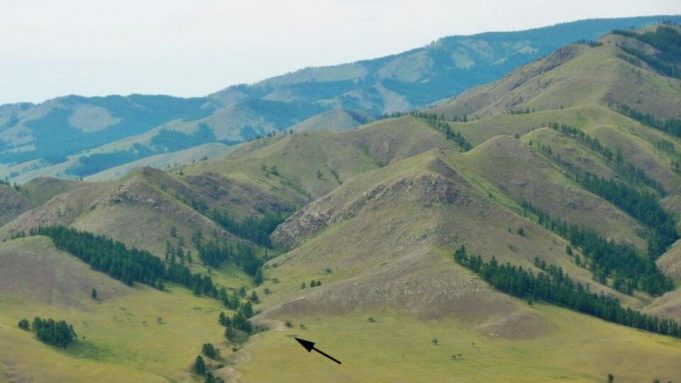
Stone tools uncovered in Mongolia by an international team of archaeologists indicate that modern humans traveled across the Eurasian steppe about 45,000 years ago, according to a new University of California, Davis, study. The date is about 10,000 years...
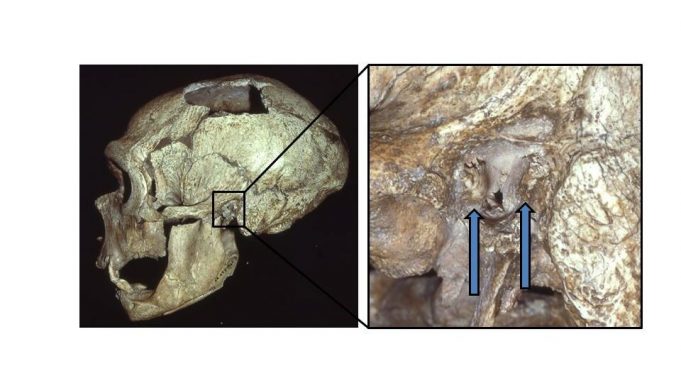
What do surfers, kayakers and Neanderthals have in common?
New research published Wednesday revealed that abnormal bony growths in the ear canal, also called "surfer's ear" and often seen in people who take part in water sports in colder climates,...

The Devonian period, which was 419 million to 359 million years ago, is best known for Tiktaalik, the lobe-finned fish that is often portrayed pulling itself onto land. However, the "age of the fishes," as the period is called,...

The most detailed study to date of ancient predators trapped in the La Brea Tar Pits is helping Americans understand why today we're dealing with coyotes dumping over garbage cans and not saber-toothed cats ripping our arms off.
Larisa DeSantis,...
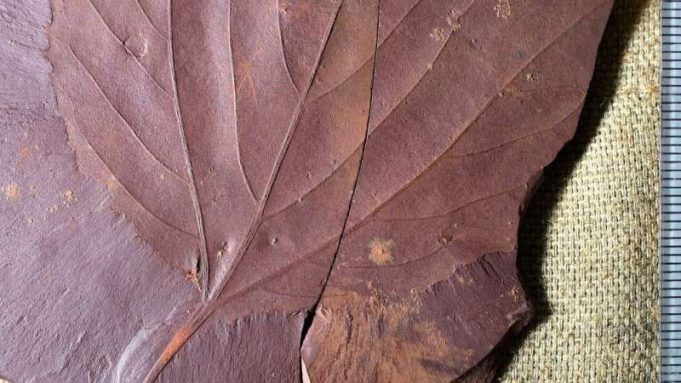
The discovery of fossilized plants in Labrador, Canada, by a team of McGill directed paleontologists provides the first quantitative estimate of the area's climate during the Cretaceous period, a time when the earth was dominated by dinosaurs.
The specimens were...
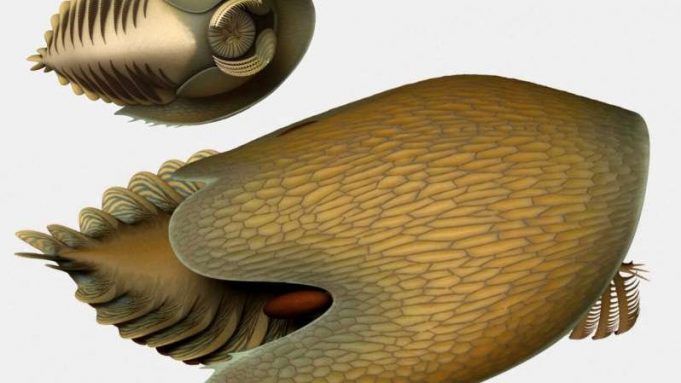
Palaeontologists at the Royal Ontario Museum and University of Toronto have uncovered fossils of a large new predatory species in half-a-billion-year-old rocks from Kootenay National Park in the Canadian Rockies. This new species has rake-like claws and a pineapple-slice-shaped...


