




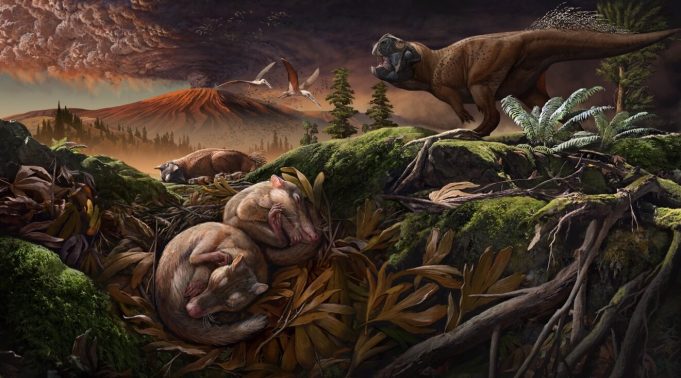
A joint research team led by Mao Fangyuan from the Institute of Vertebrate Paleontology and Paleoanthropology (IVPP) of the Chinese Academy of Sciences and Meng Jin from the American Museum of Natural History reported a new symmetrodont, Origolestes lii,...
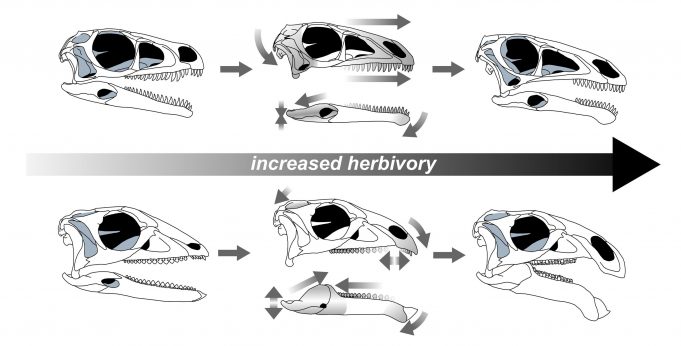
Herbivorous dinosaurs evolved many times during the 180 million-year Mesozoic era, and while they didn't all evolve to chew, swallow, and digest their food in the same way, a few specific strategies appeared time and time again. An investigation...
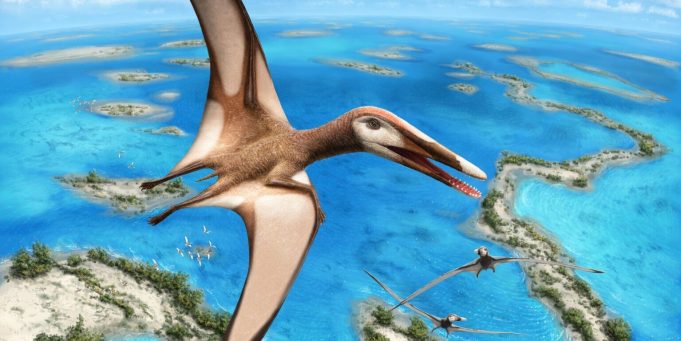
Ancient flying reptiles known as pterosaurs were much more diverse than originally thought, according to a new study by an international group of paleontologists.
The research—conducted by scientists at the University of Alberta and the Museu Nacional in Rio de...

Researchers from the Institute of Vertebrate Paleontology and Paleoanthropology (IVPP) of the Chinese Academy of Sciences and the American Museum of Natural History (AMNH) have reported a new species of multituberculate—a type of extinct Mesozoic rodent—with well-preserved middle ear...
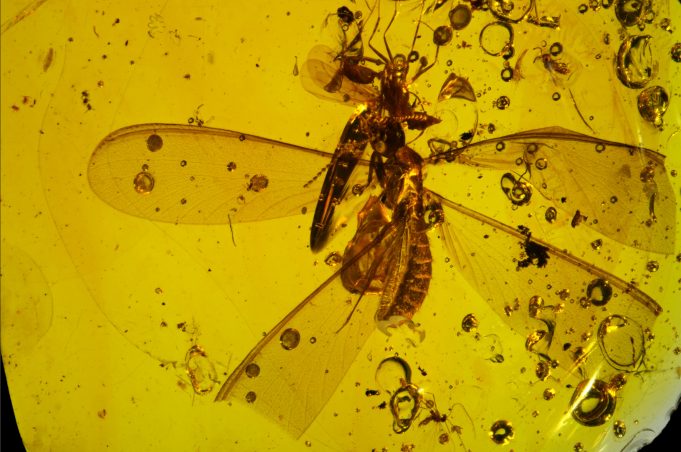
When trying to better the odds for survival, a major dilemma that many animals face is dispersal—being able to pick up and leave to occupy new lands, find fresh resources and mates, and avoid intraspecies competition in times of...

A team of researchers at the University of Alberta has unearthed a well-preserved Styracosaurus skull—and its facial imperfections have implications for how paleontologists identify new species of dinosaurs.
The skull was discovered by Scott Persons in 2015, then a graduate student in the Department...
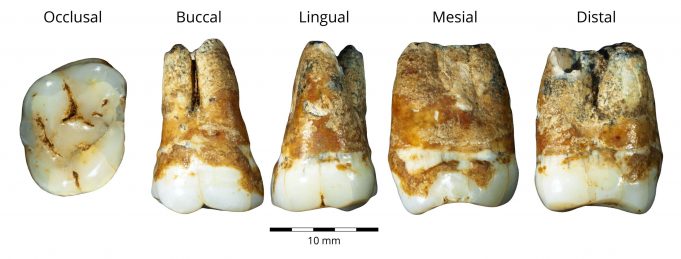
Who exactly were the Aurignacians, who lived in the Levant 40,000 years ago? Researchers from Tel Aviv University, the Israel Antiquities Authority, and Ben-Gurion University now report that these culturally sophisticated yet mysterious humans migrated from Europe to the...

Swinburne and Museums Victoria have announced the discovery of several theropod bones, including a 20 centimeter long hand claw, from the Otway Coast of Victoria.
The bones were found in the Eumeralla Formation, a geological deposit that is approximately 107...
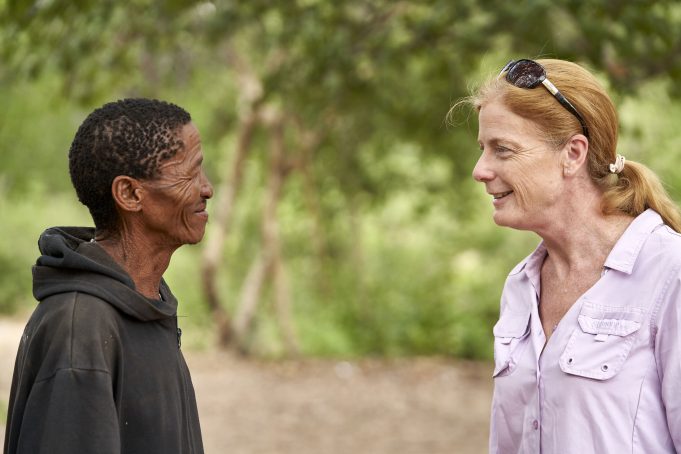
A study has concluded that the earliest ancestors of anatomically modern humans (Homo sapiens sapiens) emerged in a southern African 'homeland' and thrived there for 70 thousand years.
The breakthrough findings are published in the prestigious journal Nature today.
The authors propose that...
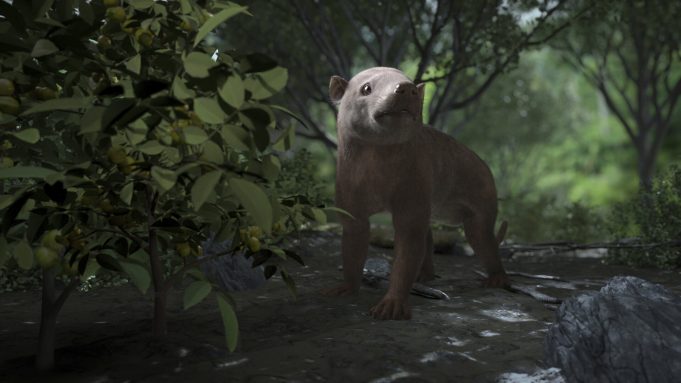
A remarkable trove of fossils from Colorado has revealed details of how mammals grew larger and plants evolved after the cataclysm that killed the dinosaurs.
The thousands of specimens let scientists trace that history over a span of 1 million...

New evidence, published in the Journal of the British Archaeological Association, has confirmed that the Bayeux Tapestry was designed specifically to fit a specific area of Bayeux's cathedral.
New research suggests the Tapestry was designed to be hung along the north,...


