

science

Oxygen could have been available to life as early as 3.5...
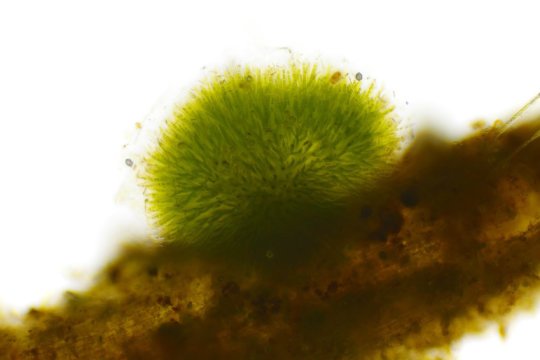
Microbes could have performed oxygen-producing photosynthesis at least one billion years earlier in the history of the Earth than previously thought.
The finding could change...
New evidence reveals how heavy elements were created after the Big...

The Big Bang theory and the question of how life on Earth began has fascinated scientists for decades, but now new research from The...
Scientists uncover the mechanism of fungal luminescence and create luminescent yeasts

Russian scientists with colleagues from the U.K., Spain, Brazil, Japan and Austria have fully described the mechanism of fungal luminescence. They report that fungi...
Newly discovered wasp turns social spiders into zombies
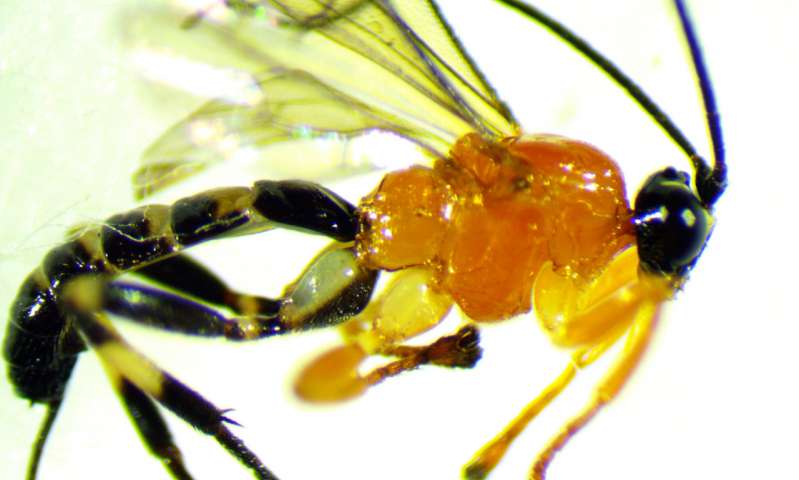
It sounds like the plot of the world's tiniest horror movie: deep in the Ecuadorian Amazon, a newly discovered species of wasp transforms a...
Climate change wiped out the ‘Siberian unicorn’

New research has shed light on the origin and extinction of a giant, shaggy Ice Age rhinoceros known as the Siberian unicorn because of...
Ocean circulation in North Atlantic at its weakest

A study led by Drs. Christelle Not and Benoit Thibodeau from the Department of Earth Sciences and the Swire Institute of Marine Science, The...
Researchers achieve highest certified efficiency of organic solar cells to date

Materials scientists at Friedrich-Alexander-Universität Erlangen-Nürnberg (FAU) have achieved a new record in the performance of organic, non-fullerene-based, single-junction solar cells. Using a series of...
Complex systems help explain how democracy is destabilised

Complex systems theory is usually used to study things like the immune system, global climate, ecosystems, transportation or communications systems.
But with global politics becoming...
Newly discovered deep-sea microbes gobble greenhouse gases and perhaps oil spills,...

Scientists at The University of Texas at Austin's Marine Science Institute have discovered nearly two dozen new types of microbes, many of which use...
Disordered materials could be hardest, most heat-tolerant carbides

Materials scientists at Duke University and UC San Diego have discovered a new class of carbides expected to be among the hardest materials with...
A water treatment breakthrough, inspired by a sea creature

Inspired by Actinia, a sea organism that ensnares its prey with its tentacles, a team of researchers has developed a method for efficiently treating...


