

science

Harnessing tomato jumping genes could help speed-breed drought-resistant crops

Once dismissed as 'junk DNA' that served no purpose, a family of 'jumping genes' found in tomatoes has the potential to accelerate crop breeding...
Machine learning opens new possibilities for quantum devices
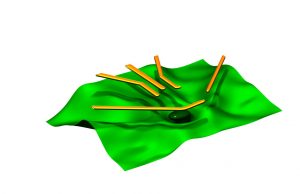
Scientists from the University of Oxford, in collaboration with University of Basel and Lancaster University, have developed an algorithm that can be used to...
Galaxy found to float in a tranquil sea of halo gas

Using one cosmic mystery to probe another, astronomers have analyzed the signal from a fast radio burst, an enigmatic blast of cosmic radio waves...
The dark giraffe, the new dark horse

Darker male giraffes have been found to be more solitary and less social than their lighter-colored counterparts, according to new research from The University...
Big world around tiny star puts new spin on planet formation

A giant world discovered around a tiny star is putting a new spin on how planets form.
Astronomers reported Thursday they've found a Jupiter-like planet...
Researchers observe exotic radioactive decay process
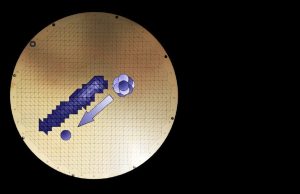
Researchers from the National Superconducting Cyclotron Laboratory (NSCL) at Michigan State University (MSU) and TRIUMF (Canada's national particle accelerator) have observed a rare nuclear...
Tiny, biocompatible nanolaser could function inside living tissues

Researchers have developed a tiny nanolaser that can function inside of living tissues without harming them.
Just 50 to 150 nanometers thick, the laser is...
A new way to turn heat into useful energy

An international team of scientists has figured out how to capture heat and turn it into electricity.
The discovery, published last week in the journal Science...
‘Lucky’ observation: Scientists watch a black hole shredding a star

A NASA satellite searching space for new planets gave astronomers an unexpected glimpse at a black hole ripping a star to shreds.
It is one...
Scientists finally find superconductivity in place they have been looking for...

Researchers at Stanford University and the Department of Energy's SLAC National Accelerator Laboratory say they have found the first, long-sought proof that a decades-old...
How fungus-farming ants could help solve our antibiotic resistance problem
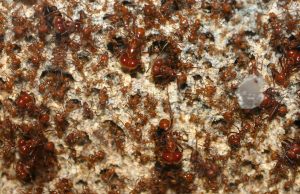
For the last 60 million years, fungus-growing ants have farmed fungi for food. In their cultivation of those fungi, they've successfully relied on bacteria-produced...


